Artificial intelligence is no longer limited to research labs or complex business systems. It is now part of everyday technology, from search and productivity software to smartphones and creative applications.
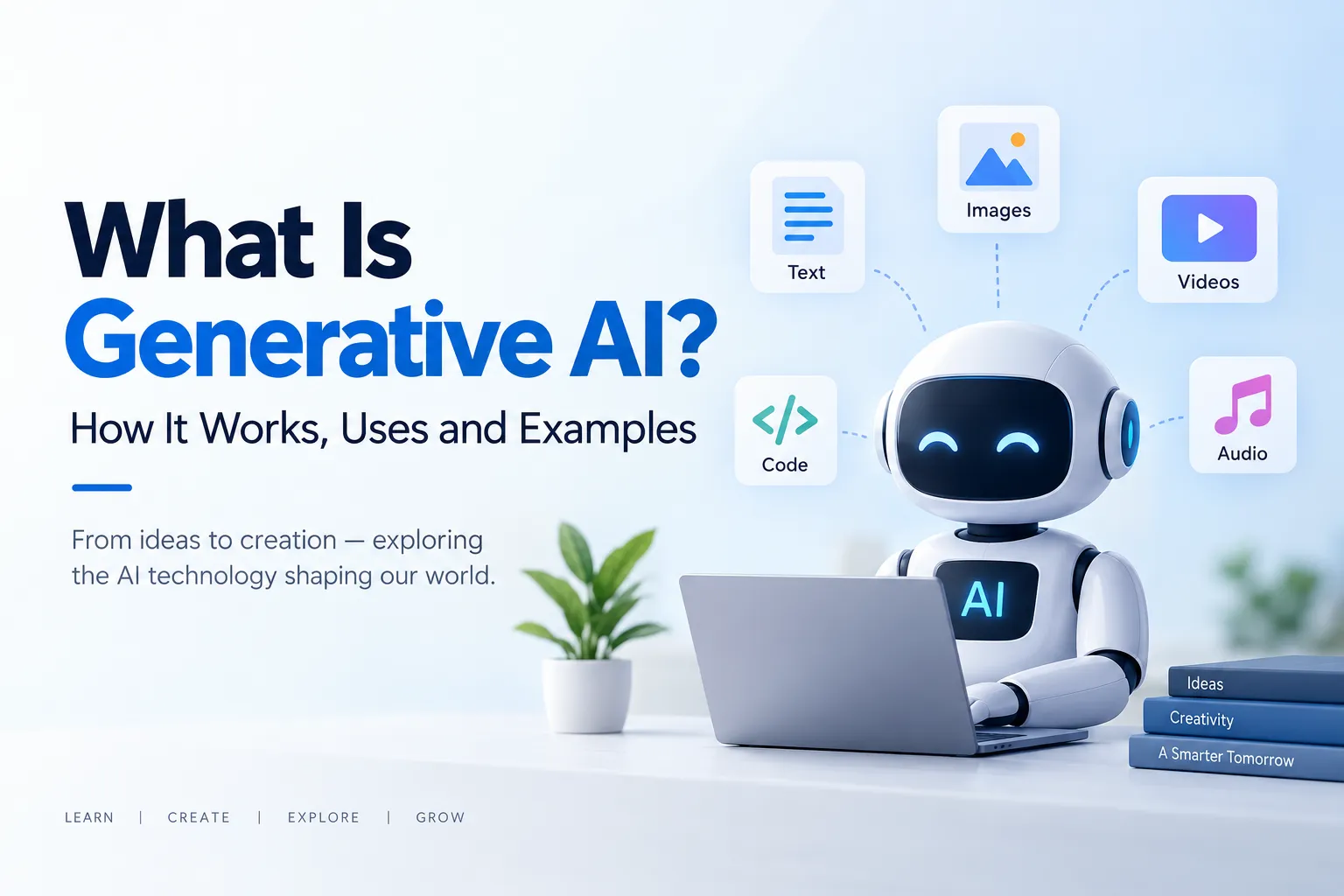
One of the most visible developments is Generative AI. Unlike AI systems designed mainly to classify information, make predictions, or detect patterns, generative systems can produce new content in response to instructions. Depending on the system, that content can include text, images, audio, video, software code, and more.
This guide explains what Generative AI is, how it works at a high level, where it is being used, popular examples, its benefits and risks, and what its future may look like.
Also Read: Artificial Intelligence (AI): A Complete Beginner’s Guide
What Is Generative AI?
Generative AI is a type of artificial intelligence that can create new content such as text, images, audio, video, and code by learning patterns from existing data.
The word generative refers to the ability to generate something new. Generative AI models are trained on large amounts of data and learn statistical patterns and relationships within that data. When a user provides a prompt, the model uses those learned patterns to produce an output that fits the request.
This does not mean the system thinks or understands the world like a human. It generates responses according to how its model has learned to represent and predict patterns in data.
Traditional AI can, for example, examine an email and classify it as spam or not spam. Generative AI can instead draft a new email based on an instruction such as, “Write a polite response to a customer asking for a refund.”
Generative AI has become important because sophisticated AI capabilities are now accessible through relatively simple interfaces. Users can describe what they want in ordinary language rather than needing to write software or understand machine-learning algorithms.
How Does Generative AI Work?
The exact technology differs between systems, but the basic process can be understood in five steps.
1. Training on Large Amounts of Data
Generative AI models are trained using large datasets. Depending on the model, these datasets can contain text, images, audio, code, video, or combinations of these.
During training, the model processes examples and adjusts its internal parameters so it can capture useful patterns in the data.
2. Learning Patterns
The model learns relationships between elements rather than simply functioning as a searchable database of everything it has seen.
For example, a language model can learn that certain words commonly occur together and how sentence structure, context, and meaning tend to relate. Image models learn patterns associated with visual features and descriptions.
3. Receiving a Prompt
A prompt is the instruction or input given to the AI system.
For example:
“Explain photosynthesis to a 10-year-old using a simple example.”
A clearer, more specific prompt generally gives the model better guidance about the desired result.
4. Generating Content
The model processes the prompt and uses its learned patterns to generate an output. In a language model, this involves predicting likely sequences of tokens—the small units into which text is processed.
For image, audio, or video systems, different model architectures and generation techniques may be used.
5. Refining the Output
Generation does not always produce a perfect result on the first attempt. Users can ask follow-up questions, add constraints, provide examples, or correct mistakes.
This iterative process—prompt, review, and refinement—is one of the most practical ways to use Generative AI effectively.
Types of Generative AI
Generative AI can produce several kinds of content:
- Text generation: Writing an article outline, summarizing a document, or drafting an email.
- Image generation: Creating an illustration from a description, such as “a futuristic city at sunset.”
- Audio and music generation: Producing speech, sound effects, or musical compositions.
- Video generation: Creating or modifying video content based on prompts or other inputs.
- Code generation: Suggesting software code, explaining existing code, or helping developers debug programs.
These categories can also overlap. A single AI application may combine text, images, voice, and other forms of content.
Common Uses of Generative AI
Content Creation
Writers, marketers, and businesses can use Generative AI to brainstorm ideas, create first drafts, summarize material, and produce product descriptions or social media copy.
The output still benefits from human editing, especially when accuracy, brand voice, or originality matters.
Education
Students can use AI tools to request simpler explanations, generate practice questions, summarize study material, or explore unfamiliar subjects.
Teachers can also use them to brainstorm lesson activities and create learning materials. However, students should check AI-generated answers rather than assuming every response is correct.
Software Development
Generative AI can help developers write code, explain unfamiliar functions, create documentation, and identify potential bugs. Coding assistants can provide suggestions directly inside development environments.
Business and Customer Service
Businesses use generative systems for drafting emails, summarizing information, creating internal documents, answering routine questions, and supporting customer-service workflows. Microsoft, for example, describes Copilot as capable of generating content such as scripts, agendas, images, charts, and presentations.
Creative Industries
Artists, designers, filmmakers, musicians, and other creators can use Generative AI for brainstorming and experimentation. Image-generation systems can turn natural-language descriptions into visual concepts, while other tools can assist with audio and video production.
Generative AI Examples
| Generative AI Tool/Technology | What It Can Do | Example Use |
| ChatGPT | Generate and transform text and other content | Brainstorming, explanations, drafting |
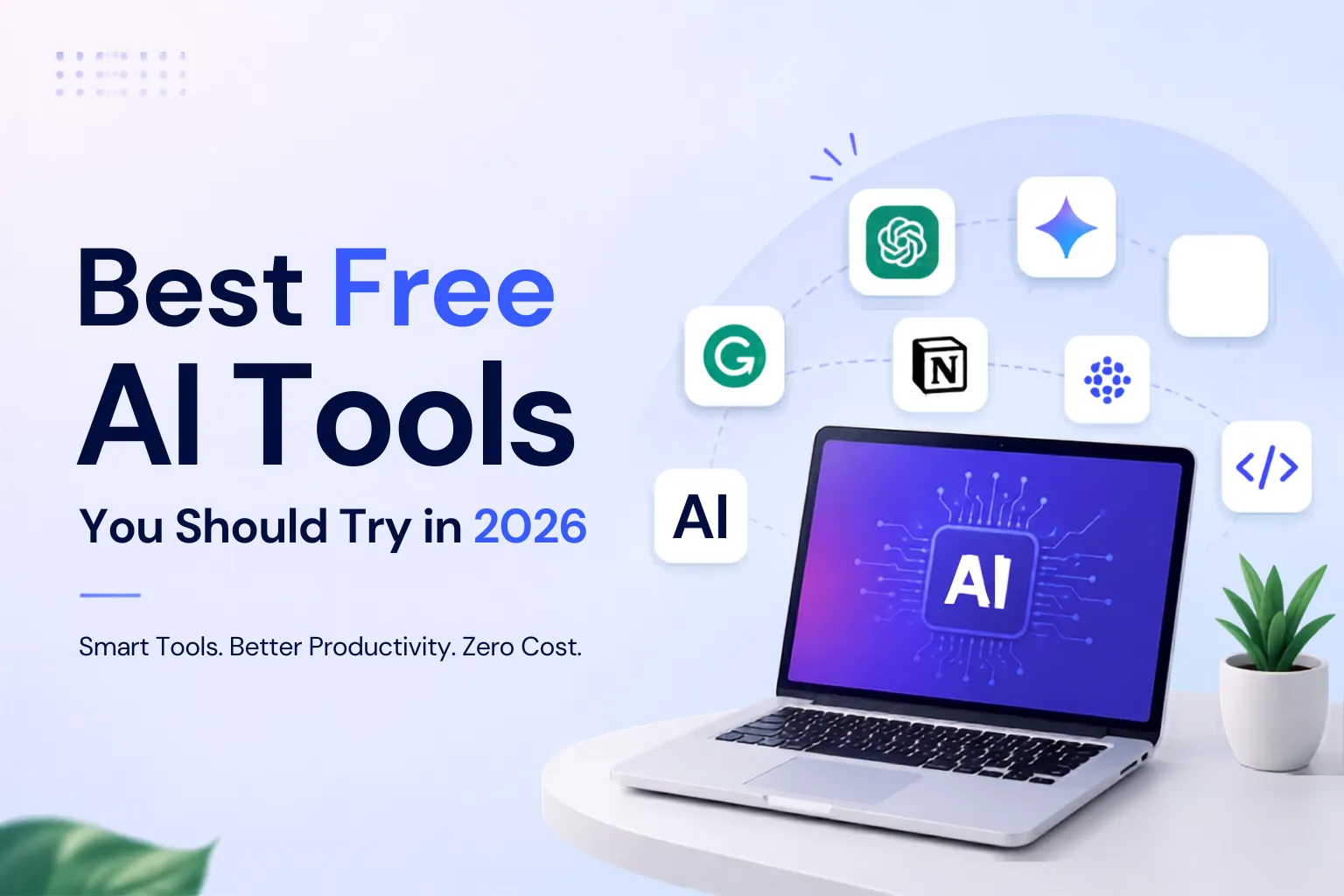
| Google Gemini | AI-assisted generation and information tasks | Writing, research assistance, coding |
| Microsoft Copilot | Generate and work with content | Documents, presentations, workplace assistance |
| Adobe Firefly | Generate and edit creative content | Image and design concepts |
| GitHub Copilot | Generate coding suggestions | Code completion and programming assistance |
The capabilities and available features of these products can change over time, so specific functions may vary by version or plan. GitHub, for example, documents code suggestions, coding chat, and other developer-focused capabilities for Copilot.
Generative AI vs Traditional AI
| Feature | Traditional AI | Generative AI |
| Main purpose | Analyze, classify, predict, or make decisions | Generate new content |
| Output | Labels, predictions, scores, recommendations | Text, images, audio, video, code, and other content |
| Typical applications | Fraud detection, recommendations, spam filtering | Content creation, coding, image generation, summarization |
| Examples | Credit-risk models, recommendation systems | Chatbots, image generators, coding assistants |
The distinction is useful but not absolute. Some modern AI products combine traditional predictive systems with generative models. Generative AI is best understood as a category focused on producing synthetic content from learned patterns. NIST describes generative AI as AI models that emulate characteristics of input data to generate derived synthetic content.
Benefits of Generative AI
Some of the major benefits of Generative AI include:
- Faster content creation: Produces drafts and ideas quickly.
- Higher productivity: Helps people complete routine tasks more efficiently.
- Personalized learning: Can adapt explanations and practice material to individual needs.
- Coding assistance: Helps developers write, understand, and modify code.
- Creative experimentation: Makes it easier to explore different concepts and styles.
- Automation: Can assist with repetitive communication and content-related tasks.
- Greater access to information: Natural-language interfaces make complex tasks easier to approach.
These benefits do not eliminate the need for human judgment. Generative AI is most useful when people review, edit, and direct its output.
Limitations and Risks of Generative AI
Generative AI also has important limitations.
Incorrect information: AI models can produce convincing but incorrect statements. Users should verify important facts, particularly when making medical, legal, financial, academic, or other high-stakes decisions.
Bias: Models can reproduce or amplify biases present in their training data or surrounding systems.
Privacy: Users should be careful about entering confidential, personal, or sensitive information into AI services.
Copyright and intellectual property: The legal and practical questions surrounding training data, generated content, ownership, and similarity to existing works can be complicated and vary by jurisdiction.
Overreliance: Treating AI output as automatically correct can lead to poor decisions or reduce opportunities for human review.
Security: AI systems can introduce security and misuse risks, particularly when connected to software, business data, or automated workflows.
NIST’s Generative AI risk-management guidance highlights the need to identify and manage risks associated with generative systems throughout their lifecycle.
The Future of Generative AI
Generative AI is likely to continue influencing education, software development, business communication, search, creative work, and workplace productivity.
AI assistants may become more capable of working across different types of information and software. Instead of simply answering a question, an assistant may increasingly help users organize information, draft materials, analyze files, or complete parts of a workflow.
However, the pace and impact of these changes will vary by industry. Technical capability does not automatically translate into reliable or appropriate real-world use. Questions around accuracy, privacy, copyright, security, regulation, and human oversight will remain important.
Also Read: How Artificial Intelligence Is Transforming Everyday Life
Frequently Asked Questions
1. What is Generative AI in simple words?
Generative AI is technology that learns patterns from existing data and uses those patterns to create new content in response to instructions.
2. How does Generative AI work?
It is trained on large datasets, learns patterns and relationships, receives a prompt, and generates an output based on the prompt and its learned model.
3. What are some examples of Generative AI?
Examples include ChatGPT, Google Gemini, Microsoft Copilot, Adobe Firefly, and GitHub Copilot.
4. What can Generative AI create?
Depending on the system, it can create or transform text, images, audio, video, computer code, and other digital content.
5. Is Generative AI the same as artificial intelligence?
No. Generative AI is a category within artificial intelligence focused on generating content. Other AI systems may focus on classification, prediction, recommendation, or decision support.
Conclusion
Generative AI is a powerful branch of artificial intelligence that can create new content from patterns learned during training. Its ability to respond to natural-language prompts has made advanced AI tools accessible to students, professionals, creators, developers, and businesses.
Understanding how generative AI works does not require advanced mathematics. The essential idea is straightforward: models learn patterns from large datasets and use those patterns to generate outputs based on user instructions.
For anyone learning about AI, the most useful approach is neither to treat Generative AI as magic nor to dismiss it as a simple search engine. Learn what it can do, understand its limitations, write clear prompts, and verify important results. Used thoughtfully, Generative AI can become a practical tool for learning, creating, and solving problems.