Imagine waking up to lights that turn on automatically, a coffee maker that starts brewing before you leave your bed, and a smartwatch that tracks your sleep and heart rate. These everyday conveniences are possible because of the Internet of Things (IoT).
The Internet of Things is rapidly changing the way people interact with technology. Millions of connected devices now communicate with each other over the internet, making homes smarter, businesses more efficient, and cities more sustainable.
Whether you’re a student exploring technology, a homeowner using smart home technology, or a business owner looking to improve operations, understanding IoT has become increasingly important.
In this guide, you’ll learn what IoT is, how it works, its real-world applications, benefits, challenges, security best practices, and what the future holds.
What Is the Internet of Things (IoT)?
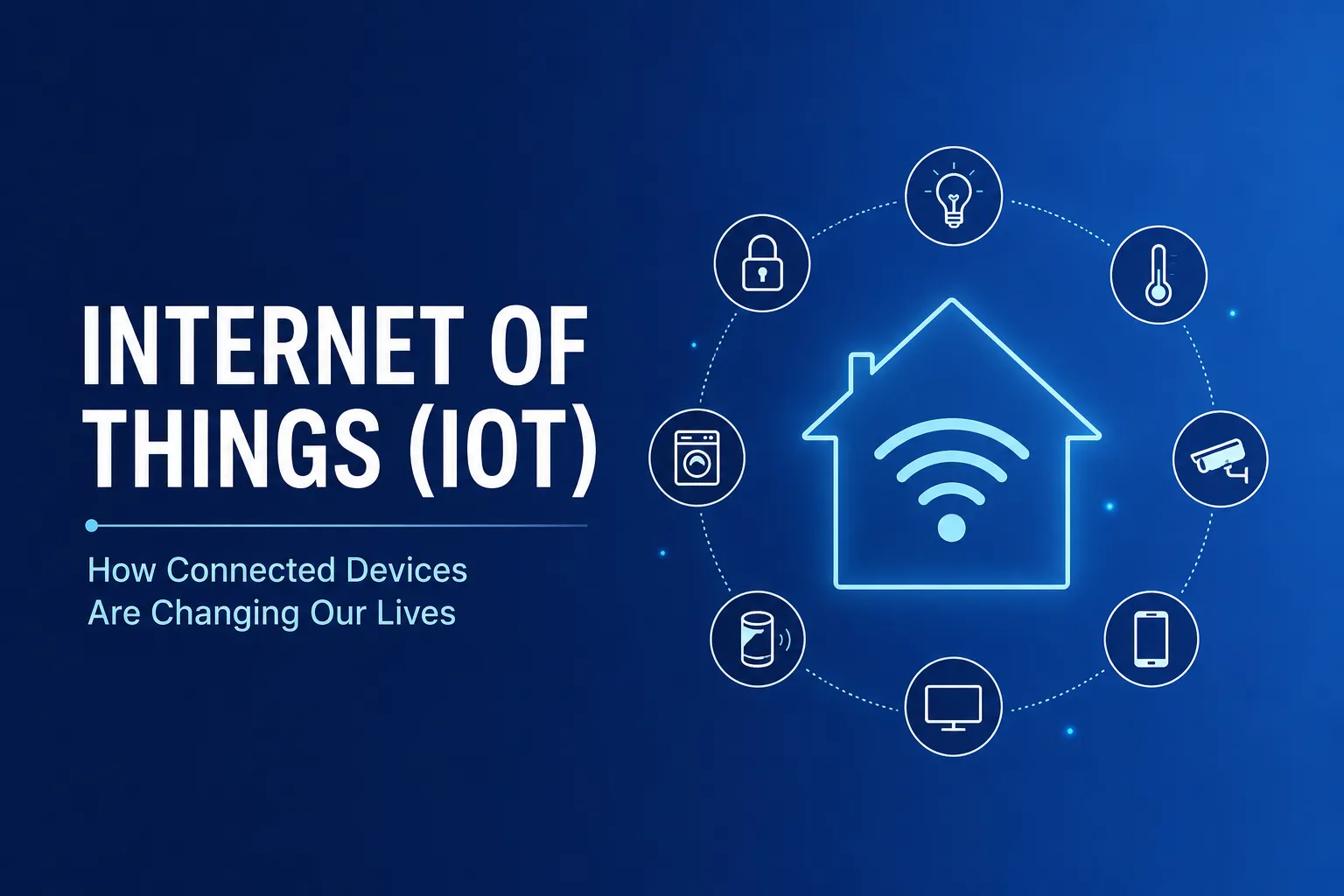
The Internet of Things (IoT) is a network of physical objects that are connected to the internet. These smart devices collect data using sensors, share that information, and often perform automated actions without requiring constant human input.
Simply put:
IoT connects everyday devices to the internet so they can collect data, communicate, and automate tasks.
How IoT Works in Simple Steps
- A sensor collects information.
- The device connects to the internet.
- Data is sent to a cloud platform.
- Software analyzes the information.
- The device or user receives instructions or insights.
- Automated actions are performed when needed.
This seamless communication makes IoT technology useful in homes, workplaces, hospitals, and cities.
How Does IoT Work?
Although IoT may sound complex, its operation follows a straightforward process.
Step 1: Device Collects Data
Sensors measure information such as temperature, motion, location, or heart rate.
Step 2: Data Is Sent Over the Internet
The collected information is securely transmitted through Wi-Fi, Bluetooth, cellular, or other networks.
Step 3: Cloud Processes Information
Cloud platforms analyze the incoming data using software and algorithms.
Step 4: User Receives Useful Insights
Users can monitor information through mobile apps or dashboards.
Step 5: Device Performs Automated Actions
Based on predefined rules, the device can adjust settings, send alerts, or perform tasks automatically.
Everyday Examples of IoT
| IoT Device | How It Helps |
| Smart speakers | Voice control for music, reminders, and home automation |
| Smart lights | Remote lighting control and energy savings |
| Smart thermostats | Automatically optimize indoor temperature |
| Fitness trackers | Monitor steps, sleep, and activity levels |
| Smartwatches | Track health metrics and deliver notifications |
| Smart TVs | Stream content and integrate with smart home systems |
| Security cameras | Enable remote home monitoring and motion alerts |
| Smart refrigerators | Track groceries and reduce food waste |
| Connected cars | Provide navigation, diagnostics, and safety features |
These Internet of Things examples show how IoT in daily life enhances comfort and convenience.
Benefits of Internet of Things (IoT)
Convenience
Connected devices automate routine tasks, reducing manual effort and making everyday life easier.
Better Energy Efficiency
Smart thermostats and lighting systems optimize energy consumption, lowering utility costs while supporting sustainability.
Improved Safety
IoT-enabled security cameras, smoke detectors, and smart locks help protect homes and businesses by providing real-time alerts.
Time Savings
Automation reduces repetitive tasks, allowing individuals and organizations to focus on more valuable activities.
Better Healthcare Monitoring
Wearable devices continuously monitor vital signs, enabling proactive health management and supporting remote patient care.
Increased Productivity
Businesses use IoT applications to monitor equipment, track inventory, and streamline operations, improving overall efficiency.
IoT Applications Across Different Industries
The versatility of IoT extends across nearly every industry.
Healthcare
Remote patient monitoring, connected medical devices, and wearable health trackers improve care and support early intervention.
Smart Homes
Smart lighting, thermostats, security systems, and appliances create more comfortable, efficient living spaces.
Manufacturing
Industrial IoT helps monitor machinery, predict maintenance needs, and improve production efficiency.
Agriculture
Smart irrigation systems, soil sensors, and livestock monitoring enable farmers to optimize resources and increase yields.
Transportation
Connected vehicles, fleet tracking, and traffic management systems improve safety and reduce congestion.
Retail
Retailers use IoT to manage inventory, personalize customer experiences, and streamline checkout processes.
Education
Connected classrooms support interactive learning, efficient resource management, and enhanced campus security.
Smart Cities
IoT powers intelligent traffic systems, waste management, public lighting, and environmental monitoring to improve urban living.
Challenges of IoT Technology
Despite its many advantages, IoT presents several challenges.
- Privacy concerns: Connected devices collect significant amounts of personal and operational data.
- Cybersecurity risks: Poorly secured devices may become targets for cyberattacks.
- Data protection: Organizations must safeguard sensitive information against unauthorized access.
- Device compatibility: Products from different manufacturers may not always work seamlessly together.
- High initial costs: Deploying IoT infrastructure can require a substantial investment.
- Internet dependency: Many IoT devices rely on stable internet connectivity to function effectively.
IoT Security Best Practices
Protecting connected devices is essential for maintaining privacy and system reliability.
10-Point IoT Safety Checklist
- ✅ Use strong, unique passwords for every device.
- ✅ Enable two-factor authentication whenever available.
- ✅ Update firmware and software regularly.
- ✅ Secure your Wi-Fi network with modern encryption.
- ✅ Purchase devices from trusted brands.
- ✅ Disable unused features and services.
- ✅ Change default usernames and passwords immediately.
- ✅ Monitor connected devices regularly.
- ✅ Review app permissions and privacy settings.
- ✅ Remove unused or unsupported devices from your network.
Future of Internet of Things (IoT)
The future of IoT looks increasingly intelligent and interconnected.
AI + IoT
Artificial intelligence will enable devices to make smarter decisions based on real-time data.
5G Connectivity
Faster and more reliable networks will improve the speed and responsiveness of connected systems.
Smart Cities
Urban infrastructure will become more efficient through intelligent transportation, energy management, and public services.
Wearable Technology
Future wearables will offer advanced health monitoring and personalized wellness insights.
Autonomous Vehicles
Connected sensors and real-time communication will play a key role in self-driving transportation.
Edge Computing
Processing data closer to devices will reduce latency and improve performance.
Industrial IoT
Manufacturers will continue adopting connected systems to increase productivity, reduce downtime, and improve quality control.
Common Myths About IoT
| Myth | Reality |
| IoT is only for large companies. | Consumers and small businesses also benefit from IoT. |
| Every smart device is expensive. | Many affordable IoT products are available today. |
| IoT always invades privacy. | Proper security settings significantly improve privacy. |
| IoT replaces human workers. | IoT primarily automates repetitive tasks while supporting human decision-making. |
| IoT is only for smart homes. | It is widely used in healthcare, manufacturing, agriculture, transportation, retail, and education. |
Frequently Asked Questions
1. What is the Internet of Things (IoT)?
The Internet of Things (IoT) is a network of internet-connected physical devices that collect, exchange, and process data to automate tasks and improve decision-making.
2. What are some examples of IoT devices?
Examples include smart speakers, smart lights, smart thermostats, fitness trackers, smartwatches, security cameras, connected cars, and smart refrigerators.
3. Is IoT safe to use?
Yes, when users follow good IoT security practices such as updating devices, using strong passwords, and enabling two-factor authentication.
4. How does IoT improve daily life?
IoT increases convenience, saves time, improves energy efficiency, enhances safety, and supports better health monitoring.
5. What industries use IoT?
Healthcare, manufacturing, agriculture, retail, transportation, education, smart homes, and smart cities all rely on IoT solutions.
6. Does IoT require the internet?
Most IoT devices require internet connectivity, although some can perform limited local functions without an internet connection.
7. What are the biggest risks of IoT?
Cybersecurity threats, privacy concerns, weak passwords, outdated software, and device compatibility issues are among the biggest risks.
8. What is the future of IoT?
The future includes deeper integration with artificial intelligence, 5G networks, edge computing, autonomous systems, and advanced industrial automation.
Also Read About: Artificial Intelligence (AI): A Complete Beginner’s Guide
Conclusion
The Internet of Things (IoT) is transforming how people live, work, and interact with technology. From smart home technology and wearable health devices to connected factories and intelligent cities, IoT continues to create new opportunities for convenience, efficiency, and innovation.
As the number of connected devices grows, businesses and consumers alike will benefit from smarter automation and data-driven insights. However, embracing IoT also means prioritizing security by keeping devices updated, protecting networks, and choosing trusted products.
Looking ahead, the combination of IoT, artificial intelligence, 5G, and edge computing will unlock even more advanced applications, making our homes, workplaces, and communities increasingly intelligent and connected.