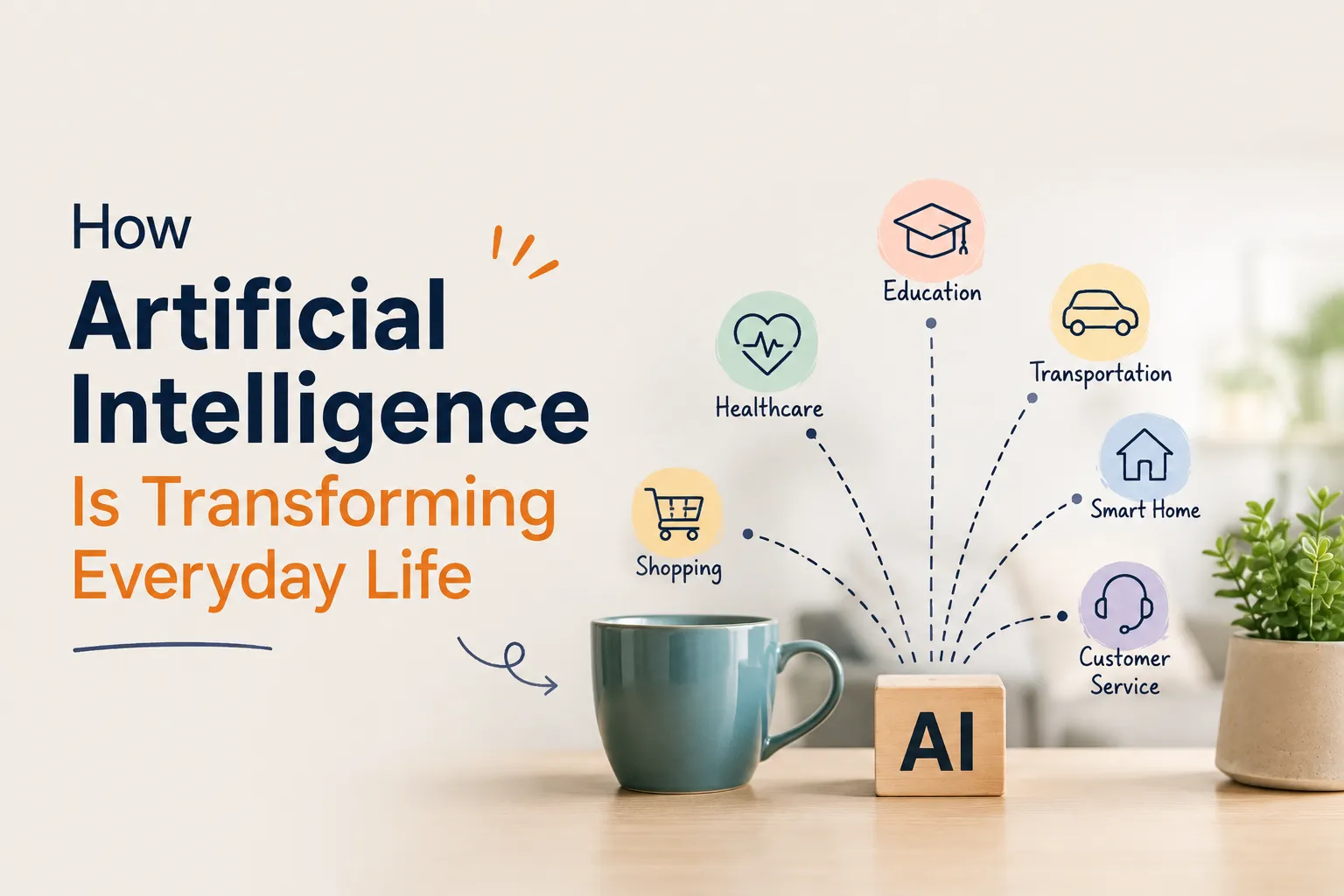
Technology is advancing at an unprecedented pace. Innovations that once seemed like science fiction are becoming part of everyday life, changing how we work, communicate, learn, travel, and solve global challenges. From Artificial Intelligence helping doctors diagnose diseases to smart cities powered by connected devices, today’s breakthroughs are laying the foundation for tomorrow’s world.
Businesses are embracing digital transformation to stay competitive, while individuals are learning new skills to keep up with changing career opportunities. Whether you’re a student, entrepreneur, technology enthusiast, or working professional, understanding emerging technologies is becoming more important than ever.
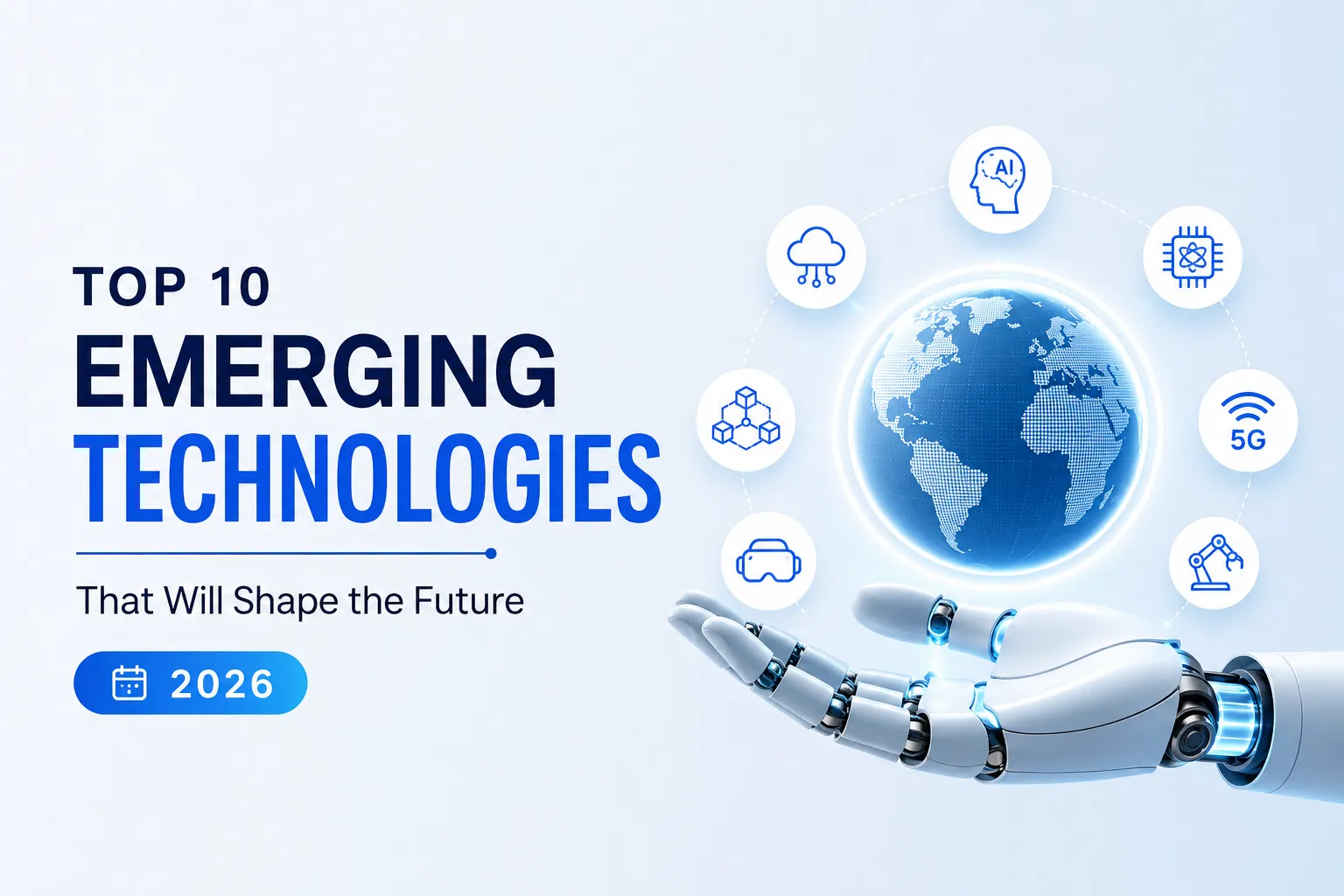
In this guide, we’ll explore the Top 10 Emerging Technologies That Will Shape the Future, their real-world applications, benefits, challenges, and how you can prepare for the technology-driven world of 2026 and beyond.
What Are Emerging Technologies?
Emerging technologies are innovative technologies that are still developing or rapidly expanding but have the potential to transform industries and everyday life. They improve efficiency, create new business opportunities, and drive digital transformation across healthcare, finance, education, manufacturing, transportation, and many other sectors.
Emerging technologies represent the next wave of innovation. Unlike mature technologies, these solutions continue to evolve quickly, offering new possibilities for businesses and consumers alike.
Why Emerging Technologies Matter
- Improve productivity and efficiency
- Create new industries and jobs
- Solve complex global challenges
- Enhance customer experiences
- Accelerate digital transformation
- Drive sustainable innovation
From AI-powered assistants to renewable energy systems, these technologies are already influencing millions of lives every day.
Top 10 Emerging Technologies That Will Shape the Future
1. Artificial Intelligence (AI)
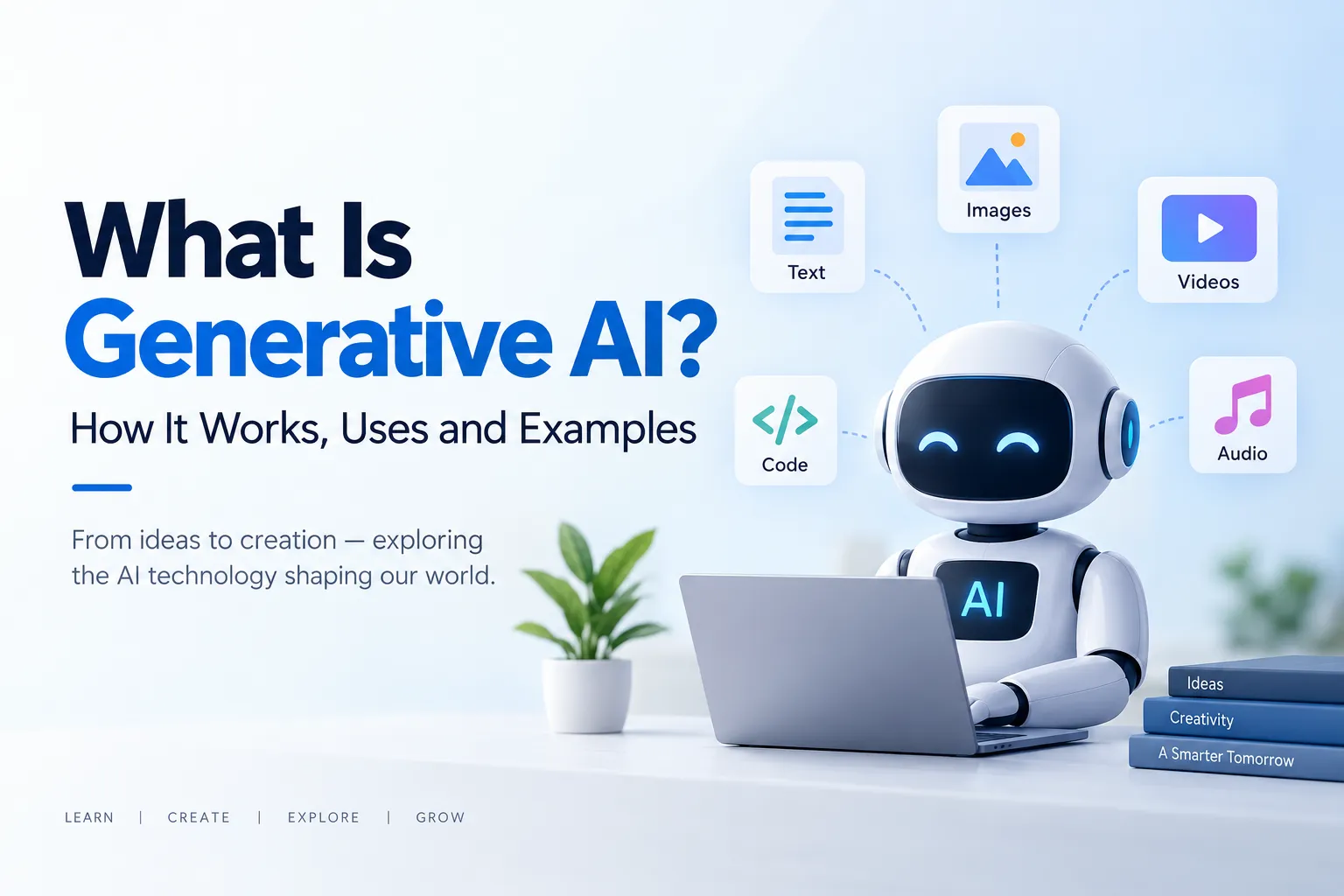
Artificial Intelligence continues to lead the list of future technology trends. AI enables machines to learn, analyze data, recognize patterns, and make intelligent decisions with minimal human intervention.
Current Applications
- ChatGPT and AI assistants
- Medical diagnosis
- Fraud detection
- Customer support chatbots
- Personalized recommendations
- Content creation
Future Impact
AI is expected to become even more integrated into healthcare, education, transportation, manufacturing, and scientific research. Generative AI, intelligent automation, and AI copilots will help people become more productive while supporting faster decision-making.
2. Quantum Computing
Quantum computing uses the principles of quantum mechanics to process information far more efficiently than traditional computers for certain complex problems.
Why It’s Revolutionary
Quantum computers could dramatically improve:
- Drug discovery
- Climate modeling
- Financial simulations
- Advanced cybersecurity
- Material science
- Logistics optimization
Although still developing, quantum computing could solve problems that would take today’s fastest supercomputers thousands of years.
3. Internet of Things (IoT)
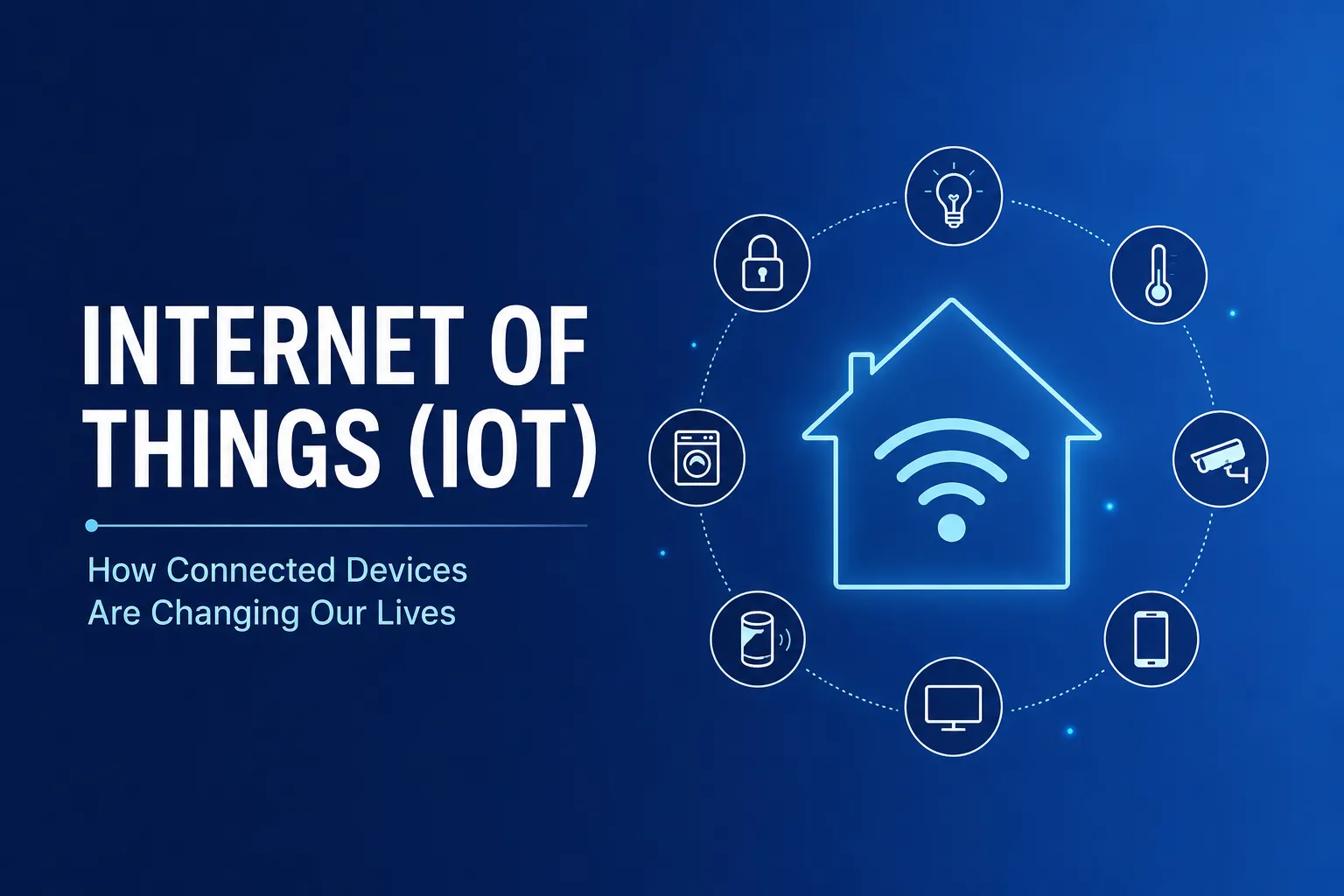
The Internet of Things (IoT) connects everyday devices through the internet, allowing them to collect and exchange data.
Common Applications
- Smart homes
- Wearable fitness devices
- Smart factories
- Connected healthcare devices
- Smart agriculture
- Smart traffic management
IoT enables automation, improves efficiency, and creates better user experiences through real-time data.
4. Blockchain Technology
Although blockchain became popular through cryptocurrencies, its value extends far beyond digital assets.
Modern Use Cases
- Supply chain transparency
- Secure banking transactions
- Healthcare records
- Digital identity verification
- Smart contracts
- Government services
Blockchain technology improves transparency, reduces fraud, and builds trust between organizations.
5. 5G and Next-Generation Connectivity
5G technology delivers significantly faster internet speeds, lower latency, and better support for billions of connected devices.
Benefits
- Faster downloads
- Better video streaming
- Autonomous vehicles
- Smart cities
- Industrial automation
- Remote healthcare
As connectivity continues to improve, future networks will support increasingly sophisticated smart technology.
6. Robotics and Automation
Modern robotics combines AI, sensors, machine learning, and automation to perform complex tasks efficiently.
Current Applications
- Manufacturing robots
- Warehouse automation
- Surgical robots
- Agricultural automation
- Delivery robots
- Industrial inspection
Rather than replacing every human worker, robots increasingly assist people with repetitive, dangerous, or precision-based tasks.
7. Augmented Reality (AR) and Virtual Reality (VR)
AR overlays digital content onto the real world, while VR creates fully immersive digital environments.
Industries Using AR and VR
- Gaming
- Medical training
- Education
- Retail shopping
- Real estate
- Architecture
- Remote collaboration
These technologies make learning more interactive, improve product visualization, and create engaging customer experiences.
8. Edge Computing
Edge computing processes data closer to where it is generated instead of relying solely on centralized cloud servers.
Advantages
- Lower latency
- Faster response times
- Improved IoT performance
- Better security
- Reduced bandwidth usage
- Reliable real-time analytics
Edge computing is especially valuable for autonomous vehicles, industrial systems, and smart infrastructure.
9. Green Technology
Green technology focuses on sustainable innovation while reducing environmental impact.
Examples
- Renewable energy
- Electric vehicles
- Smart power grids
- Carbon capture
- Energy-efficient buildings
- Sustainable manufacturing
Governments and businesses increasingly invest in green technology to meet climate goals while improving long-term efficiency.
10. Biotechnology and Personalized Medicine
Healthcare is becoming more personalized thanks to advances in biotechnology, genomics, and Artificial Intelligence.
Future Innovations
- Gene editing
- Precision medicine
- AI-assisted diagnosis
- Personalized treatments
- Early disease detection
- Regenerative medicine
These innovations promise more effective treatments tailored to each patient’s unique genetic profile.
Industries That Will Benefit the Most
| Industry | Emerging Technology | Benefits |
| Healthcare | AI, Biotechnology, IoT | Faster diagnosis, personalized treatment, remote monitoring |
| Finance | Blockchain, AI | Fraud detection, secure transactions, automation |
| Education | AI, AR, VR | Personalized learning, virtual classrooms |
| Transportation | 5G, AI, Edge Computing | Autonomous vehicles, smarter traffic systems |
| Manufacturing | Robotics, IoT | Higher productivity, predictive maintenance |
| Retail | AI, AR | Personalized shopping, virtual product visualization |
| Agriculture | IoT, AI, Robotics | Precision farming, improved crop yields |
Benefits of Emerging Technologies
Organizations adopting the latest technology innovations gain significant advantages.
Key benefits include:
- Improved operational efficiency
- Better decision-making through data analytics
- Increased productivity
- Intelligent automation
- Lower operating costs
- Enhanced customer experiences
- Greater sustainability
- Faster innovation cycles
- Improved workplace safety
- Better global connectivity
Challenges and Risks
While the future of technology is exciting, it also presents important challenges.
Some of the biggest concerns include:
- Cybersecurity threats
- Privacy and data protection
- Ethical AI development
- Job displacement through automation
- High implementation costs
- Digital divide and unequal access
- Regulatory uncertainty
- Environmental impact of computing infrastructure
Responsible innovation requires balancing technological progress with ethics, security, transparency, and human well-being.
How Individuals Can Prepare for Future Technologies
Future-ready professionals continuously learn and adapt.
Here are practical ways to stay ahead:
- Learn Artificial Intelligence fundamentals.
- Improve digital literacy.
- Take online technology courses.
- Build analytical and problem-solving skills.
- Stay informed about technology trends in 2026.
- Practice coding or automation basics.
- Understand cybersecurity best practices.
- Develop communication and collaboration skills.
- Gain experience with emerging digital tools.
- Commit to lifelong learning.
Frequently Asked Questions (FAQ)
1. What are emerging technologies?
Emerging technologies are innovative technologies that are rapidly developing and have the potential to transform industries, businesses, and everyday life.
2. Which technology has the biggest future potential?
Artificial Intelligence currently has the broadest impact because it supports automation, healthcare, education, research, finance, manufacturing, and many other industries.
3. How will AI change everyday life?
AI will improve healthcare, personalize education, automate routine tasks, enhance customer service, support transportation, and help individuals make faster, data-driven decisions.
4. Is blockchain only used for cryptocurrency?
No. Blockchain technology also supports supply chain management, digital identity, healthcare records, banking, and secure business transactions.
5. What is the role of 5G in future technology?
5G provides faster, more reliable connectivity that enables smart cities, autonomous vehicles, IoT devices, and real-time communication.
6. Which industries will benefit the most?
Healthcare, finance, education, manufacturing, transportation, agriculture, and retail are expected to experience significant transformation.
7. What skills are needed for future technology careers?
Digital literacy, AI fundamentals, data analysis, cybersecurity awareness, programming, communication, creativity, and continuous learning are valuable skills.
8. Why is cybersecurity important for emerging technologies?
As more systems become connected, strong cybersecurity protects sensitive data, maintains trust, prevents cyberattacks, and supports safe digital transformation.
Conclusion
The Top 10 Emerging Technologies That Will Shape the Future are already redefining industries and changing how people live and work. Artificial Intelligence, quantum computing, IoT, blockchain, 5G, robotics, AR and VR, edge computing, green technology, and biotechnology are driving a new era of innovation and digital transformation.
Technology will continue to evolve rapidly, creating both exciting opportunities and complex challenges. Individuals who invest in learning new skills and businesses that embrace responsible innovation will be better positioned to thrive in the years ahead. Staying informed, adaptable, and ethically focused is no longer optional—it’s a competitive advantage in the future of technology.