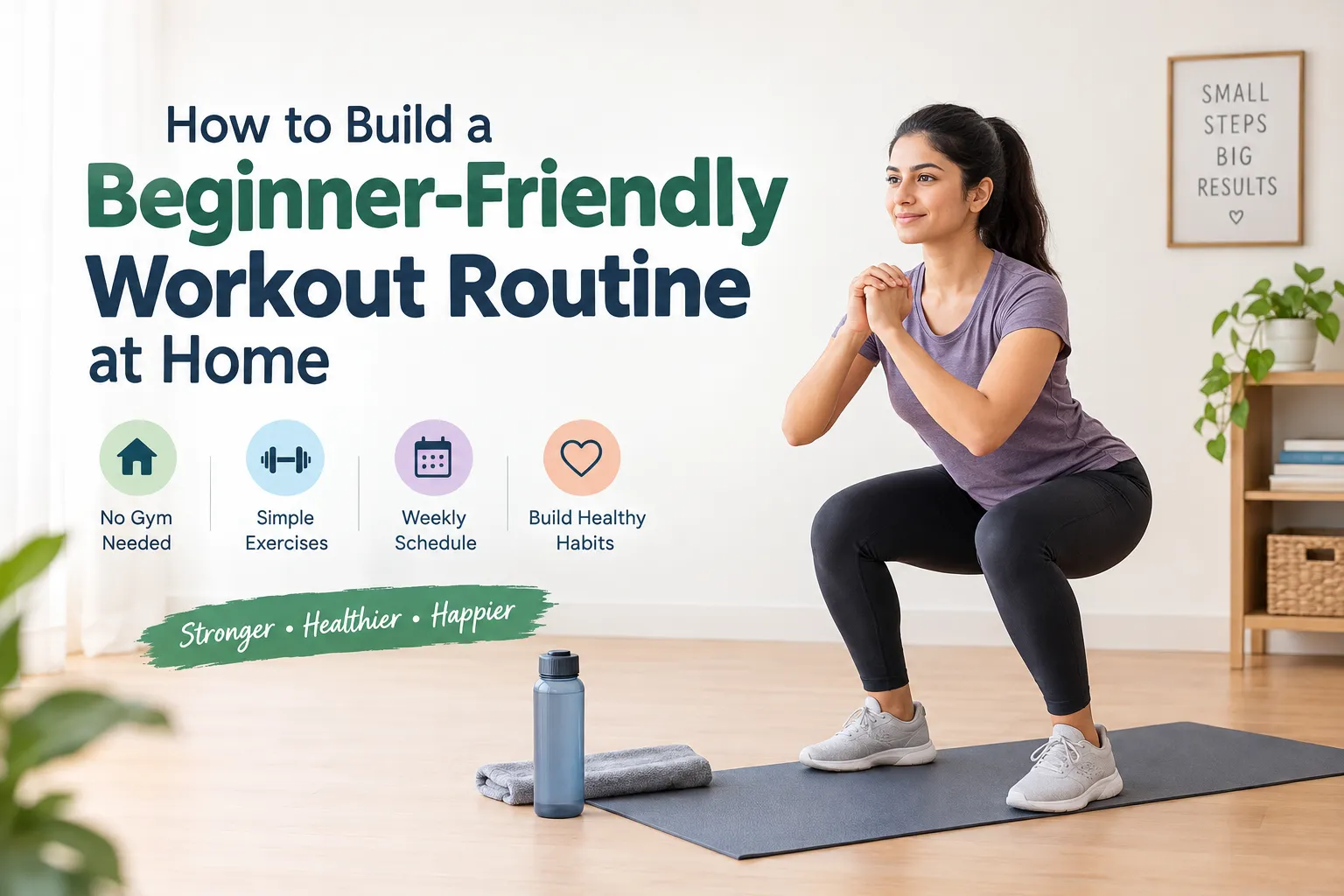
Getting started with fitness does not have to mean joining an expensive gym or buying complicated equipment. With a little space, comfortable clothing, and a simple plan, you can begin exercising right at home.
A home workout routine offers flexibility for busy adults, beginners, and anyone who prefers exercising in a familiar environment. You can choose a convenient time, work at your own pace, and gradually build confidence without feeling pressured to keep up with others.
The key is to start small and focus on consistency rather than perfection.
In this guide, you will learn how to build a beginner-friendly workout routine at home, choose simple exercises, create a weekly workout schedule, and develop sustainable fitness habits.
Why Start Working Out at Home?
Home workouts can make regular physical activity easier to fit into everyday life. You do not need a gym membership, expensive machines, or a complicated training plan to get started.
Here are some practical benefits:
- Convenience and flexibility: Exercise before work, during a lunch break, or in the evening.
- Lower costs: Many beginner exercises use only your body weight, so you can start without purchasing equipment.
- Better consistency: Removing travel time makes it easier to maintain a regular workout habit.
- General fitness: Regular exercise can help improve strength, cardiovascular endurance, balance, and everyday movement.
- Personal comfort: You can pause, rest, or modify exercises according to your ability.
For beginners, the most useful workout routine is one that fits comfortably into daily life and can be maintained over time.
How to Build a Beginner-Friendly Workout Routine at Home
Building an effective beginner fitness plan involves setting realistic goals, choosing appropriate exercises, warming up, and balancing activity with recovery.
Set Realistic Fitness Goals
Start by deciding what you want to achieve. Your initial goal might be to move more regularly, improve your stamina, develop strength, or establish a consistent exercise habit.
Choose goals that are achievable with your current schedule and fitness level.
For example:
- Exercise at home three days a week.
- Walk for 20 minutes on two weekdays.
- Complete one comfortable round of a beginner workout.
- Practice gentle stretching for 10 minutes after work.
Avoid trying to change everything at once. As your fitness improves, gradually increase your activity.
A small, achievable goal that you repeat consistently is a useful foundation for long-term progress.
Choose Exercises for Your Fitness Level
A beginner home workout routine should include simple movements that are easy to understand and modify.
Here are six beginner-friendly exercises to consider:
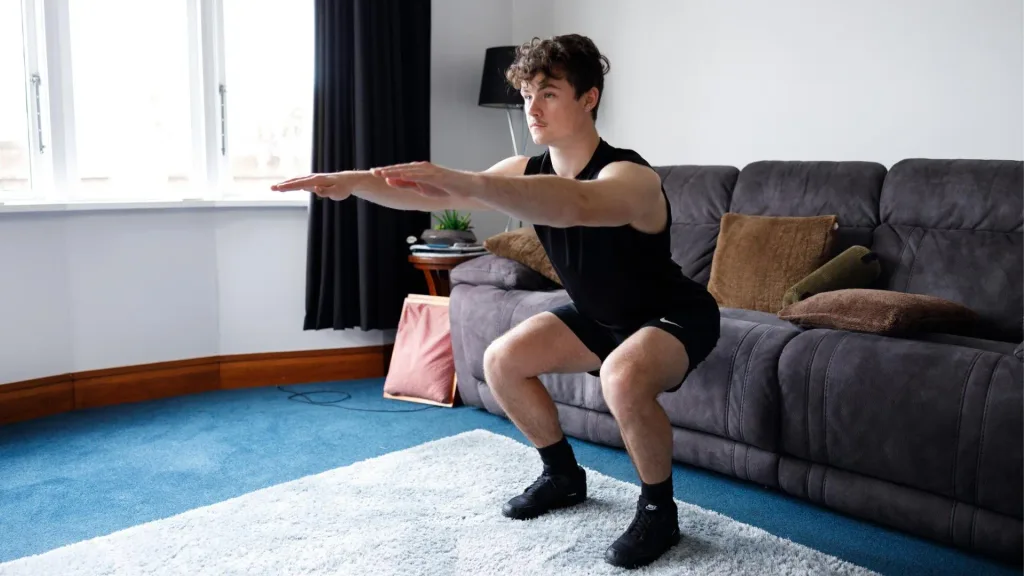
1. Bodyweight squats
Help strengthen the thighs, hips, and glutes. Beginners can squat to a sturdy chair for extra support.
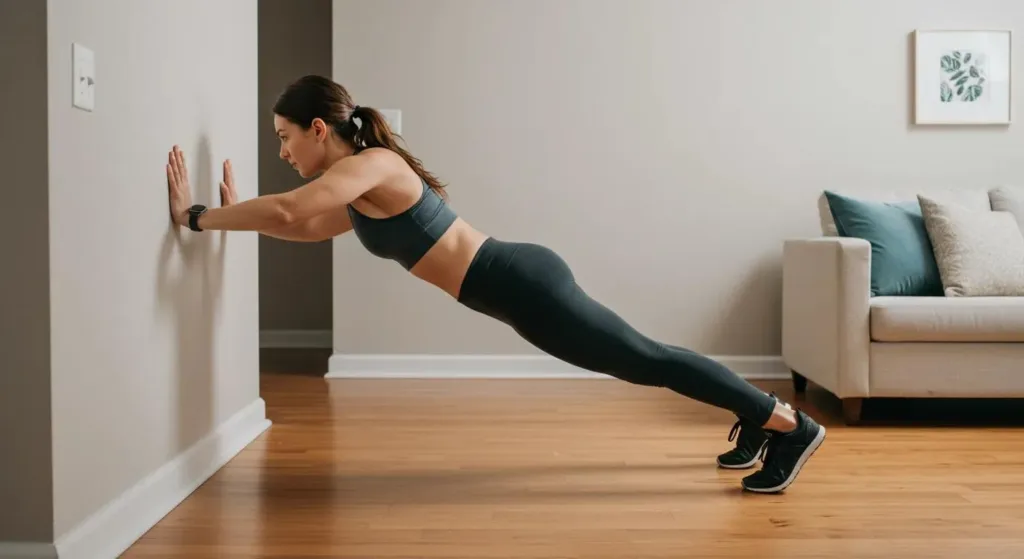
2. Wall push-ups
Work the chest, shoulders, and arms. Standing closer to the wall makes the movement easier.
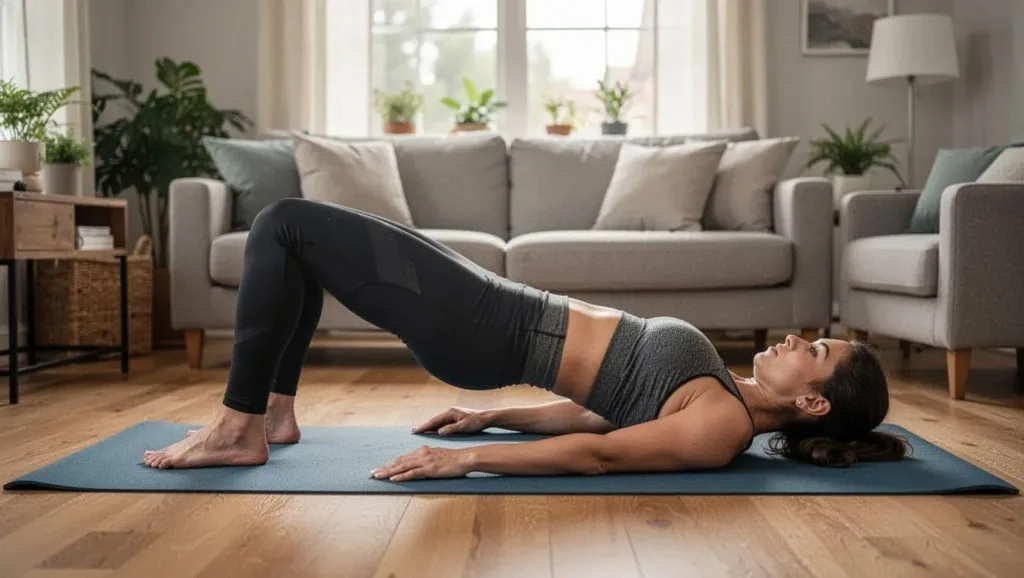
3. Glute bridges
Strengthen the glutes and help develop hip control. Perform them on a comfortable, stable surface.
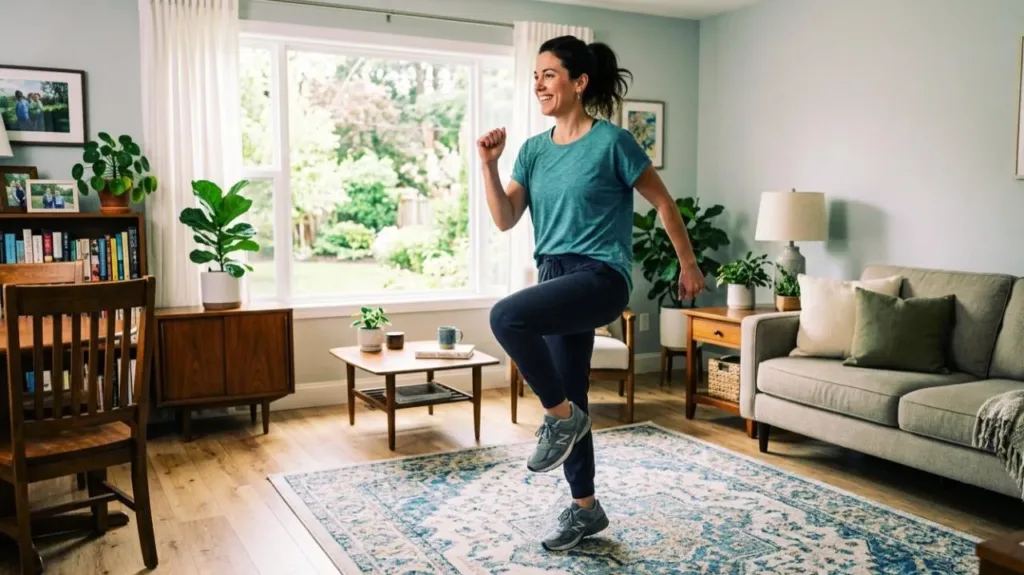
4. Standing marches
Raise your heart rate gently while practicing coordination and balance.
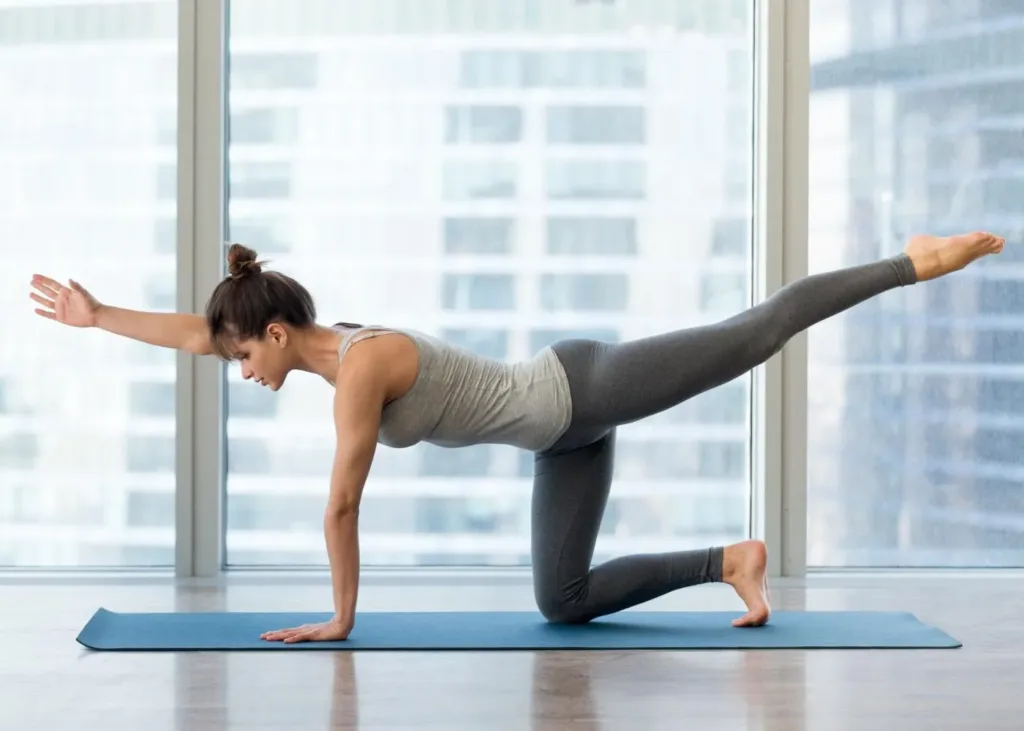
5. Bird dogs
Practice balance and strengthen the muscles around the trunk, back, and hips.
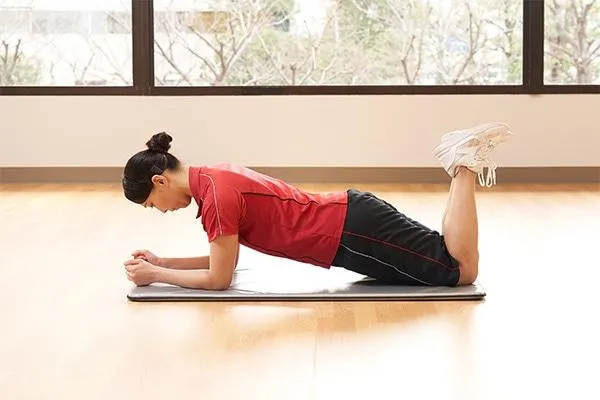
6. Planks or modified planks
Develop core strength and control. Beginners can start with a short knee-supported plank or a wall plank.
Choose variations that allow you to move comfortably and maintain control. You do not need to perform every exercise in your first session.
Start With a Warm-Up
A warm-up prepares your body for exercise by gradually increasing movement and activity.
Spend around 5–10 minutes performing gentle movements such as:
- Marching in place.
- Making small arm circles.
- Rolling your shoulders gently.
- Performing comfortable hip and ankle movements.
- Walking slowly around your room.
Start slowly and increase your movement gradually. Avoid forcing stretches or making sudden, uncomfortable movements.
Include Strength and Cardio Exercises
A balanced at-home exercise routine can include both strength training and cardiovascular activity.
Strength training uses resistance to challenge muscles. Bodyweight squats, wall push-ups, glute bridges, and bird dogs are accessible examples.
Cardiovascular exercise, often called cardio, involves sustained movement that challenges your heart and lungs. Walking, marching in place, and dancing are practical options for beginners.
You can combine both by completing a short strength circuit followed by gentle marching or walking.
Recovery matters, too. Allow time between challenging strength sessions, and take rest days when needed. The World Health Organization recommends that adults gradually work toward 150–300 minutes of moderate-intensity aerobic activity each week, alongside muscle-strengthening activities on at least two days. Beginners can build toward these guidelines at a comfortable pace.
Simple Weekly Home Workout Schedule for Beginners
A workout schedule for beginners should balance activity, strength training, and recovery.
The following example provides a manageable starting point:
| Day | Workout | Duration |
| Monday | Full-body beginner workout | 20 minutes |
| Tuesday | Walking or light cardio | 20–30 minutes |
| Wednesday | Rest or gentle stretching | 10–15 minutes |
| Thursday | Full-body beginner workout | 20 minutes |
| Friday | Walking or low-impact cardio | 20–30 minutes |
| Saturday | Light activity or mobility | 15–20 minutes |
| Sunday | Rest and recovery | — |
Adjust the schedule according to your energy, fitness level, and available time. If 20 minutes feels too challenging, begin with 5–10 minutes and build gradually.
You can also split activity into shorter sessions throughout the day.
Beginner-Friendly Full-Body Workout at Home
This no-equipment home workout combines simple strength movements with light cardio.
| Exercise | Repetitions or Duration |
| Bodyweight squats | 8–12 reps |
| Wall push-ups | 8–12 reps |
| Glute bridges | 10–12 reps |
| Marching in place | 30–60 seconds |
| Bird dogs | 6–8 reps per side |
How to Complete the Workout
- Begin with a 5–10-minute warm-up.
- Perform one comfortable round of the exercises.
- Rest between exercises whenever necessary.
- Move slowly and focus on controlled technique.
- Finish with a short cool-down and gentle stretching.
Start with fewer repetitions if needed. Once the workout feels manageable, gradually increase repetitions or add another round.
You do not need to increase difficulty every session. Progress can also mean moving more comfortably, improving control, or completing the routine more consistently.
Tips to Stay Consistent With Home Workouts
Building a fitness habit is often more challenging than completing a single workout. These beginner-friendly fitness tips can help:
- Set a regular workout time: Choose a time that fits your daily routine.
- Create a small exercise space: Clear enough room to move safely without hitting furniture.
- Wear suitable clothing and footwear: Choose comfortable clothing and stable footwear appropriate for your activity and surface.
- Track your workouts: Use a calendar or notebook to record sessions and notice improvements.
- Choose activities you enjoy: Walking, dancing, and simple strength exercises can all be part of your routine.
- Start small: A short workout is better than repeatedly postponing an overly ambitious one.
- Celebrate consistency: Recognize the effort you make, even when a session is shorter than planned.
Remember, building a lasting habit is more important than following a perfect schedule.
Common Home Workout Mistakes Beginners Should Avoid
A few common mistakes can make exercise unnecessarily difficult or uncomfortable.
- Skipping warm-ups: Begin with gentle movement before more demanding activity.
- Starting too intensely: Avoid copying advanced routines before developing a fitness foundation.
- Ignoring technique: Use controlled movements and choose easier variations when necessary.
- Exercising through pain: Stop if you experience sharp pain, dizziness, or unusual symptoms.
- Skipping recovery: Rest and lighter activity can help you manage fatigue.
- Expecting immediate results: Improvements in fitness develop over time and vary between individuals.
- Comparing yourself with others: Focus on your own starting point and progress.
If you have a medical condition, an injury, or another relevant health concern, consult a qualified healthcare professional before starting a new exercise program. Stop exercising and seek appropriate medical advice if you experience concerning symptoms.
Frequently Asked Questions
1. How many days a week should a beginner work out at home?
Two or three planned workout days per week can be a practical starting point, with light activity on other days as comfortable. Gradually increase activity as your fitness improves.
2. Can I build fitness at home without equipment?
Yes. Bodyweight exercises, walking, and other accessible activities can help improve strength and cardiovascular fitness without gym equipment.
3. How long should a beginner home workout last?
A beginner session might last 10–20 minutes, including a warm-up and cool-down. Start with a duration you can manage comfortably.
4. What is the best home workout for beginners?
A routine combining simple strength exercises, such as squats and wall push-ups, with gentle cardio is a practical option. The right routine depends on your abilities and goals.
5. Should beginners exercise every day?
Not necessarily. Beginners can combine planned workouts with light movement and recovery days. Allow time to recover after challenging sessions.
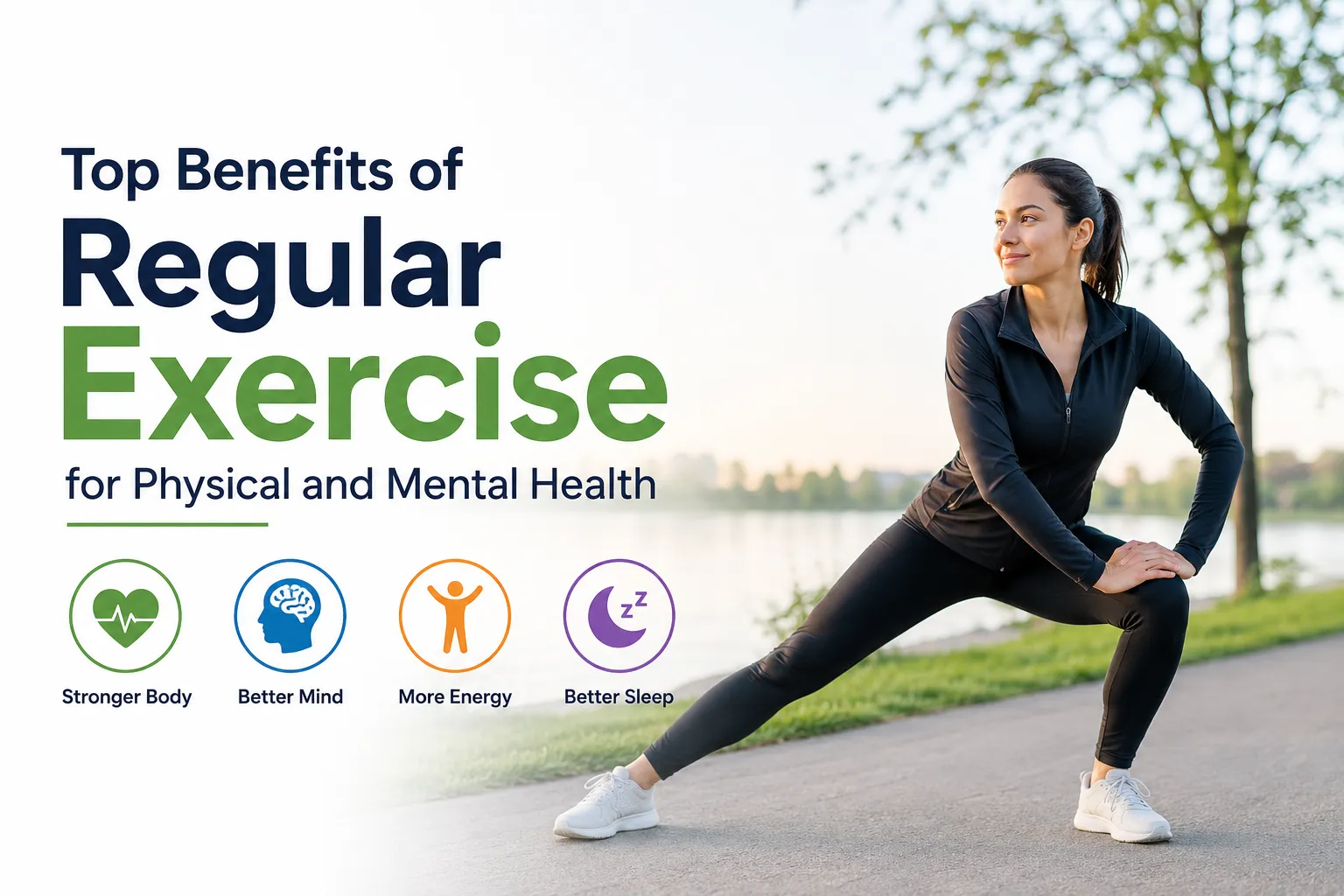
Also Read: Top Benefits of Regular Exercise for Physical and Mental Health
Conclusion
Learning how to build a beginner-friendly workout routine at home does not need to be complicated. With simple bodyweight exercises, gentle cardio, a realistic weekly schedule, and enough recovery, you can develop a sustainable fitness habit without an expensive gym membership.
Start with movements that feel manageable, increase your activity gradually, and pay attention to how your body responds.
You do not have to complete every workout perfectly or make rapid progress. Focus on showing up regularly, celebrating small improvements, and finding activities that fit your lifestyle.
Your first step can be as simple as setting aside 10 minutes today.