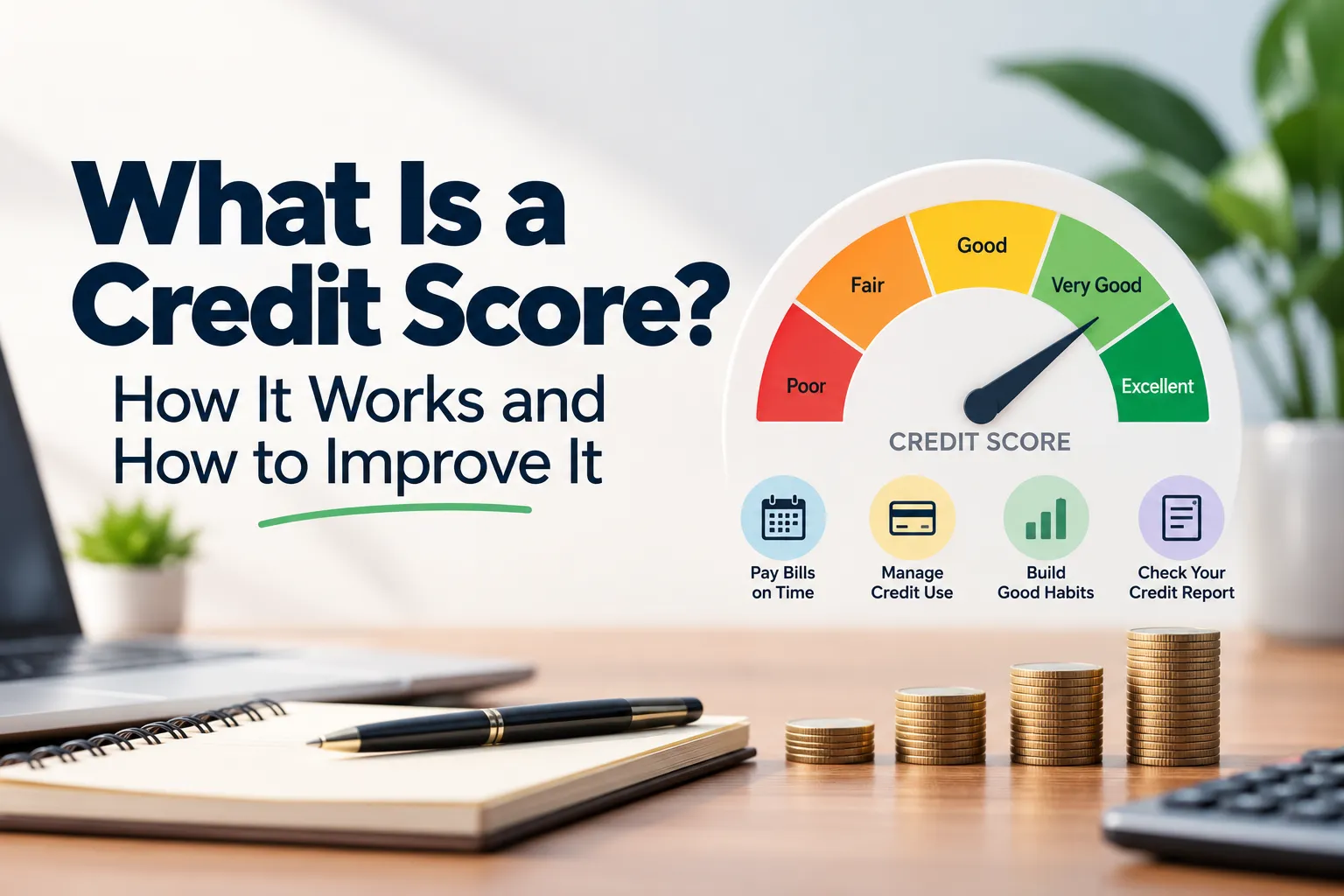
What is a credit score? In simple terms, a credit score is a number generated from information in your credit history to help represent how you have managed credit.
Credit scores can matter when you apply for a credit card, personal loan, mortgage, car finance, or another form of borrowing. Depending on the country and lender, credit information may also be relevant to other financial decisions.
Understanding your credit score can help you make more informed borrowing decisions and develop healthier personal finance habits.
It is important to remember that credit scoring systems are not universal. Different countries, credit bureaus, lenders, and scoring models can use different ranges and criteria.
What Is a Credit Score?
A credit score is a numerical summary generated using information from a person’s credit history. Scoring models analyze relevant information in a credit report and convert aspects of that information into a score.
Lenders may use credit scores as one part of their assessment when deciding whether to approve an application and what terms may be appropriate. A score is not necessarily the only factor considered.
A credit report, by contrast, is a more detailed record of credit-related information, such as accounts, payment history, balances, and inquiries, depending on the reporting system.
For example, if someone consistently pays their bills on time and manages credit responsibly, their credit profile may appear stronger than someone who frequently misses payments.
How Does a Credit Score Work?
The basic process can be explained in four steps:
- Credit activity is reported. Lenders and other eligible businesses may report relevant account information to credit reporting agencies or bureaus.
- Information is recorded. Reported information becomes part of your credit report.
- A scoring model analyzes the information. The model evaluates selected characteristics of your credit history.
- A score is produced. The resulting score may be used by lenders or other eligible businesses as part of their decision-making process.
Different scoring models can produce different scores for the same person because they may use different data, formulas, and versions. FICO, for example, identifies payment history, amounts owed, length of credit history, new credit, and credit mix as major categories in its scoring models.
What Is a Good Credit Score?
There is no single universal good credit score. Credit score ranges depend on the scoring model and country.
In general, a higher score within a particular scoring system indicates a stronger credit profile, but lenders can have their own eligibility requirements and may consider income, existing debts, employment, collateral, and other information.
| Credit Score Level | General Meaning |
| Poor | Higher perceived credit risk |
| Fair | Some credit limitations may apply |
| Good | Generally stronger credit profile |
| Very Good | Strong credit history |
| Excellent | Very strong credit profile |
Note: These labels are general descriptions rather than universal score ranges. The exact numerical ranges differ by scoring model and country.
What Factors Affect Your Credit Score?
Payment History
Payment history is an important factor in many credit scoring systems. Consistently making required payments on time can help demonstrate responsible credit management.
In the FICO model, payment history is the largest of its five major scoring categories. However, the relative importance of factors varies between scoring models and individual credit profiles.
Credit Utilization
Credit utilization is the amount of revolving credit you are using compared with your available credit limit.
For example, if you have a $1,000 credit limit and a $300 balance, your utilization is 30%.
Using a large proportion of available revolving credit can affect some credit scores. Lower utilization is generally viewed more favorably by many scoring models, although there is no universal percentage that guarantees a particular score.
Length of Credit History
The age and history of credit accounts can matter. Some scoring models consider how long accounts have existed, the age of your oldest account, and the average age of accounts.
A shorter credit history does not automatically mean you cannot have a good score, but people with limited credit histories may have less information available for scoring.
New Credit Applications
Applying for several new credit accounts within a short period can affect some credit scores. New applications may create hard inquiries, while opening new accounts can also change the age and composition of your credit profile.
The impact varies by scoring model and individual circumstances.
Credit Mix
Some scoring models consider the types of credit accounts in your history, such as revolving accounts and installment loans.
However, you should not borrow money unnecessarily just to create a credit mix. Taking on debt should be based on a genuine financial need and your ability to repay it. FICO specifically notes that consumers do not need one of every type of credit account.
How to Improve Your Credit Score
Pay Bills on Time
Make required payments by their due dates. Consider automatic payments, calendar reminders, or budgeting tools if they help you stay organized.
If you have missed payments, getting current and maintaining consistent payments can help establish better credit behavior over time.
Keep Credit Utilization Under Control
Avoid regularly using a large portion of your available revolving credit. Paying balances down can also support better debt management.
There is no magic utilization percentage that guarantees a higher score, so focus on sustainable spending and repayment rather than chasing a specific number.
Check Your Credit Report
Review your credit reports for incorrect account information, unfamiliar accounts, inaccurate payment information, or other potential errors.
If you find inaccurate information, follow the appropriate dispute process available in your country. The CFPB recommends reviewing credit reports regularly and disputing errors.
Avoid Applying for Unnecessary Credit
Only apply for credit when you have a genuine reason and understand the repayment terms. Multiple applications over a short period can affect some scoring models.
Keep Older Accounts Open When Appropriate
Closing an older credit account is not automatically beneficial. Depending on the account and scoring system, closing it may affect available credit, utilization, or the history associated with your credit profile.
Consider fees, account usefulness, and your broader financial situation before closing an account.
Pay Down Existing Debt Responsibly
Reducing outstanding balances can improve your overall financial position and may help certain credit-score factors, particularly those related to revolving balances.
However, paying down debt should be approached alongside a realistic budget and emergency savings plan.
How Long Does It Take to Improve a Credit Score?
Improving a credit score usually takes time. The timeline depends on why the score is low, how extensive the credit history is, and how quickly new information is reported.
For example, reducing a high revolving balance may be reflected after the lender reports updated information. By contrast, rebuilding a history affected by repeated late payments generally requires longer-term consistency.
There is no legitimate instant credit-score fix. Be cautious of companies that promise dramatic score increases for an upfront fee or claim they can permanently remove accurate negative information.
Common Credit Score Mistakes to Avoid
Avoid these common mistakes:
- Missing required payments
- Regularly maxing out credit cards
- Applying for many accounts at once without a need
- Ignoring your credit reports
- Closing accounts without considering the possible consequences
- Paying unnecessary fees for promises of instant score increases
- Taking on debt solely to improve your credit score
Credit Score vs. Credit Report
| Credit Score | Credit Report |
| Numerical representation | Detailed record of credit activity |
| Summarizes information using a scoring model | Contains account and payment information |
| Can change as reported information changes | Contains current and historical credit information |
| Generated using scoring models | Maintained by credit reporting agencies |
Think of the credit report as the underlying information and the credit score as a numerical summary produced from relevant information in that report.
Does Checking Your Credit Score Lower It?
Generally, checking your own credit information does not have the same effect as a lender making a hard credit inquiry.
A soft inquiry can occur when you check your own credit or when an existing creditor reviews your account. Soft inquiries generally do not affect your credit score.
A hard inquiry usually occurs when you apply for credit and a lender reviews your credit report as part of the application. Hard inquiries can affect some credit scores.
Rules vary by scoring model, and some models treat multiple inquiries for certain types of loan shopping as a single inquiry within a defined period.
Frequently Asked Questions
1. What is a credit score?
A credit score is a numerical summary generated from information in a credit report using a particular scoring model.
2. What is considered a good credit score?
A good credit score depends on the scoring model and country. Generally, stronger scores indicate a stronger credit profile within that particular system.
3. How can I improve my credit score quickly?
There is no guaranteed quick fix. Paying bills on time, managing revolving balances, checking for report errors, and avoiding unnecessary applications are sensible long-term practices.
4. Does paying credit cards on time improve your credit score?
Consistently making required payments on time can support a healthy payment history, which is an important factor in many scoring models.
5. Does checking your credit score lower it?
Checking your own credit score or credit report generally does not lower your score. A lender’s hard inquiry is different and may affect some scores.
Conclusion
A healthy credit profile is built through consistent behavior rather than quick fixes. Paying bills on time, keeping revolving balances manageable, monitoring your credit information, and borrowing only when appropriate can all support responsible credit management.
Remember that your credit score is only one part of your broader financial health. A higher score should never be the reason to take on debt you cannot comfortably afford.
Focus on sustainable personal finance habits, understand the credit system used in your country, and review your credit information regularly. Over time, responsible credit management can help you make better-informed borrowing decisions.
Financial Disclaimer
This article is for educational and informational purposes only and should not be considered personalized financial advice. Credit scoring systems, regulations, and lending practices can vary by country, lender, and scoring model. Readers should consult a qualified financial professional for advice based on their individual circumstances.