Starting a business can be exciting, but turning an idea into a sustainable business requires more than enthusiasm. You need to understand your customers, competitors, costs, marketing strategy, and goals. That is where a business plan can help.
A business plan is a written document that explains a business idea, target customers, products or services, marketing strategy, operations, and financial goals.
Learning how to write a business plan does not require an MBA or years of business experience. For beginners, the goal is simply to create a practical roadmap that helps turn an idea into clear, achievable steps.
Also Read: How to Start an Online Business: A Complete Beginner’s Guide
What Is a Business Plan?
A business plan describes what your business will do, who it will serve, how it will operate, and how it expects to make money.
Think of it as a roadmap for your business. It can help you:
- Set clear business goals
- Understand your target market
- Plan startup and operating costs
- Identify potential challenges
- Make better business decisions
- Explain your idea to investors or lenders
A business plan is not something you write once and forget. As your business learns more about customers and the market, you can update the plan.
Why Is a Business Plan Important?
Good business planning helps you think through important questions before committing significant time or money.
A business plan can:
- Provide direction: It turns a broad idea into specific actions.
- Identify risks: Research may reveal problems before they become expensive mistakes.
- Clarify goals: You can define what success should look like.
- Estimate startup costs: You can identify the money needed to launch.
- Support financial planning: Revenue, expenses, cash flow, and break-even targets become easier to understand.
- Support fundraising: Investors and lenders may want detailed information about the business before providing funding.
How to Write a Business Plan Step by Step
Here are the essential steps to write a business plan for beginners.
Step 1: Write an Executive Summary
The executive summary provides a quick overview of your business.
Include:
- Business name
- Business idea
- Main products or services
- Target market
- Major goals
- Basic financial expectations
Although this section comes first, many entrepreneurs find it easier to write it after completing the rest of the business plan. You will then have a clearer understanding of what to summarize.
Step 2: Describe Your Business
Explain what your business does and why it exists.
Cover:
- The problem your business solves
- Products or services
- Business structure
- Location or operating model
- Short-term goals
- Long-term goals
For example, instead of saying, “I want to sell food online,” explain the specific problem and customer: “We deliver affordable, healthy weekday lunches to busy office workers.”
Step 3: Research Your Target Market
Market research helps you understand whether people actually need or want what you plan to sell.
Research:
- Target customers
- Customer needs and problems
- Potential market size
- Industry trends
- Customer buying behavior
For example, a freelance graphic designer might target small companies that need affordable branding but cannot justify hiring a full-time designer.
The more specifically you define your customer, the easier it becomes to develop your product, pricing, and marketing.
Step 4: Analyze Your Competition
Identify businesses offering similar products or solving similar customer problems.
Compare their:
- Products or services
- Prices
- Strengths
- Weaknesses
- Marketing methods
The goal is not to copy competitors. Instead, look for opportunities to differentiate your business.
Perhaps competitors are expensive, have poor customer service, offer limited delivery options, or serve a different customer segment. These observations can help you develop a clearer value proposition.
Step 5: Explain Your Products or Services
Describe exactly what you sell and why customers should care.
Include:
- Products or services
- Customer benefits
- Pricing
- Unique selling proposition (USP)
- Possible future products or services
Focus on benefits rather than simply listing features. Customers generally want to know how your offering solves a problem or improves their situation.
Step 6: Create a Marketing and Sales Plan
Your marketing plan explains how potential customers will discover your business. Your sales plan explains how interested prospects will become paying customers.
Possible marketing channels include:
- Business website
- Social media
- Search engine optimization (SEO)
- Email marketing
- Paid advertising
- Customer referrals
- Local marketing
For example, a local bakery might use Google Search, Instagram, neighborhood promotions, and customer referrals to attract customers.
Start with channels that match your audience rather than trying to use every platform.
Step 7: Create an Operations Plan
The operations plan explains how the business will function day to day.
Consider:
- Business location
- Equipment
- Suppliers
- Employees or contractors
- Technology
- Inventory
- Daily processes
A small online store, for example, may need a website, payment processor, inventory system, packaging supplies, delivery partners, and a process for handling returns.
Step 8: Create a Financial Plan
Financial planning is one of the most important parts of a startup business plan because it helps you understand whether your idea can work financially.
Include:
- Startup costs: Money required to launch, such as equipment, registration, inventory, or website development.
- Revenue projections: Your estimated sales over a specific period.
- Operating expenses: Ongoing costs such as rent, software, salaries, utilities, and advertising.
- Profit and loss estimates: A projection of revenue minus expenses.
- Cash flow: Money coming into and leaving the business.
- Break-even point: The level of sales at which revenue covers costs.
Base your estimates on realistic research rather than simply choosing numbers that make the business look attractive.
Step 9: Set Realistic Business Goals
Turn your overall vision into measurable goals.
Examples include:
- Reach a specific monthly revenue target
- Acquire a certain number of customers
- Achieve a monthly sales target
- Increase website traffic
- Launch a second product
- Expand into another location
Instead of writing “grow the business quickly,” write a measurable objective such as “reach 100 paying customers within the first six months.”
Simple Business Plan Structure
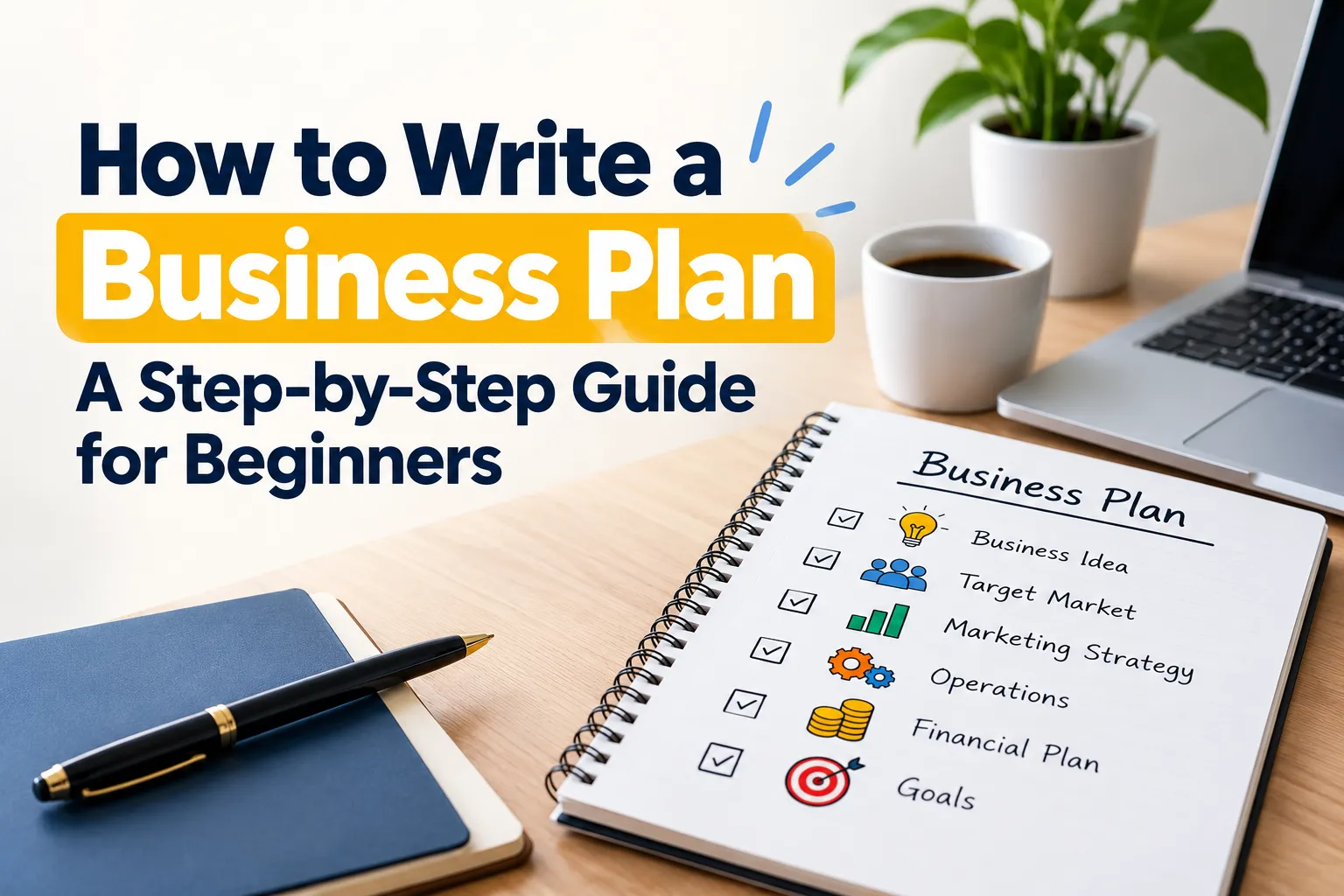
| Business Plan Section | What to Include |
| Executive Summary | Business idea and goals |
| Company Description | What the business does |
| Market Analysis | Customers and industry |
| Competitor Analysis | Main competitors |
| Products/Services | What you sell |
| Marketing Plan | How you attract customers |
| Operations Plan | How the business operates |
| Financial Plan | Costs, revenue, and profits |
| Goals | Short-term and long-term objectives |
This structure can also serve as a simple business plan template when you are creating your first plan.
Also Read: How Small Businesses Can Increase Profits
Common Business Plan Mistakes to Avoid
Making unrealistic financial projections
Avoid assuming sales will grow rapidly without evidence. Base forecasts on market research, pricing, capacity, and reasonable assumptions.
Ignoring competitors
Even if your idea feels unique, customers probably have alternatives. Research what they currently use.
Not researching customers
Do not build your plan entirely around what you think customers want. Talk to potential customers, study existing demand, and test assumptions.
Using complicated language
A good business plan should be easy to understand. Clear writing is more useful than impressive-sounding jargon.
Setting vague goals
“Become successful” is not a measurable goal. Define specific targets and deadlines.
Underestimating startup costs
List one-time expenses and recurring expenses separately. Consider leaving room for unexpected costs.
Creating a plan but never reviewing it
Markets, customers, prices, and business priorities change. Review your plan periodically and update important assumptions.
Copying another company’s business plan
Business plan examples can help you understand structure, but your plan should be based on your own customers, market, costs, and strategy.
Business Plan Example for Beginners
Example: Local Healthy Meal Delivery Business
Imagine an entrepreneur wants to deliver healthy, affordable meals to busy professionals.
- Business idea: Pre-prepared weekday lunches delivered locally.
- Target customers: Office workers who want convenient meals.
- Competitors: Local restaurants, meal-prep companies, and food-delivery services.
- Marketing strategy: Local SEO, social media, office partnerships, referrals, and introductory offers.
- Startup costs: Kitchen equipment, packaging, initial ingredients, website, permits, and marketing.
- Revenue model: Customers pay per meal or through weekly meal packages.
- First-year goal: Build a stable base of recurring customers and reach sustainable monthly sales.
This simple example demonstrates how a business idea can be converted into a practical startup business plan.
How Long Should a Business Plan Be?
There is no universal required length.
A simple small business plan may only need a few pages if it clearly covers the important questions. A plan prepared for investors or lenders may require more detailed market research, financial projections, assumptions, and supporting information.
Focus on usefulness rather than page count.
Frequently Asked Questions
1. What is a business plan?
A business plan is a written roadmap describing a business’s idea, customers, products or services, market, operations, marketing strategy, finances, and goals.
2. How do I write a business plan for the first time?
Start with the business idea and target customers. Then research the market and competitors, describe your offering, plan marketing and operations, estimate finances, and set measurable goals.
3. What are the 7 main parts of a business plan?
Common sections include the executive summary, company description, market analysis, products or services, marketing and sales plan, operations plan, and financial plan. Some plans also include competitor analysis and goals as separate sections.
4. How long should a business plan be?
It can be as short or detailed as necessary. A straightforward plan for a small business can be relatively short, while plans for investors or lenders may need substantially more detail.
5. Can I create a business plan without an MBA?
Yes. You do not need an MBA to create a useful business plan. You need accurate research, realistic assumptions, clear goals, and a willingness to learn.
Conclusion
Learning how to write a business plan does not have to be complicated. You do not need perfect forecasts or advanced business knowledge to create a useful first version.
Start by explaining your idea, identifying your customers, researching competitors, planning how you will reach buyers, and estimating your costs and revenue. Then turn those findings into measurable goals.
A good business plan helps you move from “I have an idea” to “Here is how I intend to build it.” Start with a simple version, learn from the market, and improve the plan as your business develops.