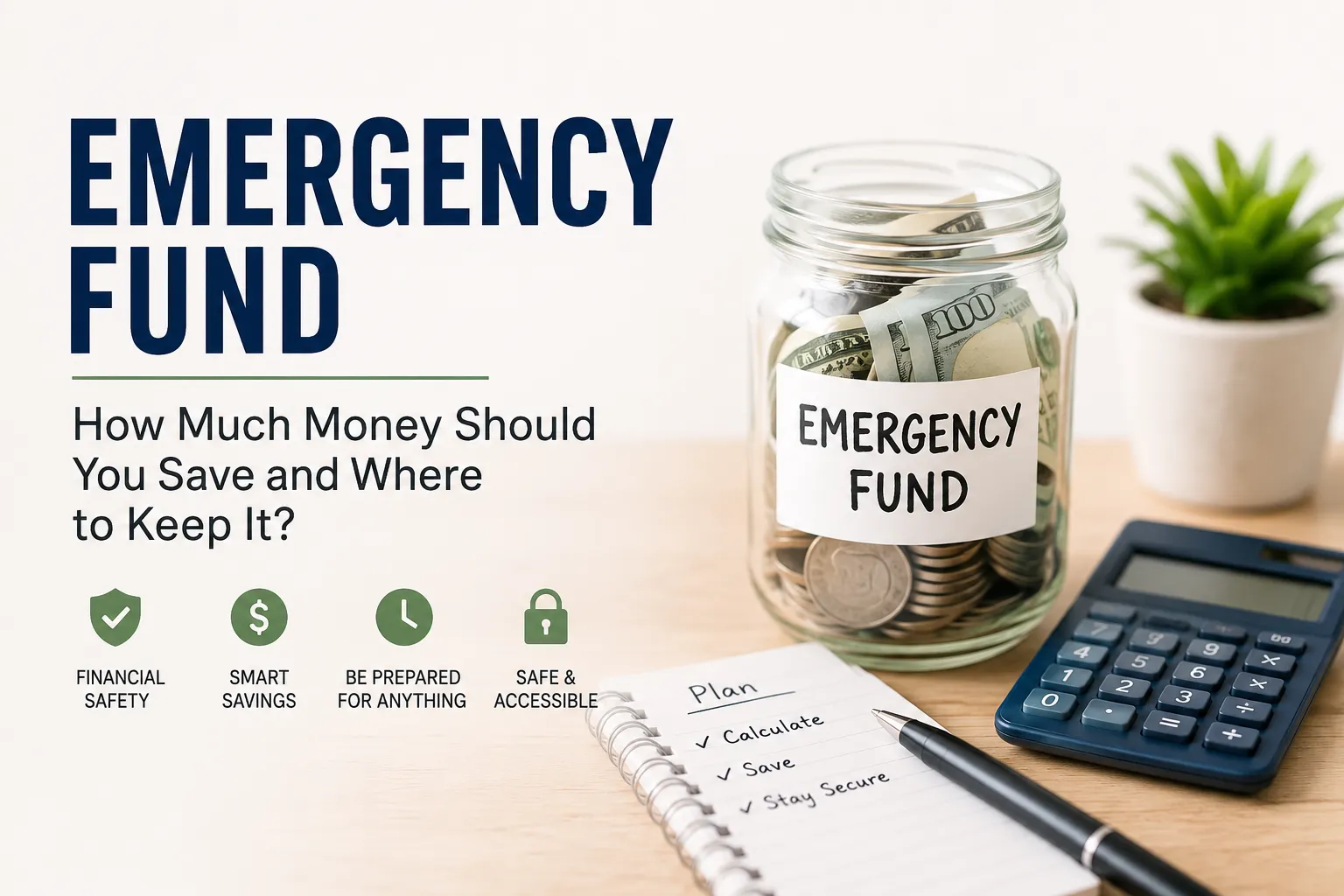
An unexpected car repair, medical bill, home repair, job loss, or urgent family expense can quickly become a financial crisis when you have no savings available.
An emergency fund is one of the basic building blocks of personal finance because it gives you a financial safety net when something goes wrong. Without savings, people may have to rely on credit cards, loans, or retirement investments to cover an unexpected bill. Even a small emergency fund can provide valuable breathing room.
This guide explains how much emergency savings you may need, how to calculate your target, where to keep the money, and practical ways to build an emergency fund from scratch.
What Is an Emergency Fund?
An emergency fund is money set aside specifically for unexpected and necessary expenses or financial emergencies.
It should generally be separate from everyday spending and long-term investments. The purpose is not to maximize investment returns; it is to make sure money is available when you genuinely need it.
Examples of genuine emergencies
- Unexpected medical expenses
- Essential home repairs
- Urgent car repairs
- Job loss or loss of income
- Essential travel because of a family emergency
Expenses that usually do not qualify include vacations, entertainment, shopping, planned purchases, and regular monthly bills you already expected.
How Much Money Should You Save in an Emergency Fund?
A common guideline is to build an emergency fund covering around 3–6 months of essential living expenses. The right amount depends on your income, responsibilities, job stability, debt, and access to other financial support.
3-Month Emergency Fund
A 3 month emergency fund may be a reasonable target for someone with stable employment, predictable income, relatively low financial obligations, and good access to other resources.
6-Month Emergency Fund
A 6 month emergency fund may make more sense for freelancers, self-employed workers, single-income households, people with dependents, or anyone whose income is less predictable. People facing higher financial uncertainty may choose to keep an even larger buffer.
Emergency Fund Example
If your essential expenses are $2,000 per month:
- 3 months = $6,000
- 6 months = $12,000
Replace these figures with your own essential expenses and local currency.
How to Calculate Your Emergency Fund
A simple emergency fund calculator can use this formula:
Emergency Fund Target = Essential Monthly Expenses × Number of Months
Include expenses such as:
- Housing
- Utilities
- Groceries
- Insurance
- Transportation
- Essential healthcare
- Minimum debt payments
- Necessary childcare
You can generally exclude discretionary spending such as dining out, entertainment, luxury shopping, vacations, and non-essential subscriptions.
| Essential Monthly Expense | 3 Months | 6 Months |
| $1,500 | $4,500 | $9,000 |
| $2,000 | $6,000 | $12,000 |
| $3,000 | $9,000 | $18,000 |
These are examples, not personalized financial recommendations.
Where Should You Keep Your Emergency Fund?
When deciding where to keep your emergency fund, prioritize:
- Safety
- Easy access
- Liquidity
- Low risk
Your emergency savings should be available without exposing the money to large market swings or unnecessary withdrawal restrictions. The Consumer Financial Protection Bureau recommends keeping emergency money somewhere safe, accessible, and separate enough that you are not tempted to spend it casually.
High-Yield Savings Account
A high-yield savings account can be useful because it combines relatively easy access with the potential to earn more interest than some traditional savings accounts.
Interest rates and account terms vary, however, so compare current terms, fees, access rules, and applicable deposit-protection arrangements in your country.
Regular Savings Account
A regular savings account can also work well, particularly when simplicity and accessibility are more important than maximizing interest.
Money Market Account or Similar Cash Account
A money market account or comparable cash account may offer liquidity while potentially earning interest. Availability, withdrawal rules, protections, and tax treatment vary by country and financial institution.
The key principle is simple: your emergency fund should be dependable when you need it, not optimized for maximum returns.
Where NOT to Keep Your Emergency Fund
Emergency savings generally should not be placed entirely in assets that can fluctuate significantly or become difficult to access quickly.
Be cautious about using:
- Individual stocks
- Highly volatile investments
- Cryptocurrency
- Long-term investments
- Assets with significant withdrawal restrictions
The purpose of emergency savings is stability and accessibility, not maximum investment growth.
How to Build an Emergency Fund From Scratch
Step 1: Set a Small Initial Goal
Don’t let a six-month target discourage you. Start with a realistic milestone, such as $500, $1,000, or one month of essential expenses. Fidelity currently suggests starting with $1,000 and then continuing toward 3–6 months of essential expenses.
Step 2: Calculate Your Monthly Essential Expenses
Review your budget and identify the minimum amount you would need to keep your household running.
Step 3: Automate Savings
Set up an automatic transfer shortly after receiving your income. Automation turns saving money for emergencies into a routine rather than a decision you have to make every month.
Step 4: Save Windfalls
Consider directing part of bonuses, tax refunds, gifts, freelance income, or other unexpected money toward your emergency savings.
Step 5: Reduce One or Two Expenses
Look for realistic savings rather than extreme budgeting. Redirecting a small recurring expense can make a meaningful difference over time.
If you are also working on your monthly spending plan, our guide to How to Create a Monthly Budget and Save Money Effectively can help you build a budget that supports your emergency savings goal.
Step 6: Increase the Fund Gradually
Building an emergency fund can take months or even longer. Consistency matters more than speed.
Emergency Fund vs Savings vs Investments
| Financial Goal | Main Purpose | Accessibility | Risk Level |
| Emergency Fund | Unexpected expenses | High | Low |
| Short-Term Savings | Planned purchases | High | Low |
| Investments | Long-term growth | Usually lower | Varies |
Emergency savings and short-term savings are both forms of saving, but they serve different goals. Investments are generally designed for longer-term growth and can fluctuate in value.
If you’re unsure how savings and investments fit together, read Difference Between Saving and Investing: Which Is Better for Your Financial Goals?.
Should You Build an Emergency Fund Before Investing?
For many people, emergency savings provide an important financial foundation before taking significant investment risk. You generally should not invest money you may need immediately for an emergency.
However, the right order depends on your circumstances. High-interest debt may also deserve priority because its cost can make it harder to build savings. A balanced approach might involve creating a small cash buffer while addressing expensive debt, then increasing emergency savings over time.
How to Build an Emergency Fund on a Low Income
You do not need a high income to start.
Try to:
- Start with a small amount
- Automate even modest contributions
- Save unexpected income when possible
- Review recurring expenses
- Avoid comparing your progress with other people
- Increase contributions when your income rises
Even a small emergency fund is generally more useful than having no emergency savings at all. The CFPB notes that putting aside even a small amount can provide some financial security.
Common Emergency Fund Mistakes
Avoid these common problems:
- Saving too little and never increasing the target
- Keeping emergency savings in risky investments
- Mixing emergency money with everyday spending
- Using the fund for non-emergencies
- Setting an unrealistic target
- Stopping contributions after reaching the first milestone
- Forgetting to rebuild the fund after using it
How to Rebuild Your Emergency Fund After Using It
Using an emergency fund is not a failure. That’s exactly what the money is there for.
After the emergency:
- Check how much remains.
- Temporarily redirect extra savings toward rebuilding it.
- Review what caused the expense.
- Consider whether your target should be larger in the future.
- Resume normal long-term saving once the emergency reserve is restored.
The CFPB specifically recommends rebuilding emergency savings after you have used it.
Frequently Asked Questions
1. How much should I have in an emergency fund?
A common guideline is 3–6 months of essential expenses. Your target may be lower or higher depending on income stability, dependents, debt, and other financial circumstances.
2. Is $1,000 enough for an emergency fund?
It can be a useful starter goal, but $1,000 may not cover several months of essential expenses. Treat it as an initial milestone rather than a universal final target.
3. Should my emergency fund cover 3 or 6 months?
Three months may suit someone with stable income and fewer obligations. Six months or more may provide a stronger buffer for freelancers, single-income households, families, or people with uncertain income.
4. Where is the safest place to keep an emergency fund?
Look for a low-risk, accessible savings or cash account offered by a reputable financial institution. Check your country’s deposit-protection rules and the institution’s current terms.
5. Should I invest my emergency fund?
Generally, emergency money belongs in low-risk, accessible accounts rather than volatile investments because you may need the money when markets are down.
6. How long does it take to build an emergency fund?
There is no universal timeline. It depends on your income, essential expenses, savings rate, and starting balance. Consistent contributions can gradually build the fund.
7. Can I build an emergency fund on a low income?
Yes. Start small, automate what you can, save windfalls when possible, and increase contributions as your income improves.