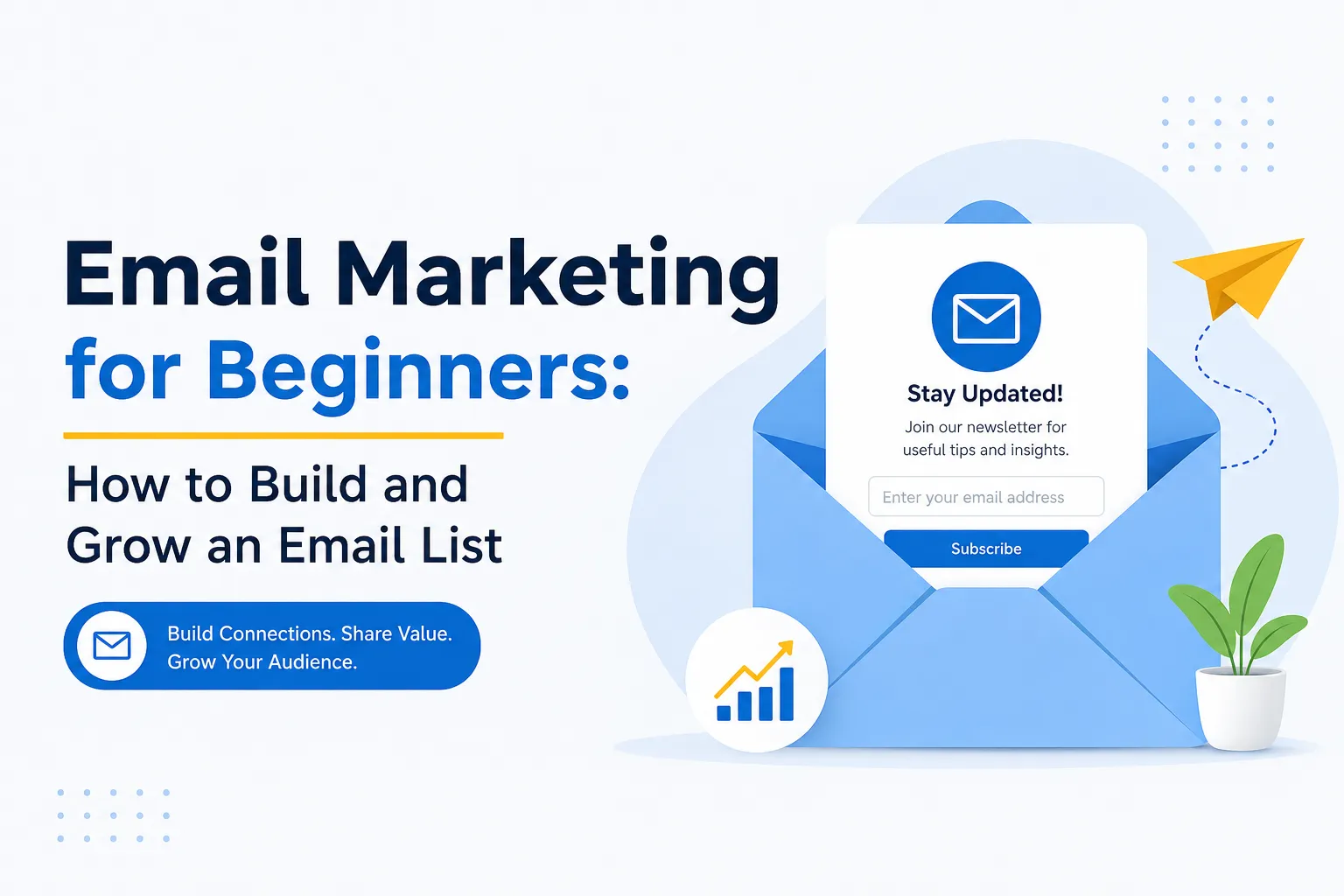
Email marketing is one of the simplest ways to build a direct relationship with an online audience. Bloggers, creators, educators, freelancers, and small businesses can use email to share useful information, promote content, announce updates, and stay connected with people who have chosen to hear from them.
For beginners, the goal is not to collect as many email addresses as possible. It is to attract the right subscribers and provide enough value that they want to remain subscribed.
In this guide to Email Marketing for Beginners, you will learn what email marketing is, why it matters, how to build an email list from scratch, practical ways to grow it, and common mistakes to avoid.
What Is Email Marketing?
Email marketing is the practice of communicating with people who have voluntarily subscribed to receive emails from a business, creator, organization, or individual.
These messages can include email newsletters, educational content, promotions, product updates, event announcements, and welcome emails.
For example, a freelance designer might offer a free branding checklist in exchange for an email address. After someone subscribes, the designer could send a welcome message followed by helpful design tips and occasional information about their services.
The important distinction is permission. Useful email marketing provides relevant content to people who have opted in. Sending unwanted messages repeatedly can become spam and damage both trust and your reputation.
Why Is Email Marketing Important?
Email gives you a direct communication channel with people who have expressed interest in your topic, business, or content.
Some key benefits of email marketing include:
- Direct communication: You can communicate with subscribers without depending entirely on social media algorithms.
- Relationship building: Regularly useful emails can help you develop familiarity and trust.
- Content distribution: An email newsletter can bring readers back to your blog, website, or educational resources.
- Product and service promotion: Businesses can introduce relevant offers to an audience that has already shown interest.
- Brand trust: Helpful, consistent communication can establish credibility over time.
- Repeat engagement: Subscribers can become a returning audience for new content, products, events, or resources.
Email marketing does not guarantee sales or growth. Its value comes from consistently serving an audience with relevant information.
How to Build an Email List From Scratch
If you are wondering how to build an email list, start with a simple system rather than trying every marketing technique at once.
Choose Your Target Audience
First, decide who you want to reach.
Ask yourself:
- Who would benefit most from my content or service?
- What problems are they trying to solve?
- What information would they find useful?
For example, a beginner-focused fitness blogger might target people who want simple home workouts rather than trying to appeal to everyone interested in fitness.
A specific audience makes your content, lead magnet, and signup messages much easier to create.
Create a Valuable Lead Magnet
A lead magnet is a useful free resource offered in exchange for someone’s permission to join your email list.
Examples include:
- Free ebook
- Checklist
- Beginner’s guide
- Template
- Worksheet
- Educational PDF
- Resource list
The best lead magnet solves a small but meaningful problem for your target audience.
For example, a photography blogger could offer a “Beginner’s Camera Settings Cheat Sheet.” Someone interested in improving their photography has a clear reason to subscribe.
Add an Email Signup Form
Place a signup form where interested visitors are likely to see it, such as:
- Your website homepage
- Relevant blog posts
- Sidebar
- Dedicated landing pages
- Resource pages
Tell visitors what they will receive and, where appropriate, how frequently you expect to email them. Avoid vague messages such as “Subscribe now” when you can explain the actual benefit.
Use a Clear Call to Action
Your CTA should tell visitors exactly what happens next.
Examples include:
- Get the Free Guide
- Join Our Free Newsletter
- Receive Weekly Tips
A specific CTA is generally more useful than a generic “Submit” button.
How to Grow Your Email List
Once your signup system is working, focus on how to grow an email list through useful content and ethical promotion.
Effective email list building methods include:
- Publish helpful blog posts that attract your target audience.
- Promote your newsletter through relevant social media channels.
- Offer genuinely useful lead magnets.
- Add signup forms to relevant website pages.
- Create dedicated landing pages for specific resources.
- Encourage subscribers to share useful content with people who may benefit.
- Send valuable emails consistently so subscribers have a reason to stay.
Avoid buying email lists. Purchased addresses may not represent people who want your content, and contacting people without appropriate permission can create privacy, deliverability, and compliance problems.
Organic growth may take longer, but subscribers who genuinely choose to join are usually a stronger foundation for an email marketing strategy.
What Should You Send to Your Email Subscribers?
Beginners often wonder what they should actually put in their emails. A good starting point is to mix education, useful resources, updates, and occasional promotions.
| Email Type | Purpose | Example |
| Welcome Email | Introduce your brand | Welcome message |
| Newsletter | Share useful information | Weekly tips |
| Educational Email | Teach something | How-to guide |
| Promotional Email | Promote an offer | Product discount |
| Update Email | Share news | New content or feature |
Your emails do not need to sell something every time. In many cases, providing useful information consistently is a better way to build a relationship than making every message promotional.
Simple Email Marketing Strategy for Beginners
A beginner-friendly email marketing strategy can be built around seven steps:
- Choose a specific audience. Know who you are trying to help.
- Create a useful free resource. Make a lead magnet that solves a relevant problem.
- Set up a signup form. Make subscribing simple and explain what people will receive.
- Send a welcome email. Thank new subscribers and deliver the promised resource.
- Provide useful content regularly. Share practical advice, educational material, or relevant resources.
- Track basic performance. Pay attention to metrics such as opens, clicks, unsubscribes, and conversions where appropriate.
- Improve over time. Use what you learn to improve your topics, subject lines, CTAs, and overall approach.
You do not need a complicated funnel to begin. A clear audience, useful resource, signup form, and consistent content are enough to establish the foundation.
Common Email Marketing Mistakes to Avoid
Several mistakes can weaken an email marketing strategy:
- Buying email lists: Purchased contacts may not have given appropriate permission and may not be interested in your content.
- Sending too frequently: Excessive emails can annoy subscribers and increase unsubscribes.
- Sending only promotions: Constant selling provides little reason for subscribers to stay engaged.
- Using misleading subject lines: Clickbait can damage trust.
- Ignoring mobile readers: Many people read emails on phones, so messages should be easy to read on smaller screens.
- Making emails unnecessarily long: Respect your readers’ time and keep each message focused.
- Hiding the unsubscribe option: Subscribers should have a straightforward way to leave your list.
- Ignoring privacy and applicable laws: Follow relevant email, privacy, and consent requirements for the locations and audiences you serve.
Email Marketing Tips for Beginners
Use these practical email marketing tips as you build your system:
- Keep subject lines clear and relevant.
- Write for one specific audience rather than everyone.
- Make emails easy to scan with short paragraphs and useful headings.
- Use simple, conversational language.
- Provide value consistently.
- Test different subject lines or CTAs when your audience and email platform support testing.
- Give each email one clear primary action when possible.
- Make your emails readable on mobile devices.
- Monitor basic performance metrics and look for meaningful trends.
- Respect subscriber preferences and make opting out straightforward.
Frequently Asked Questions
1. What is email marketing for beginners?
Email marketing for beginners means learning how to communicate with people who have voluntarily subscribed to receive relevant messages. It includes list building, creating useful content, sending emails, and measuring performance.
2. How do I start building an email list?
Choose a target audience, create a useful lead magnet, add an email signup form to your website, and invite relevant visitors to subscribe.
3. How can I grow my email subscribers?
Publish useful content, promote your newsletter, create relevant lead magnets, use dedicated landing pages, and consistently give subscribers a reason to remain on your list.
4. Is email marketing free?
You can start with free or low-cost email marketing tools, although many platforms charge as your subscriber count or feature requirements increase. Costs vary by provider and plan.
5. How often should I send emails?
There is no universal schedule. Choose a frequency you can maintain while providing useful content. Weekly, biweekly, or another consistent schedule can work depending on your audience and purpose.
6. What should I include in my first email?
Thank subscribers for joining, introduce yourself or your organization, deliver the promised lead magnet if applicable, explain what they can expect, and provide one useful next step.
7. Can I buy an email list?
Generally, no. Buying lists is a poor strategy because the people on them may not have agreed to receive your emails. It can also create compliance and deliverability problems.
8. What is a lead magnet?
A lead magnet is a useful free resource offered to potential subscribers in exchange for their permission to join an email list.
Conclusion
Email Marketing for Beginners does not have to be complicated. The foundation is simple: understand your audience, offer something genuinely useful, make subscribing easy, and consistently provide valuable content.
Building an email list takes time. A smaller group of engaged, relevant subscribers can be more useful than a large list filled with people who never wanted your emails in the first place.
If you are starting from scratch, keep your first goal simple: create one useful lead magnet and add one clear signup form to your website. Then welcome your first subscribers and focus on earning their trust one helpful email at a time.