Publishing content regularly does not automatically mean you have a content marketing strategy. You can publish blog posts, social media updates, videos, and emails every week, but without a clear purpose, your efforts may feel disconnected.
A content marketing strategy gives your content direction. It helps you understand who you want to reach, what problems you can help solve, and what results you want your content to support.
The good news is that beginners do not need a complicated system. In this guide, you will learn how to create a content marketing strategy step by step, from setting goals and understanding your audience to planning, publishing, promoting, and measuring your content.
What Is a Content Marketing Strategy?
A content marketing strategy is a plan for creating, publishing, promoting, and measuring content that helps you reach a specific audience and support your business or marketing goals.
A simple content marketing plan should answer:
- Who do you want to reach?
- What content will you create?
- Which problems or questions will the content address?
- Where will you publish it?
- How will you promote it?
- How will you measure results?
In other words, a content strategy helps you create content with a purpose instead of publishing random ideas whenever inspiration appears.
Why Do You Need a Content Marketing Strategy?
A clear content strategy for business can make your marketing more focused and easier to manage.
Some of the main benefits include:
- Clearer marketing direction
- A better understanding of your target audience
- More consistent content
- Improved efficiency when planning and creating content
- Opportunities to build brand authority over time
- Better long-term insight into what content performs well
Content marketing usually requires time and consistency. A strategy will not guarantee immediate traffic, leads, or sales, but it can help you make more informed decisions and build a stronger foundation over time.
How to Create a Content Marketing Strategy: Step-by-Step
Step 1: Define Your Goals
Before choosing topics or creating content, decide what you want your content marketing efforts to support.
Common content marketing goals include:
- Brand awareness
- Website traffic
- Lead generation
- Customer education
- Email subscribers
- Sales support
- Building authority in your industry
Try to make your goals measurable and realistic.
For example, instead of saying, “I want more website traffic,” you could aim to “increase relevant organic website visits over the next six months.”
A local accounting firm might focus on educating potential clients about tax-related topics. A new software startup might focus on building brand awareness. A freelancer may use helpful articles to demonstrate expertise and support potential client inquiries.
Your goals should guide the rest of your content marketing process.
Step 2: Identify Your Target Audience
You cannot create useful content if you do not understand who it is for.
Start by identifying:
- Who your audience is
- What problems they face
- What questions they ask
- What goals they have
- Where they consume content online
You can create a simple audience persona to organize your thinking.
Example:
Audience: New small business owner
Challenge: Limited marketing knowledge and budget
Goal: Find affordable ways to attract potential customers
Content interests: Beginner guides, checklists, practical examples, and marketing tips
You do not need an extremely detailed persona when starting. Focus on understanding the problems your audience wants to solve.
Step 3: Research Topics and Search Intent
Once you understand your audience, start looking for topics that are relevant to their needs.
Beginners can find content ideas from:
- Customer questions
- Google searches
- Keyword research
- Industry forums and communities
- Competitor content
- Frequently asked questions
When researching topics, think about search intent—the reason behind a person’s search.
For example:
- Informational intent: “How does content marketing work?”
- Commercial intent: “Best content marketing tools for small businesses”
Informational content helps people learn. Commercial content often helps people evaluate products, services, or solutions.
A balanced digital content strategy can include both, depending on your audience and business goals.
Step 4: Choose Your Content Formats
Content can take many forms, including:
- Blog posts
- Videos
- Social media posts
- Email newsletters
- Case studies
- Infographics
- Guides
- Checklists
You do not need to use every format.
For a beginner, it is often better to start with one or two formats you can create consistently. For example, a small business could focus on blog articles and social media posts, while a consultant might focus on LinkedIn posts and educational guides.
Choose formats based on your audience, available resources, and content marketing goals.
Create a Simple Content Plan
A content plan helps you organize your ideas and turn your strategy into action.
For each piece of content, consider:
- Topic
- Primary keyword
- Content format
- Target audience
- Content goal
- Publishing date
Here is a simple example for a fictional small business that sells handmade skincare products:
| Topic | Content Type | Target Audience | Goal | Publishing Schedule |
| How to Choose a Face Moisturizer | Blog Post | Skincare beginners | Educate and attract search traffic | Week 1 |
| 5 Simple Winter Skincare Tips | Social Media Post | Existing followers | Engagement | Week 2 |
| Beginner’s Natural Skincare Guide | Downloadable Guide | Potential customers | Lead generation | Week 3 |
| Common Skincare Ingredient Questions | Blog Post | Research-focused buyers | Customer education | Week 4 |
A simple content creation strategy is easier to maintain and improve than an overly ambitious plan.
Step 5: Create High-Quality and Helpful Content
Good content should do more than fill space on your website or social media feed.
Aim to create content that:
- Answers real questions
- Solves specific problems
- Is easy to read
- Includes useful examples
- Is accurate and trustworthy
- Matches search intent
- Has a clear purpose
For example, an article titled “How to Create a Content Plan” should actually guide readers through the planning process rather than simply explain why planning matters.
Quality is usually more valuable than publishing a large amount of content with little usefulness. Before publishing, ask: Will this help the person it was created for?
Step 6: Choose Where to Publish and Promote Your Content
Creating content is only part of the process. You also need to think about where your audience is most likely to discover it.
Common distribution channels include:
- Your website or blog
- Search engines
- Social media platforms
- Email newsletters
- Relevant online communities
The best channels depend on your audience. A business-to-business company may focus on blog content and professional social platforms, while a visually focused consumer brand may place greater emphasis on visual social content.
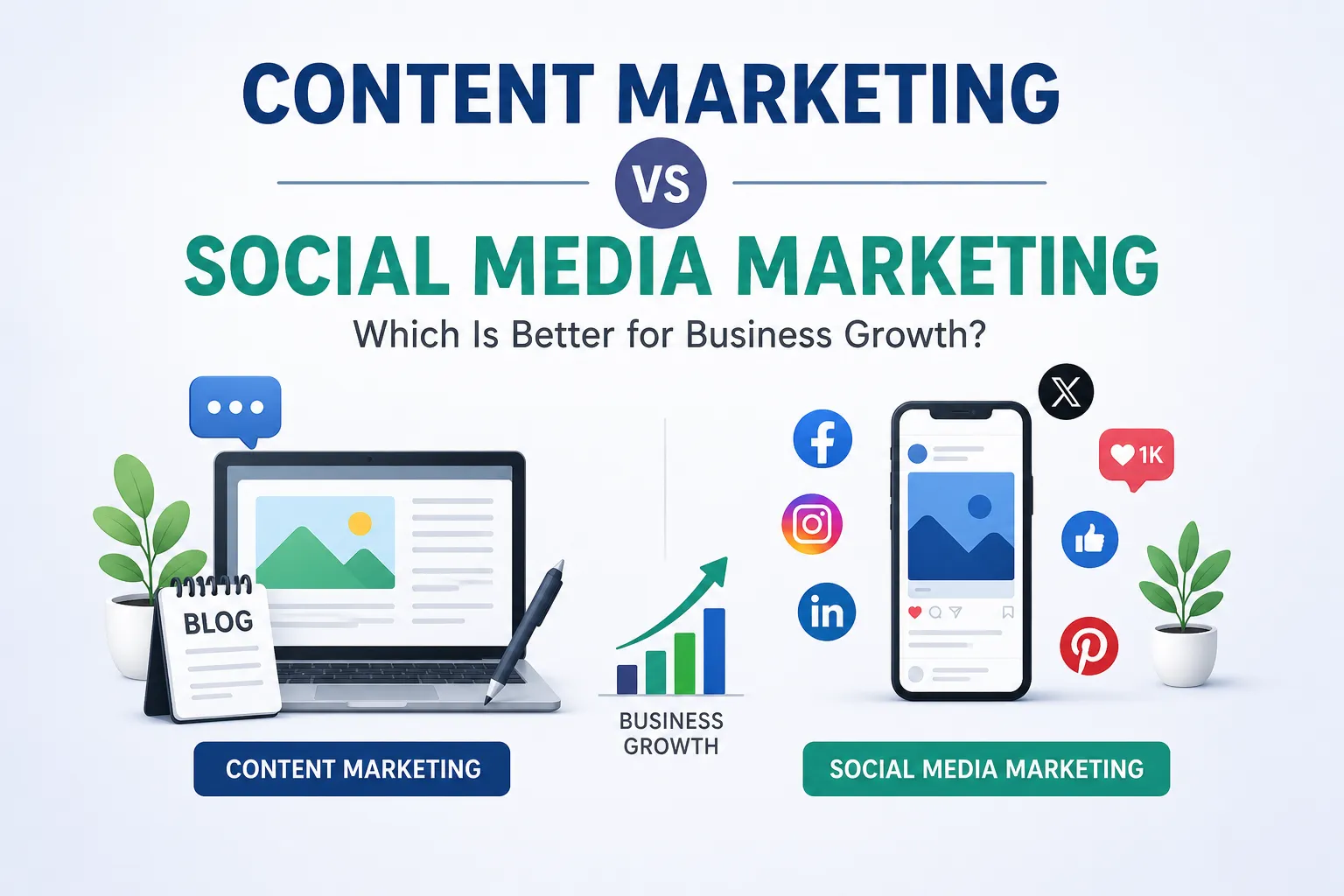
Want to understand how content marketing compares with social media? Read Content Marketing vs Social Media Marketing: Which Is Better for Business Growth?
Step 7: Build Content Into Your Wider Marketing Strategy
Content marketing works best when it supports your broader marketing activities rather than operating alone.
Helpful content can support:
- SEO by targeting useful search topics
- Social media by providing ideas to share and discuss
- Email marketing by giving subscribers valuable resources
- Lead generation by educating potential customers
- Brand building by demonstrating knowledge and consistency
For example, one detailed blog post could be shared on social media, included in an email newsletter, and updated later with new information.
Content can also support email campaigns—learn how to build an audience in our guide, Email Marketing for Beginners: How to Build and Grow an Email List.
Step 8: Create a Realistic Content Calendar
Consistency matters, but consistency does not mean publishing every day.
A realistic beginner content calendar might include:
- One or two high-quality pieces per month
- Planned topics in advance
- Time for editing and promotion
- Time for reviewing and updating older content
Example monthly calendar:
- Week 1: Publish a helpful blog post
- Week 2: Promote the article and create related social posts
- Week 3: Publish a second piece of content
- Week 4: Review performance and plan the following month
Choose a schedule you can maintain. A smaller, consistent content marketing plan is often easier to manage than an ambitious schedule that quickly becomes difficult to sustain.
Step 9: Measure Your Content Marketing Results
Measurement helps you understand whether your content is supporting its intended goals.
Beginner-friendly metrics may include:
- Website traffic
- Organic search visibility
- Time spent engaging with content
- Email sign-ups
- Leads
- Social engagement
- Conversions
The right metrics depend on your original goal.
For example, if your goal is customer education, engagement and feedback may matter more than immediate sales. If your goal is email list growth, sign-ups are likely to be more relevant.
Avoid judging your entire strategy using only one metric. Look at performance in context and identify patterns over time.
Common Content Marketing Mistakes Beginners Should Avoid
Watch out for these common mistakes:
- Publishing without a clear goal
- Creating content for everyone instead of a specific audience
- Ignoring audience research
- Focusing only on quantity
- Not promoting published content
- Ignoring SEO completely
- Expecting immediate results
- Not measuring performance
- Creating content inconsistently
A good strategy does not need to be perfect from the beginning. The important thing is to learn from your audience and improve your approach over time.
Simple Content Marketing Strategy Checklist
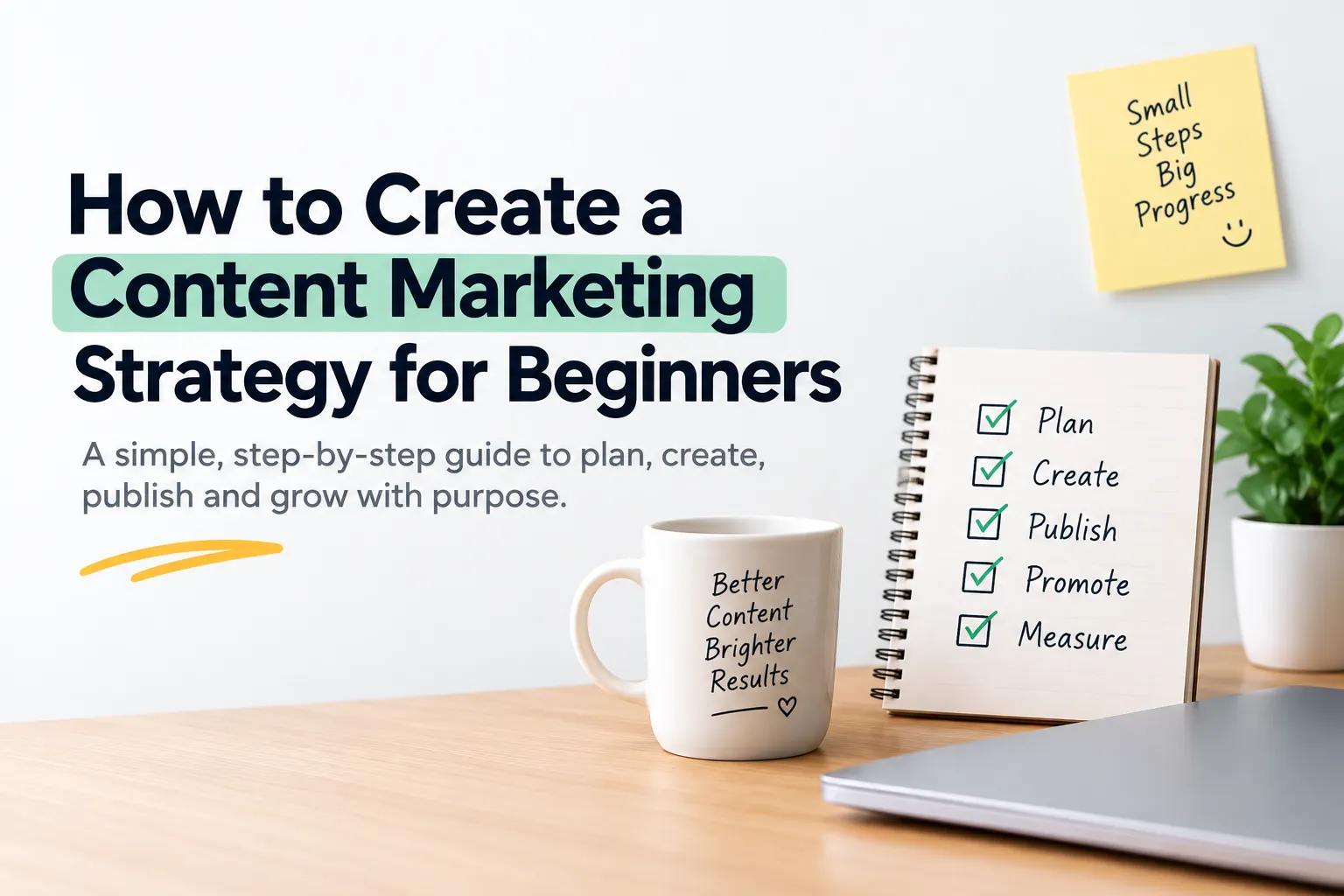
✓ Define your goal
✓ Identify your audience
✓ Research topics
✓ Understand search intent
✓ Choose content formats
✓ Create a content calendar
✓ Publish helpful content
✓ Promote your content
✓ Track performance
✓ Improve your strategy over time
Frequently Asked Questions
1. What is a content marketing strategy?
A content marketing strategy is a plan for creating, publishing, promoting, and measuring content to reach a specific audience and support defined marketing goals.
2. How do beginners start content marketing?
Start by choosing a clear goal, identifying your target audience, researching useful topics, selecting manageable content formats, and creating a realistic publishing schedule.
3. What should be included in a content marketing plan?
A content marketing plan should include your goals, target audience, topics, keywords, content formats, publishing schedule, promotion channels, and performance metrics.
4. How often should I publish content?
Publish at a frequency you can realistically maintain. For many beginners, one or two high-quality pieces of content per month can be a practical starting point.
5. How long does content marketing take to show results?
Content marketing timelines vary depending on competition, audience, distribution, content quality, and consistency. It is generally best viewed as a long-term marketing activity rather than an instant-results channel.
6. What type of content is best for beginners?
Blog posts, simple guides, checklists, and useful social media posts are good starting points because they can help you understand audience interests and build a repeatable process.
Conclusion
Creating a content marketing strategy for beginners does not have to be complicated.
Start with a simple plan built around clear goals, audience research, helpful content, consistent publishing, and regular measurement. As you learn more about what your audience needs and how your content performs, you can adjust and improve your strategy.
The best content marketing strategies are not static documents. They evolve over time. Begin with what you can realistically manage, focus on providing genuine value, and use performance insights to make smarter decisions as your content marketing efforts grow.