Choosing the right digital marketing strategy can determine how quickly your business grows online. Whether you’re a startup founder, a small business owner, or a marketing professional, you’ve likely asked yourself the same question: SEO vs PPC—which one is better?
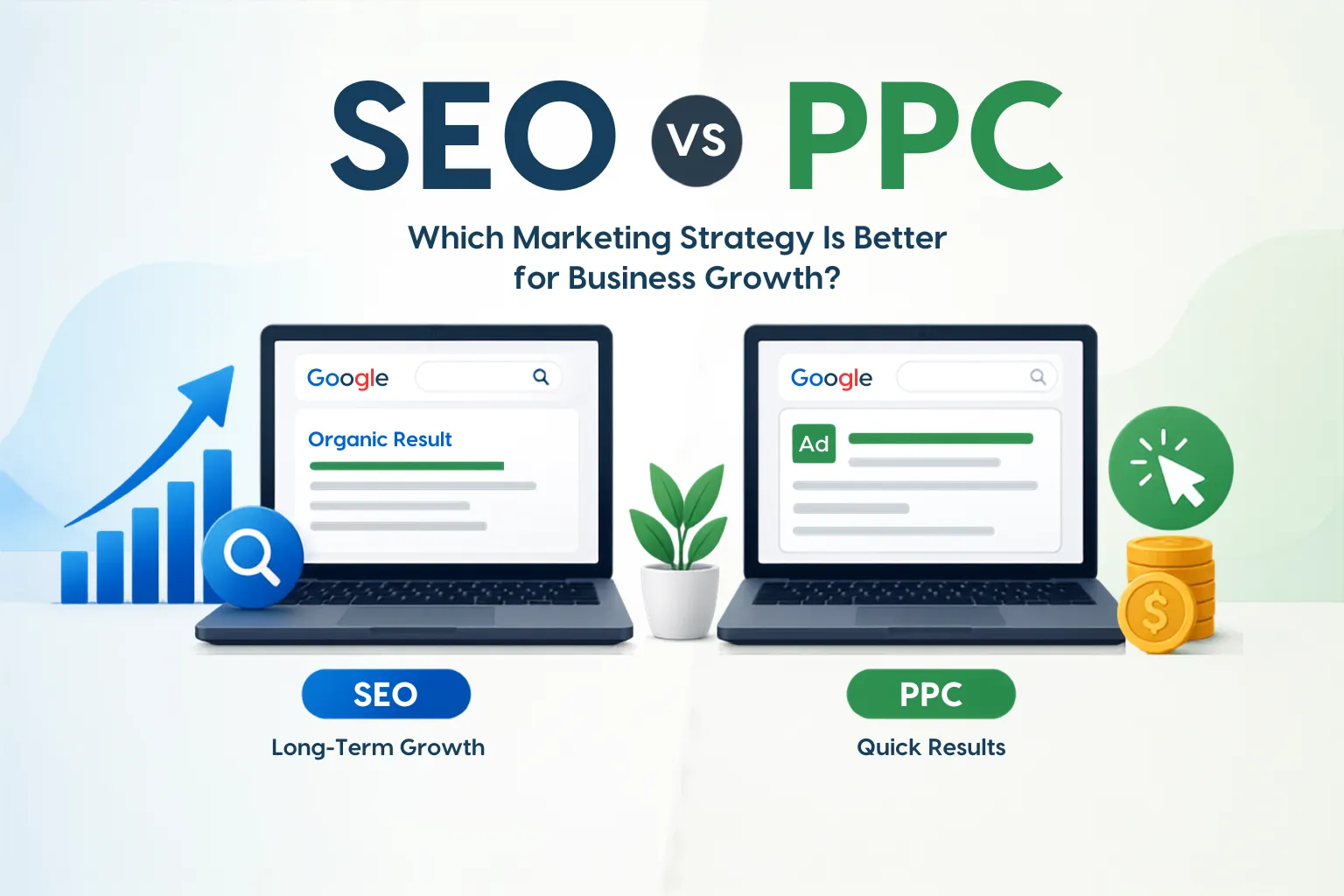
Both Search Engine Optimization (SEO) and Pay-Per-Click (PPC) advertising help businesses attract customers through search engines. However, they work in very different ways. SEO focuses on earning organic traffic over time, while PPC generates immediate visibility through paid advertisements.
The right choice depends on your goals, budget, competition, and timeline. In this guide, you’ll learn how SEO and PPC work, their advantages, where each strategy performs best, and why many successful companies combine both for maximum growth.
What Is SEO?
Search Engine Optimization (SEO) is the process of improving your website so it ranks higher in search engine results without paying for every visitor.
When users search for products or services, search engines display pages they consider the most relevant and trustworthy. SEO helps your website earn those rankings, increasing organic traffic over time.
How SEO Works
SEO improves your website by optimizing:
On-Page SEO
- Keyword optimization
- High-quality content
- Title tags and meta descriptions
- Internal linking
- Image optimization
Off-Page SEO
- Backlink building
- Brand mentions
- Guest posting
- Digital PR
Technical SEO
- Website speed
- Mobile responsiveness
- Secure HTTPS
- XML sitemaps
- Structured data
Although SEO requires patience, it often delivers sustainable traffic and lower customer acquisition costs in the long run.
What Is PPC?
Pay-per-click advertising (PPC) is a digital advertising model where businesses pay each time someone clicks on their advertisement.
The most popular PPC platform is Google Ads, although Bing Ads (Microsoft Advertising) also offers valuable opportunities.
How PPC Works
A typical PPC campaign includes:
- Keyword selection
- Ad creation
- Audience targeting
- Budget setting
- Bid management
- Landing page optimization
Your ads appear above organic search results, helping you reach customers immediately.
For example, if someone searches for “best accounting software,” a well-optimized Google Ads campaign can place your business at the top of the page within hours.
SEO vs PPC: Quick Comparison
| Feature | SEO | PPC |
| Cost | Ongoing optimization investment | Pay for every click |
| Speed | Slow to build | Immediate results |
| Traffic | Organic traffic | Paid traffic |
| ROI | Strong long-term ROI | Fast but budget-dependent |
| Long-Term Value | Excellent | Stops when spending stops |
| Trust | Higher credibility | Lower trust than organic listings |
| Maintenance | Continuous optimization | Continuous budget management |
Benefits of SEO
SEO remains one of the strongest business growth strategies because it creates lasting value.
Sustainable Organic Traffic
Well-optimized content can attract visitors for months or even years.
Higher Credibility
Users generally trust organic search results more than advertisements.
Better Long-Term ROI
Although SEO takes time, businesses often enjoy lower acquisition costs once rankings improve.
Builds Brand Authority
Publishing valuable, optimized content positions your business as an industry expert.
Cost-Effective Over Time
Unlike paid ads, organic traffic continues even when you pause marketing spend.
Benefits of PPC
PPC offers several advantages for businesses seeking immediate growth.
Instant Website Traffic
Ads can begin driving visitors as soon as campaigns go live.
Faster Lead Generation
Businesses can quickly attract qualified prospects.
Precise Audience Targeting
Target customers by:
- Location
- Age
- Interests
- Device
- Search intent
- Time of day
Easy Performance Tracking
Modern advertising platforms provide detailed analytics, making optimization straightforward.
Excellent for Promotions
PPC works especially well for:
- Product launches
- Seasonal campaigns
- Flash sales
- Limited-time offers
SEO vs PPC: Which Is Better for Business Growth?
There isn’t a universal winner. The ideal strategy depends on your business goals.
Small Businesses
SEO usually provides the best long-term value because it reduces reliance on paid advertising while steadily increasing visibility.
Startups
PPC helps startups generate early traffic and validate offers, while SEO builds long-term growth.
Best approach: Combine both when possible.
Local Businesses
Local SEO improves visibility in location-based searches, while PPC captures customers searching with immediate intent.
eCommerce Stores
Online retailers benefit from both:
- SEO drives consistent product discovery.
- PPC boosts seasonal sales and high-converting products.
Large Enterprises
Larger companies often invest heavily in both SEO and PPC to dominate competitive search results and maximize market share.
Also Read: Content Marketing vs Social Media Marketing: Which Is Better for Business Growth?
When Should You Choose SEO?
Choose SEO if you:
- Want sustainable long-term growth
- Have limited advertising budgets
- Focus on brand authority
- Publish educational content regularly
- Want ongoing organic lead generation
- Prefer long-term marketing ROI
When Should You Choose PPC?
Choose PPC if you:
- Need immediate traffic
- Launch new products
- Run seasonal promotions
- Want fast lead generation
- Enter highly competitive markets
- Need measurable campaign results quickly
Why Combining SEO and PPC Gives the Best Results
The strongest online marketing strategies rarely rely on a single channel.
Combining SEO and PPC creates several advantages.
Better Search Visibility
Appearing in both paid and organic listings increases brand exposure.
More Website Traffic
SEO attracts long-term visitors while PPC fills short-term traffic gaps.
Better Conversion Rates
Businesses can use PPC data to identify high-converting keywords, then optimize SEO content around those insights.
Stronger Brand Awareness
Repeated exposure builds familiarity and trust.
Improved Marketing ROI
SEO lowers long-term acquisition costs, while PPC accelerates revenue generation.
Example:
An online furniture store launches Google Ads for a new sofa collection while simultaneously publishing SEO-optimized buying guides. The ads generate immediate sales, while the guides continue attracting organic traffic for years.
Common Mistakes Businesses Make
Avoid these costly mistakes:
- Ignoring SEO entirely
- Overspending on PPC without measuring ROI
- Conducting poor keyword research
- Sending paid traffic to weak landing pages
- Failing to track conversions
- Expecting overnight SEO success
- Neglecting website performance and user experience
Tips to Maximize Marketing ROI
Use this checklist to improve your digital marketing performance:
- Conduct comprehensive keyword research
- Create helpful, high-quality content
- Optimize landing pages for conversions
- Perform A/B testing on ads and landing pages
- Track goals using analytics platforms
- Continuously refine campaigns based on data
- Improve page speed and mobile usability
- Refresh older content regularly
Read More about: Digital Marketing Strategies for Small Businesses
Frequently Asked Questions
1. Is SEO better than PPC?
SEO is generally better for long-term business growth, while PPC is better for immediate results.
2. Which is cheaper, SEO or PPC?
SEO often becomes more cost-effective over time because you don’t pay for every click.
3. Can I use SEO and PPC together?
Yes. Combining both usually produces the strongest traffic, lead generation, and marketing ROI.
4. Which delivers faster results?
PPC delivers traffic almost immediately after campaigns launch.
5. Is Google Ads worth it for small businesses?
Yes, especially when campaigns target high-intent keywords with optimized landing pages and realistic budgets.
6. How long does SEO take to show results?
Many websites begin seeing meaningful improvements within 3–6 months, although highly competitive industries may take longer.
7. Which strategy has the highest ROI?
SEO often delivers the highest long-term ROI, while PPC can generate excellent short-term returns when campaigns are well managed.
8. Should beginners start with SEO or PPC?
Businesses with limited budgets often benefit from starting with SEO. Those needing immediate leads may begin with PPC while building their SEO foundation.
Conclusion
There is no one-size-fits-all answer in the SEO vs PPC debate. The best strategy depends on your business objectives, available budget, competition, and desired timeline.
If your goal is sustainable, long-term growth, Search Engine Optimization remains one of the smartest investments you can make. It builds trust, attracts consistent organic traffic, and delivers lasting value.
If you need immediate visibility, faster lead generation, or want to promote time-sensitive offers, Pay-Per-Click advertising can produce results within days.
The most successful businesses rarely choose one over the other. Instead, they combine SEO and PPC to increase visibility, generate qualified leads, improve conversions, and maximize overall marketing ROI.
Before investing your marketing budget, evaluate your goals, timeline, and resources. A balanced strategy built around both organic and paid search is often the most effective path to sustainable business growth.