Learning new skills has become an important part of career growth. Technology is changing how businesses operate, industries are adopting new digital tools, and employers increasingly value people who can adapt and continue learning.
Fortunately, online learning has made skill development more flexible and accessible. Students can explore new subjects alongside their studies, while working professionals can learn at their own pace without necessarily leaving their jobs.
From digital marketing and data analysis to graphic design and fashion business, there are many online courses to improve career opportunities. Creative industries are also changing. Fashion professionals today may benefit from understanding digital marketing, e-commerce, social media, visual communication, and business alongside traditional industry knowledge.
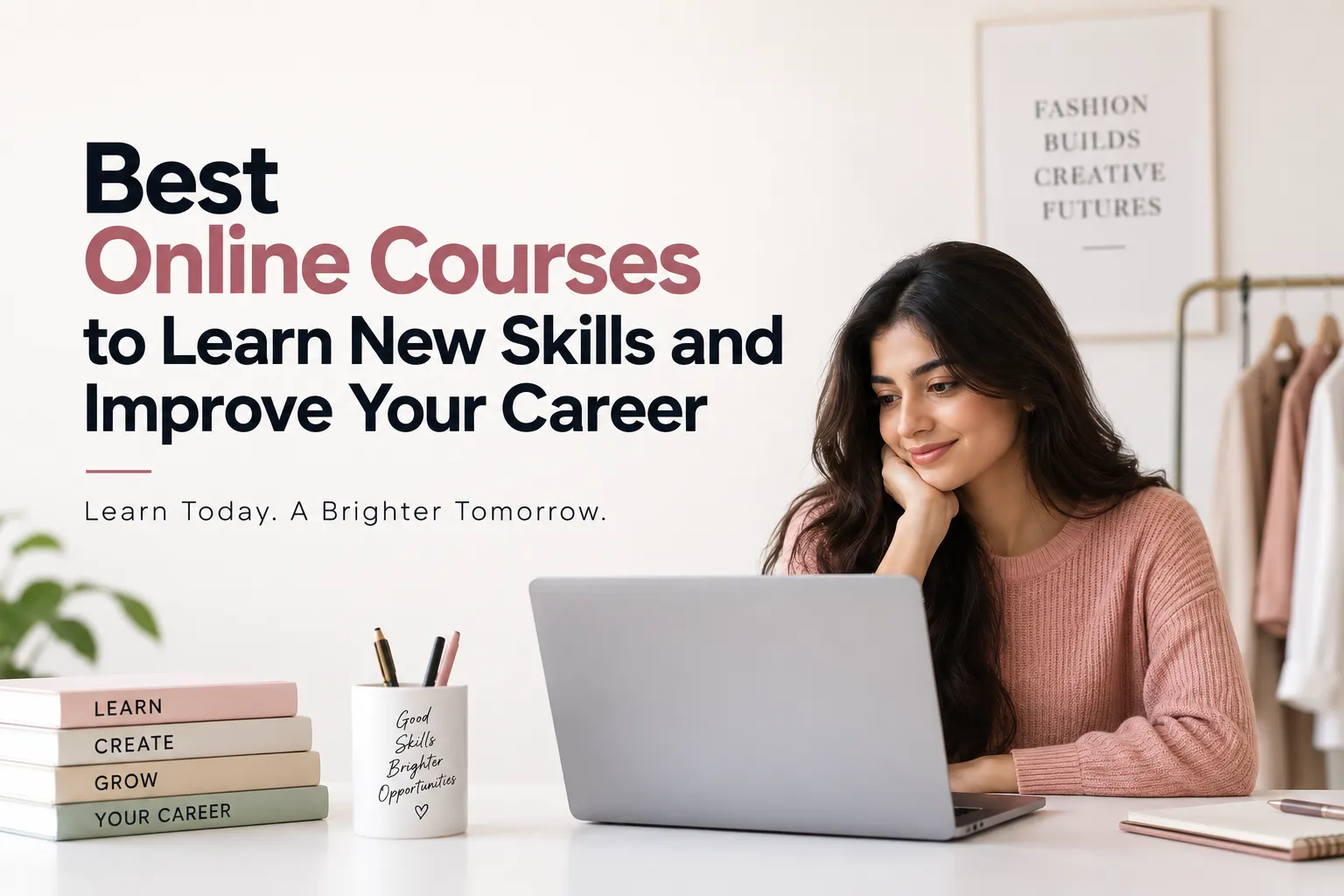
The Best Online Courses to Learn New Skills and Improve Your Career are ultimately the ones that match your goals and help you apply what you learn in practical situations.
Why Online Courses Are Useful for Career Growth
Online learning offers several advantages for people at different career stages:
- Flexible schedules that fit around studies or work
- The ability to learn from home or other convenient locations
- Access to a wide range of subjects
- Opportunities to develop practical and digital skills
- A useful starting point for exploring career changes
- Support for ongoing professional development
- A way for students to test their interests before choosing a career path
However, course value depends on more than simply completing lessons. The quality of learning, practical application, portfolio development, and relevance of the skill to your career goals all matter.
How to Choose the Best Online Course
The best online course is one that teaches a relevant skill, fits your current level, includes practical learning, and supports your career goals. Before enrolling, review the curriculum, instructor experience, projects, cost, duration, reviews, and certification options.
Quick Checklist
Before choosing from the best online courses, check:
- Your career goals
- Current industry demand
- Course curriculum
- Instructor expertise
- Practical projects
- Course duration
- Cost
- Certification options
- Student reviews
- Portfolio opportunities
Questions to Ask Before Enrolling
- What skill will I learn?
- Is this skill relevant to my career goals?
- Does the course include practical projects?
- Is the course suitable for beginners?
- Can I demonstrate the skill through a portfolio or real project?
Want to explore the most valuable skills for the future? Read our guide on Top In-Demand Skills Every Student Should Learn.
Best Online Courses to Learn New Skills
Digital Marketing Courses
Digital marketing courses can introduce learners to search engine optimization, social media marketing, content marketing, email marketing, and digital advertising.
These digital skills for career growth can be useful in businesses, agencies, startups, e-commerce, and creative industries. Learning how audiences discover and engage with brands can also be valuable for fashion and lifestyle businesses.
Graphic Design Courses
Graphic design is useful for marketing, branding, social media, and content creation. Courses often focus on visual communication, layout, typography, and general design principles.
These skills can be particularly relevant to fashion and lifestyle brands, where strong visuals play an important role in communicating brand identity.
Web Development Courses
Web development courses may cover basic coding, website creation, front-end development, and digital product development.
The amount of technical knowledge required depends on the career path. Some learners may only need basic website skills, while others may choose a more advanced development path.
Data and Analytical Skills Courses
Data-related courses can teach spreadsheet analysis, data visualization, basic data analysis, and business analytics.
Analytical skills are increasingly useful across industries because organizations often use data to understand customers, products, operations, and business performance.
Communication and English Skills Courses
Strong communication can support almost every career. Useful areas include:
- Professional communication
- Presentation skills
- Business writing
- Public speaking
- Workplace English
Technical knowledge is valuable, but the ability to explain ideas clearly can make skills easier to apply in real professional situations.
Fashion Design and Fashion Industry Courses
For aspiring creative professionals, online fashion courses can introduce fashion design fundamentals, fashion illustration, styling, fashion marketing, fashion business, textile basics, and fashion communication.
Online learning can help learners explore the fashion industry and build foundational knowledge. However, practical experience, creativity, portfolio development, and industry exposure remain important parts of long-term development.
UI/UX and Creative Digital Design Courses
UI/UX courses can introduce user interface basics, user experience principles, digital design, and portfolio development.
Creative digital skills may support opportunities in fashion e-commerce, lifestyle brands, digital businesses, and other customer-focused industries.
Best Skills to Learn Online for Career Growth
| Skill | Why It Is Useful | Suitable For |
| Digital marketing | Supports online brand and audience growth | Students, marketers, entrepreneurs |
| Communication | Helps explain ideas clearly | Almost every career |
| Graphic design | Supports branding and visual content | Creative professionals |
| Data analysis | Helps interpret information and trends | Business and analytical roles |
| Web development | Supports website and digital product creation | Technical learners |
| Fashion marketing | Connects fashion with business and audiences | Aspiring fashion professionals |
| Social media management | Supports online communication and content | Marketing and creative careers |
| UI/UX design | Focuses on digital user experiences | Digital and creative careers |
Online Courses for Students vs Working Professionals
| Students | Working Professionals |
| Explore interests and career options | Support career advancement |
| Build foundational skills | Learn new technology |
| Prepare for future careers | Explore career changes |
| Develop projects and portfolios | Improve professional skills |
For students, online learning can be an opportunity to experiment before making major career decisions. For professionals, it can help update existing knowledge or develop new capabilities.
Free vs Paid Online Courses
| Free Courses | Paid Courses |
| Usually lower or no cost | Require financial investment |
| May offer introductory learning | May offer greater course depth |
| Certification may be limited | Certification may be included |
| Mentorship may be less available | Mentorship may be available |
| Project opportunities vary | Structured projects may be included |
| Support can be limited | Additional learner support may be offered |
Paid does not automatically mean better. Free courses can also provide valuable learning when the curriculum is strong and the learner practices regularly. Compare quality, projects, support, and relevance before deciding.
How to Get Real Career Value From an Online Course
To get more value from online learning for career growth:
- Choose one skill at a time.
- Complete the course.
- Practice regularly.
- Build projects.
- Create a portfolio.
- Apply the skill in real situations.
- Keep learning from feedback.
- Update your knowledge as your field changes.
A certificate can be useful as evidence of learning, but completing a certificate is often less important than being able to demonstrate practical skills.
Common Mistakes to Avoid When Choosing Online Courses
Avoid these common mistakes:
- Taking too many courses at once
- Choosing a course only because it is popular
- Not checking course quality
- Collecting certificates without practicing
- Ignoring practical projects
- Expecting instant career results
- Not connecting learning with career goals
The most useful professional development courses should support a clear learning objective rather than simply adding another certificate to your profile.
Frequently Asked Questions
1. Which online course is best for career growth?
The best course depends on your career goals, interests, existing skills, and industry requirements. A relevant course with practical learning is usually more useful than choosing a popular subject without a clear purpose.
2. Are online courses useful for getting a job?
Online courses can help develop useful skills, but employment outcomes may also depend on experience, projects, portfolios, qualifications, interviews, and market conditions.
3. Which skills should students learn online?
Students can explore digital, communication, analytical, creative, and industry-specific skills based on their interests and future goals.
4. Are online certificates valuable?
Certificate value depends on the provider and the skill itself. Demonstrating that you can apply the knowledge through projects and practical work is also important.
5. Can I learn fashion skills through online courses?
Yes. Online courses can help with fashion theory, styling, marketing, design fundamentals, and digital skills. Practical experience and portfolio development remain important.
Conclusion
The best online courses are not necessarily the most popular or expensive. They are the courses that help you build useful skills and apply them in real situations.
Students and professionals should focus on long-term learning instead of chasing every new trend. Start with your goals, identify the skills that matter for your chosen direction, and develop them through consistent practice.
For people interested in creative fields and fashion, combining industry knowledge with digital, communication, and business skills can create broader opportunities for professional development. Build your knowledge step by step, create work that demonstrates your abilities, and keep adapting as industries change.
Continuous learning may not guarantee a particular job, promotion, or salary, but developing relevant skills and learning how to apply them can strengthen your ability to explore and pursue future career opportunities.