Social media has changed how people discover products, compare options, and decide which brands deserve their attention. Instead of relying only on traditional advertisements, consumers can now discover products through creators they already follow and trust.
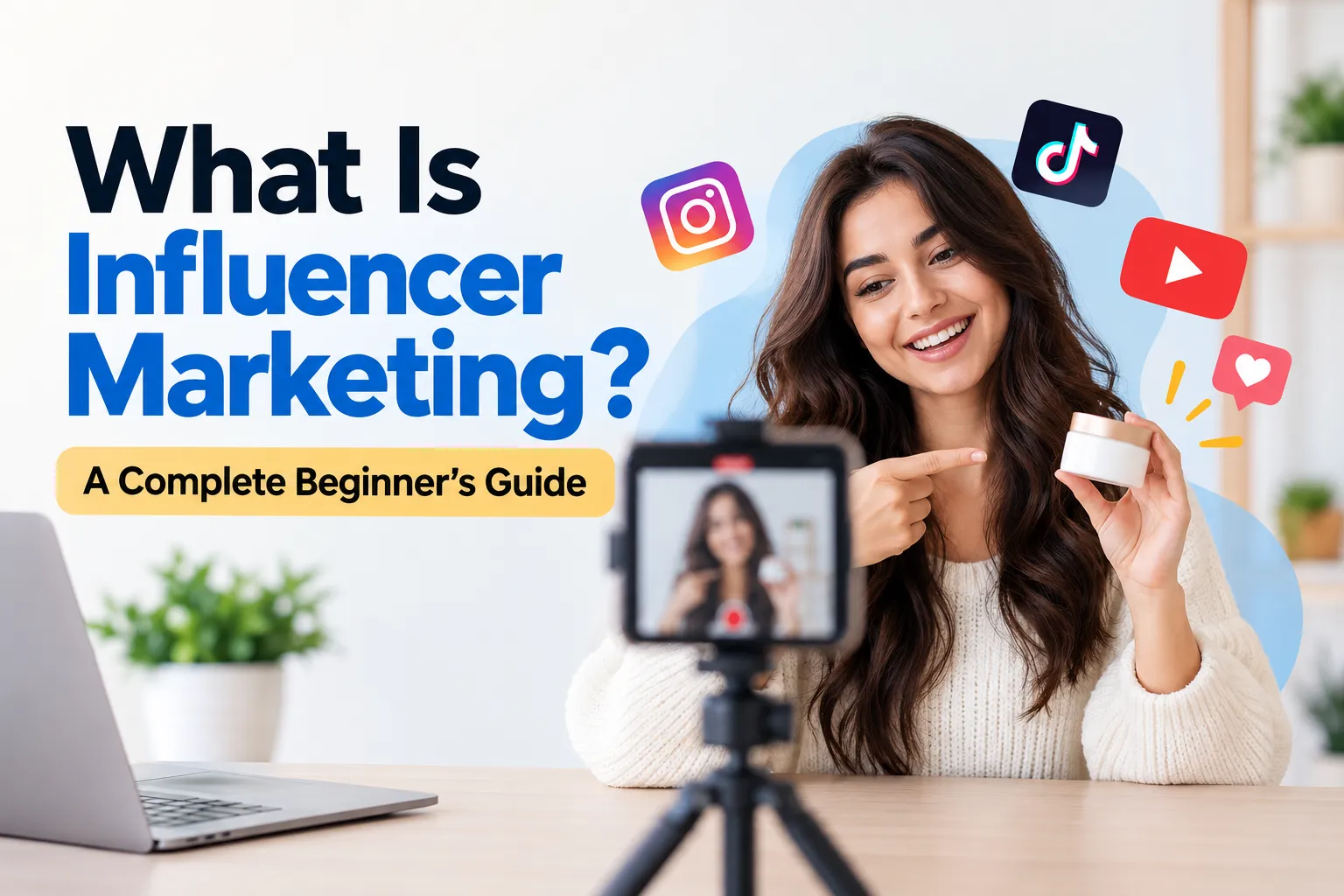
So, what is influencer marketing? In simple terms, influencer marketing is a strategy where a business collaborates with a content creator who has an established audience to promote a product, service, or brand.
For beginners and small businesses, influencer marketing can be useful because it combines targeted audience access with creator-produced content. However, success depends on choosing the right creator, setting clear objectives, and measuring results rather than simply paying for a large number of followers.
What Is Influencer Marketing?
Influencer marketing involves a collaboration between a brand and an individual who has built an audience around a particular topic, interest, lifestyle, or area of expertise.
An influencer might create an Instagram post, TikTok video, YouTube review, blog article, livestream, or other piece of content featuring the brand.
The key element is the relationship between the creator and their audience. A creator who consistently produces useful or entertaining content may have an audience that pays attention to their recommendations.
This differs from traditional advertising, where a brand usually purchases a media placement and has greater control over the advertisement itself. With influencer marketing, the creator typically contributes both their audience and their content style.
How Does Influencer Marketing Work?
A typical influencer marketing campaign follows these steps:
- A brand identifies its marketing goal. This might be awareness, traffic, leads, app downloads, or sales.
- The brand finds relevant influencers. Creators are selected based on their audience, content, niche, and platform.
- The brand evaluates the influencer and audience. Audience demographics, engagement quality, content history, and brand fit matter.
- Both parties agree on campaign terms. This can include deliverables, deadlines, compensation, usage rights, and disclosure requirements.
- The influencer creates and publishes content. The content should meet the campaign requirements while fitting the creator’s normal style.
- The brand tracks performance. Links, discount codes, platform analytics, and other tracking methods can help.
- The results are analyzed. The brand compares campaign performance with its original objectives.
Simple Example
Imagine a small clothing brand launching a new collection. Instead of immediately buying a large advertising campaign, it partners with several fashion creators whose audiences match its target customers.
Each creator could style an outfit from the collection and share it with their followers. The brand might provide each creator with a unique tracking link or discount code.
After the campaign, the business can examine reach, engagement, website visits, and purchases to determine what happened and whether the collaboration justified its cost.
Types of Influencers
Influencers are often grouped by audience size. These categories are useful for planning, but follower ranges can vary by platform and industry.
| Type of Influencer | Approximate Audience Size | Common Use |
| Nano Influencer | 1K–10K | Local and niche campaigns |
| Micro Influencer | 10K–100K | Targeted communities |
| Macro Influencer | 100K–1M | Wider reach |
| Mega Influencer | 1M+ | Large-scale awareness |
A smaller creator is not automatically more valuable than a larger one. The right choice depends on the campaign objective, audience relevance, content quality, budget, and other factors.
Benefits of Influencer Marketing
Builds Brand Awareness
Influencers can introduce a brand to people who may not have encountered it through the company’s own channels.
A relevant creator can place a product in a context their audience already understands, such as fashion, cooking, travel, fitness, or technology.
Reaches Targeted Audiences
One of the major advantages of social media influencer marketing is the ability to work with creators serving specific communities.
For example, a business selling specialty running equipment may find a running-focused creator more relevant than a general entertainment account with a much larger audience.
Builds Social Proof
Creator demonstrations, reviews, tutorials, and recommendations can help consumers become familiar with a product and consider whether it fits their needs.
The effect should not be treated as automatic: credibility, audience fit, disclosure, content quality, and the actual product experience all matter.
Creates Engaging Content
Influencers can produce photographs, videos, tutorials, reviews, or other creative assets that may complement a brand’s wider marketing activities.
Where appropriate, brands may also repurpose creator content with the creator’s permission and according to the agreed usage rights.
Can Support Sales and Conversions
An influencer campaign can contribute to website visits, leads, app downloads, or purchases when the campaign has an appropriate offer, audience, tracking system, and conversion experience.
Results vary considerably, so businesses should avoid treating influencer marketing as a guaranteed source of revenue or return on investment.
Influencer Marketing vs Traditional Advertising
| Influencer Marketing | Traditional Advertising |
| Uses creator audiences | Uses paid media placements |
| Often feels more personal | Usually more brand-controlled |
| Can target niche communities | Can provide broad reach |
| Creator contributes content | Brand typically controls creative |
| Performance can be tracked digitally | Measurement depends on channel |
The two approaches are not necessarily competitors. Businesses can use influencer marketing alongside paid search, social advertising, email, content marketing, public relations, and other channels.
How to Create an Influencer Marketing Strategy
Define Your Goal
Start with a specific objective.
Common goals include:
- Brand awareness
- Website traffic
- Lead generation
- Product sales
- App downloads
A clear goal makes it easier to select creators and decide which metrics matter.
Identify Your Target Audience
Understand who you want to reach, including:
- Age
- Interests
- Location
- Buying behavior
- Preferred social platforms
The better you understand your audience, the easier it becomes to identify relevant creators.
Choose the Right Influencer
Look beyond follower count. Consider:
- Audience relevance
- Engagement quality
- Content style
- Audience demographics
- Brand fit
- Previous sponsored content
A creator with a smaller but highly relevant audience may be more suitable for a niche campaign than a celebrity with millions of unrelated followers.
Set a Realistic Budget
Influencer compensation can take different forms, including:
- Flat fees
- Free products
- Affiliate commissions
- Performance-based arrangements
The appropriate model depends on the creator, campaign, deliverables, product, audience, and commercial terms.
Measure Campaign Results
Choose metrics that match your objective. Possible measures include:
- Reach
- Impressions
- Engagement
- Link clicks
- Website traffic
- Leads
- Conversions
- Sales
- Cost per result
Use tracking links, unique discount codes, landing pages, platform analytics, or other suitable measurement methods when possible.
Influencer Marketing Examples
The following are hypothetical examples, not real-world case studies.
Fashion: A small sustainable clothing company works with three niche fashion creators who demonstrate different ways to style one product. Each creator receives a unique tracking link.
Food: A local restaurant partners with food creators in its city. Creators visit the restaurant, document their experience, and share information about a limited-time menu.
Technology: A small software company works with productivity-focused YouTubers to demonstrate how its app solves a specific workflow problem. The campaign tracks trial registrations using creator-specific links.
These examples illustrate how the creator, audience, product, and campaign objective should fit together.
Is Influencer Marketing Good for Small Businesses?
Influencer marketing can be adapted to smaller budgets. A business does not necessarily need a famous creator to test the channel.
Small businesses can:
- Work with local creators
- Partner with niche micro-influencers
- Offer affiliate arrangements
- Start with a small test campaign
- Repurpose suitable creator content with permission
- Measure results before increasing spending
A practical approach is to treat the first campaign as a learning exercise. Test a clearly defined audience and objective, measure the results, and use those findings to inform future campaigns.
Frequently Asked Questions
1. What is influencer marketing in simple words?
Influencer marketing is when a business partners with a creator to promote its product, service, or brand to the creator’s audience.
2. How does influencer marketing work?
A brand defines a goal, finds relevant creators, agrees on campaign terms, receives or sponsors content, and measures the resulting audience and business outcomes.
3. What are the four types of influencers?
The four commonly used categories are nano, micro, macro, and mega influencers. Their audience-size ranges are approximate and can vary by platform and industry.
4. Is influencer marketing effective for small businesses?
It can be useful for small businesses, particularly when they work with creators whose audiences closely match their target customers. Results depend on campaign execution and measurement.
5. How much does influencer marketing cost?
There is no universal price. Costs depend on factors such as the creator, platform, audience, content requirements, campaign duration, usage rights, and compensation model.
Conclusion
What is influencer marketing? It is more than paying someone with a large following to mention a product. Effective influencer marketing is about creating a sensible connection between a brand, a creator, and an audience.
For beginners, the fundamentals are straightforward: understand your target audience, define a clear marketing objective, choose creators based on relevance and fit, agree on expectations, and measure what happens.
The strongest campaigns also look beyond one-off promotions. Building genuine, transparent relationships with suitable creators can give brands opportunities to develop better content, reach relevant communities, and learn more about their customers over time.
If you are new to influencer marketing, start small: understand your audience and marketing goal first, then find creators who naturally connect with that audience.