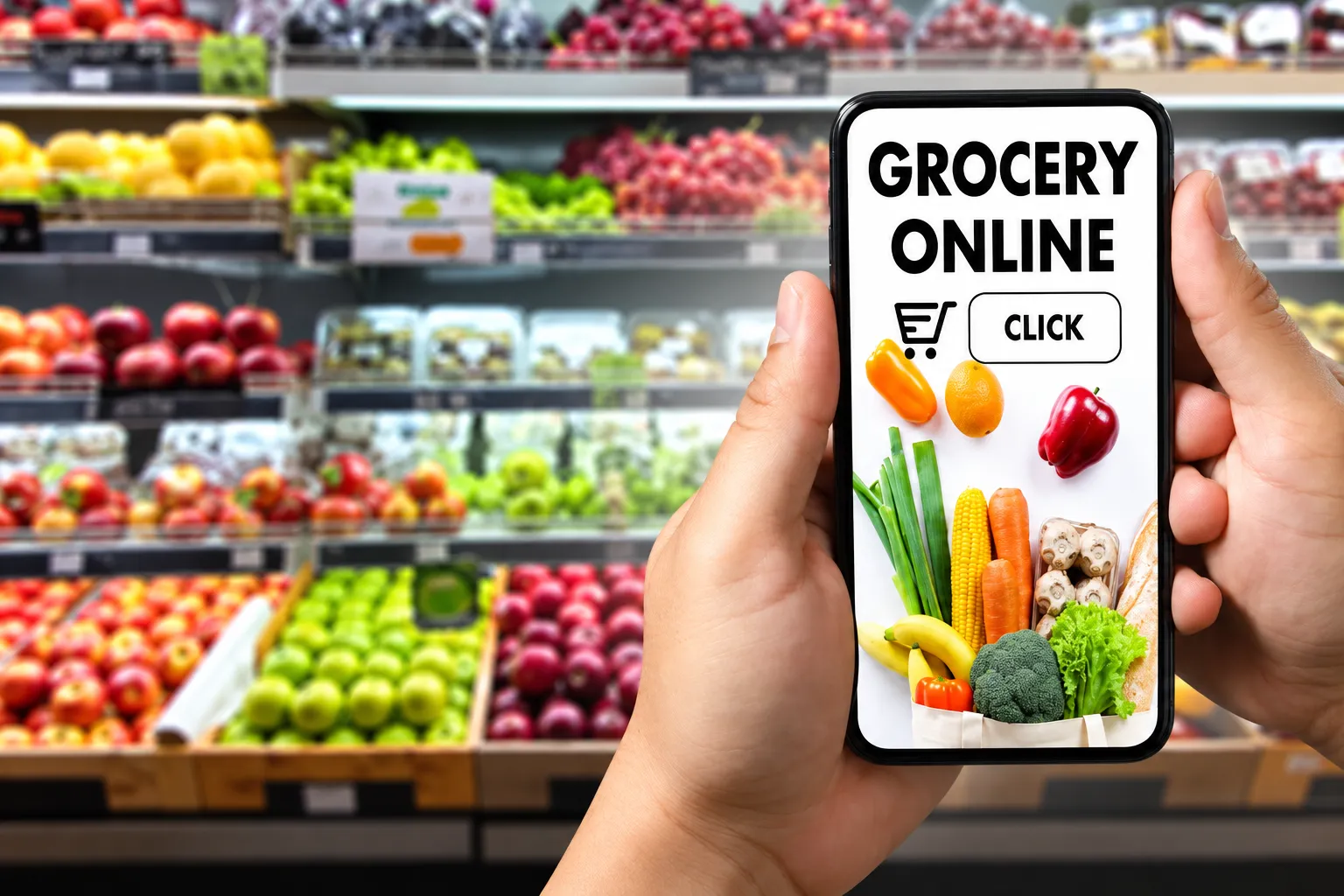
Consumer Purchasing Behavior Transformed Web-based grocery shopping is taking hold in the retail industry as customers buy their regular everyday products through the internet. Fresh produce, packaged foods, drinks, home products and personal care items are all available to buy through a website or app and have home delivery. This is opening the door for new innovation and retail businesses.
Online grocery growth is also transforming the management of inventory, how orders are fulfilled, insight into consumer behaviour, and consumer engagement. As digital penetration continues to grow in developed and emerging markets, online grocers are transforming from just a channel for purchasing to a new ecosystem connecting consumers, retailers, suppliers, and delivery infrastructure.
Global Online Grocery Market Growth
Expert Market Research has analyzed the global online grocery market share and it has estimated the market to witness a value of USD 718.69 billion by 2025. The market is expected to grow at a significant CAGR of 15.50% between 2026-2035.
This increased adoption of online grocery shopping by consumers along with ongoing investment in digital retail logistics by companies have contributed to this growth. Better Internet connection, usage of mobile phones, ease of use of digital payment systems and delivery logistics are factors contributing to growth.
For companies, the growth will mean numerous chances, from online shopping sites and last-mile delivery to warehouse technology, digital payments, stock management and, in particular, grocery-targeted marketing solutions.
Changing Consumer Shopping Habits
The online grocery industry’s growth is driven in part by the convenience aspect. Consumers are able to browse products, compare prices, and even add items to a shopping list without having to physically step into a retail establishment. This convenience is also attractive to consumers who don’t have easy access to large retail outlets or stores.
Online also enables shoppers to buy different types of food from different retailers at different times of the day. Scheduled deliveries, repeat shopping, online shopping lists and personalised recommendations can help with everyday buying.
As these behaviors become second nature, companies have the ability to tailor service offerings around customer needs. Subscription meal kits, curated boxes of products, and niche online stores are ways that companies can serve various consumer groups.
Opportunities for Traditional Retailers
Online grocery growth is not a sign of physical shops being pushed out of the game. In fact, most grocery stores are integrating the digital channels into their stores.
A supermarket or an independent retailer may consider developing an app or website or collaborating with a delivery aggregator or launching click-and-collect services. It will help to retain the existing store’s presence and offer more purchase options to its customers.
Using digital channels, merchants can gather information about product demand, frequency of purchase and customer preferences. This information can inform assortment, promotion and inventory decisions.
Growth of Last-Mile Delivery Services
Last mile delivery is in great demand Thanks to online grocery, the final leg of the supply chain has become a sought after process. An online grocery order will frequently include fresh and perishable items, delivery performance and care will be an element of the shopping experience.
This opens up new possibilities for technology firms and logistics providers to create tailored delivery solutions. Delivery management solutions such as route optimisation, temperature-sensitive logistics, the implementation of micro-fulfilment centres and live tracking can be used to enable better management of grocery stores.
Local delivery networks can also offer opportunities for small logistics players targeting individual towns, districts, or customer segments. They may also be an attractive option in places where the majors do not have a presence.
Expansion of Dark Stores and Micro-Fulfilment
Dark stores and micro-fulfilment centres A further potentially lucrative online grocery venture is the building of dark stores and micro-fulfilment centres that are mainly used for handling online shopping rather than selling in the store.
Reduced distance to the customer with the localisation of fulfilment centres near customers and faster delivery lead times is another benefit of automation. Additional advantages include, among others, automated inventory management, picking, sorting and order processing.
These centres are also requiring warehouse management software, robotics, inventory technology, packaging equipment, and specialised machinery.
Opportunities for Technology Companies
Technology is an integral component of the online grocery shopping experience. Grocery stores require online shopping systems that can accommodate product files, purchasing, costing, inventory, databases, offers, and shipments.
That offers an opening for software firms to step into. Artificial intelligence and data analytics could assist businesses in craving demand, suggesting products, monitoring inventory and detecting eating behavior.
Cloud retail tools can open the door for smaller grocery companies to a lot of the digital functionality they can’t afford to develop themselves.
Private Labels and Niche Grocery Businesses
One of the advantages of an online store for your food business would be an opportunity to sell private-label food and specialised brands. Your online shop can sell food items that are targeted at specific niches – organic foods, plant-based food, regional foods, healthy foods or gourmet ingredients.
Access to customers Contrary to the conventional retailer, which needs to have large physical shelves to stock products, online spaces allow smaller brands to access buyers. From search to social media, content marketing to advertising, brands can address specific audiences.
This could enable the development of a niche brand and provide opportunities for entrepreneurs to trial products in specific markets prior to extending their range.
Digital Payments and Fintech Opportunities
Digital payment solutions are also benefiting from the growth of online grocery. Retailers are seeing rising consumer demand for offering several types of online payment options, including card and wallet solutions, bank transfer, and others.
Finance tech companies can create online customer payment services, and retailers can use transaction data to offer targeted customer experiences and loyalty programmes.
Other innovative ways to increase the range of purchase options, such as buy-now-pay-later schemes, may also bring advantages, but they must take account of consumer affordability, regulation and responsible lending principles.
Data-Driven Grocery Marketing
Online grocery platforms generate valuable information about consumer searches. This can include details of the pages they visited, the links they clicked and the searches they made. It could also include information about their location, the language they speak and the type of device they are using. Buying habits, products they like and how often they shop. Companies can use all this information to come up with more targeted advertising campaigns.
Such As Offering Recommendations For Past Purchase Items – Retailers can offer recommendations for items that have been purchased previously, or deliver a reminder for a regularly bought product. Brands can reach customers digitally and through paid product placements as they actively shop.
This makes retail media yet another source of potential income for online grocery platforms. Retailers may want to provide opportunities for brands to reach their intended customer base through online shopping journeys.
Challenges for New Businesses
However, taking a leap into online grocery can be daunting. Grocery products tend to have relatively low margins, and delivery, packaging, storage and fulfilment can prove expensive.
Another product category that poses additional challenges is the perishable ones, given that companies need to retain quality as much as possible and keep the waste to a minimum. Proper inventory management is also needed, as stockouts lead to dissatisfaction, and excess inventory can generate losses.
Competition is another important factor. Existing retailers and major e-commerce players have already built large customer bases, invested in robust logistics infrastructure and grown their technology capabilities. By contrast, new entrants will need to find niche opportunities and scale up operational models efficiently.
The Future of Online Grocery
As online grocery continues to grow, it will open up opportunities for retail, logistics, tech, payments, marketing and food manufacturing. As people gain confidence in buying the convenience categories, brands will begin to experiment with various fulfilment options, new delivery options, subscriptions and digital shopping environments.
There is also a higher chance of an uptick in data. If companies have the ability to grasp the tastes of local consumers, control their inventory and undertake their deliveries effectively, then the better they can connect with their customers.
As the online grocery market reaches USD 3036.42 billion in 2035, the industry is turning out to be a key industry for entrepreneurs and big corporations that are on the lookout to develop their business further. These opportunities will be not just about selling groceries, but will encompass an entire world of services and innovations that will be the future of food and household retailing.
Author Bio
Satiyam Kumar is a digital marketer and SEO analyst with 3 years of experience in SEO, content strategy, and digital marketing. He currently works at Expert Market Research, where he focuses on SEO, content development, market research, and digital marketing strategies.
Insta Id – @seowithsk