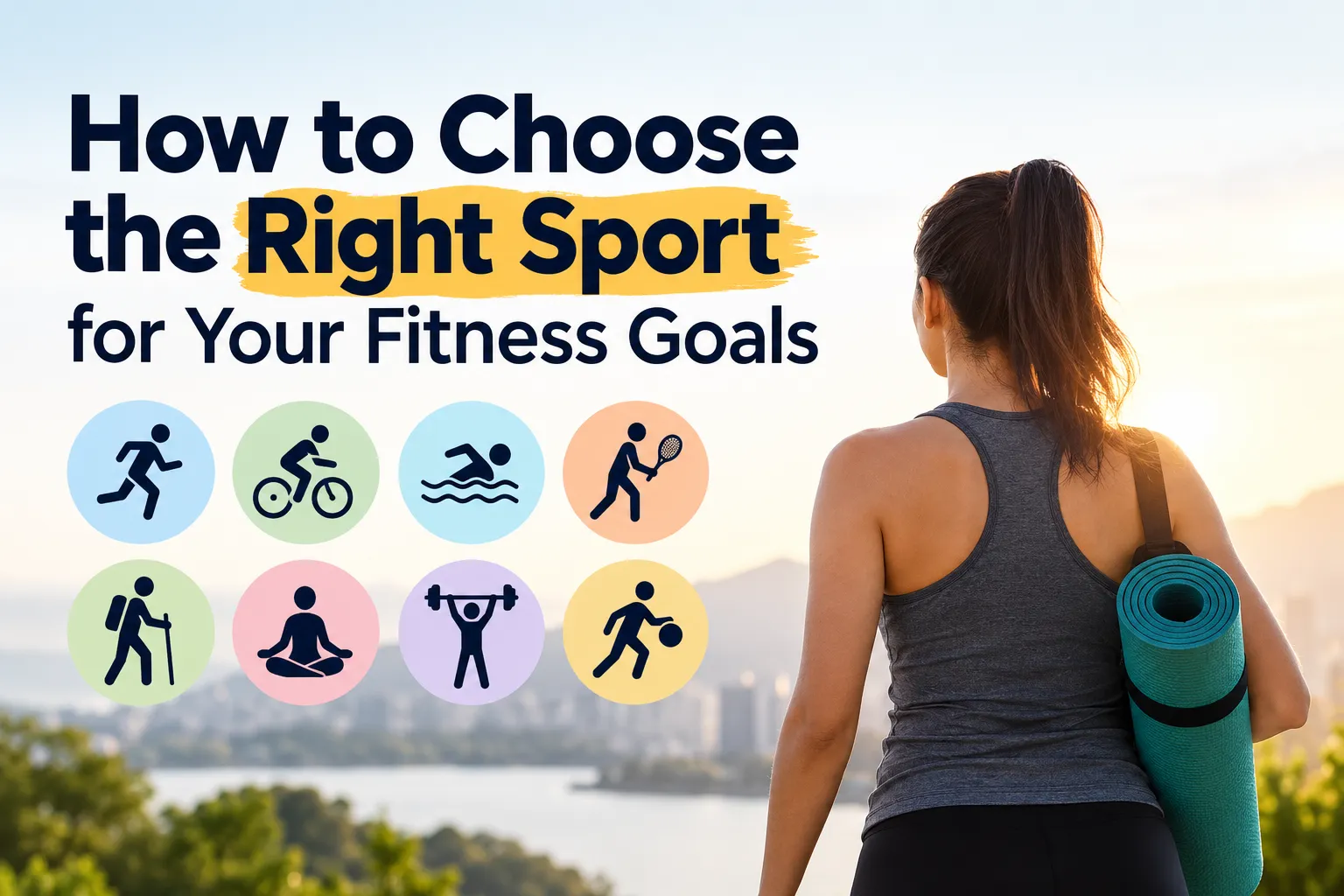
Finding the right sport can make fitness feel less like a chore and more like something you genuinely look forward to.
Whether you want to improve cardiovascular fitness, build endurance, manage your weight, become stronger, improve mobility, or simply become more active, the sport you choose can influence how consistently you exercise. An activity that fits your interests and lifestyle is often easier to maintain than one chosen simply because it is popular.
This is especially important for beginners. If you dislike an activity, find it too difficult, or cannot fit it into your schedule, you may eventually stop doing it.
The good news is that there is no single best sport for fitness. Running may suit one person, while swimming, cycling, tennis, hiking, badminton, or yoga may be a better match for someone else.
The goal of choosing the right sport is to find an activity that matches your fitness goals, current ability, personality, schedule, budget, and access to facilities.
Why Choosing the Right Sport Matters
Regular physical activity can support cardiovascular fitness, muscular fitness, endurance, coordination, balance, mobility, and general health. Sports can also provide opportunities for recreation, social connection, and stress management.
Enjoyment matters, too. The CDC recommends choosing physical activities that you enjoy and that match your abilities because this can make it easier to stay active consistently.
Different sports emphasize different physical qualities:
- Running and cycling: cardiovascular fitness and endurance
- Swimming: aerobic fitness with full-body movement
- Tennis and badminton: agility, coordination, and cardio
- Hiking: endurance and lower-body activity
- Yoga: mobility, balance, and flexibility
- Team sports: physical activity combined with social interaction
Think of your sport as one part of your overall fitness routine rather than a magic solution that has to accomplish everything.
Identify Your Main Fitness Goal
Before deciding how to choose a sport, ask yourself: What do I actually want to improve?
If Your Goal Is Cardiovascular Fitness
Running, cycling, swimming, rowing, and tennis can all provide aerobic exercise when performed at an appropriate intensity and frequency.
For example, someone who enjoys being outdoors might prefer cycling or running, while someone who wants a lower-impact option may prefer swimming.
If Your Goal Is Strength and Muscle Fitness
Rock climbing, rowing, wrestling, and some other sports can challenge muscles, but they do not necessarily replace dedicated resistance training.
If improving strength or muscle fitness is a major priority, gym-based strength training may be more directly suited to that goal. It can also be combined with a sport you enjoy.
If Your Goal Is Endurance
Running, cycling, swimming, and long-distance hiking can help develop endurance when training is progressed gradually.
A beginner might start with short walks, easy cycling sessions, or brief swim sessions before increasing duration and intensity.
If Your Goal Is Weight Management
Many sports can increase physical activity and energy expenditure, including running, cycling, swimming, basketball, football/soccer, and tennis.
However, no sport automatically causes fat loss. Weight management is influenced by overall energy intake and expenditure, along with other lifestyle factors. Regular physical activity can contribute to creating an energy deficit, but nutrition and long-term consistency also matter.
If Your Goal Is Flexibility, Balance, and Mobility
Yoga, Pilates, dance, gymnastics, and martial arts can incorporate movements that challenge mobility, balance, coordination, or flexibility.
If these qualities are particularly important to you, look for activities that regularly practice them rather than expecting every sport to provide the same benefits.
Consider Your Fitness Level
You do not need to be highly fit before starting a sport.
Instead, choose a version of the activity that matches your current ability. Beginners should generally start gradually, learn appropriate technique, and allow enough recovery between challenging sessions.
For example, a new runner might begin with a combination of walking and easy jogging rather than immediately attempting long-distance runs.
Similarly, someone new to tennis could begin with recreational sessions or beginner lessons rather than competitive matches.
Starting at a manageable level can help you build confidence while reducing the temptation to do too much too soon.
Consider Your Personality and Interests
Your preferences can be just as important as the physical benefits of a sport.
If you enjoy competition:
- Tennis
- Badminton
- Basketball
- Football/soccer
If you prefer individual activities:
- Running
- Swimming
- Cycling
- Hiking
If you enjoy social activities:
- Team sports
- Group cycling
- Recreational leagues
- Dance classes
If you prefer outdoor activities:
- Hiking
- Cycling
- Running
- Kayaking
Someone who loves social interaction may struggle to stay motivated with a solitary activity, while someone who values quiet time may prefer exercising alone.
Compare Sports Based on Your Goals
| Sport | Main Fitness Benefit | Best For | Beginner Friendly? |
| Running | Cardiovascular fitness | Endurance, general fitness | Yes, with gradual progression |
| Cycling | Cardio and leg endurance | Fitness, outdoor activity | Yes |
| Swimming | Full-body cardio | Endurance, low-impact exercise | Yes |
| Tennis | Cardio, agility, coordination | Competition and fitness | Yes |
| Basketball | Cardio, agility, coordination | Team fitness | Yes |
| Hiking | Endurance and lower-body activity | Outdoor fitness | Yes |
| Yoga | Flexibility, balance, mobility | Mobility and relaxation | Yes |
| Badminton | Cardio, agility, coordination | Recreational fitness | Yes |
The table is a starting point rather than a ranking. Your personal preferences, fitness level, and circumstances should guide the final choice.
Think About Time, Cost, and Accessibility
The theoretically perfect sport is not useful if you cannot realistically practice it.
Consider:
- How much time can you exercise each week?
- Is a suitable facility nearby?
- How much equipment will you need?
- Are classes or clubs available?
- Does the weather affect the activity?
- Can you practice alone?
- Do you need teammates or a training partner?
For example, if you have only 30 minutes after work, a nearby running route may be much more practical than a sport requiring a 30-minute commute to a facility.
Likewise, if equipment costs are a concern, recreational running or hiking may be easier to start than a sport requiring specialized gear.
Accessibility is not a minor detail. A sport that fits naturally into your routine is easier to turn into a long-term habit.
How Often Should You Play Your Sport?
For general health, widely used public-health guidelines recommend that adults aim for at least 150 minutes of moderate-intensity aerobic activity per week or 75 minutes of vigorous-intensity activity, plus muscle-strengthening activities on at least two days per week.
You do not have to reach those targets immediately.
If you are currently inactive, start with manageable amounts and gradually increase duration, frequency, or intensity. Even some physical activity is better than none.
Your sport can provide some of your weekly aerobic activity, while strength training or other activities can address areas the sport does not cover.
Tips for Staying Consistent
Once you have chosen one of the sports for fitness goals that suits you, make it easier to keep going:
- Choose something you genuinely enjoy.
- Set realistic short-term goals.
- Start with manageable sessions.
- Track your activity or progress.
- Find a training partner.
- Join a recreational group or league.
- Keep your equipment ready.
- Avoid doing too much too soon.
- Schedule sessions like appointments.
- Include recovery days.
Consistency usually matters more than having the most sophisticated training plan.
Frequently Asked Questions
1. How do I choose the right sport for my fitness goals?
Choose a sport that matches your fitness goal, interests, fitness level, schedule, and lifestyle.
2. What is the best sport for beginners?
Walking, cycling, swimming, hiking, and recreational badminton are beginner-friendly options when started gradually.
3. Which sport is best for cardiovascular fitness?
Running, cycling, swimming, rowing, and tennis can help improve cardiovascular fitness with regular practice.
4. Can sports help with weight management?
Yes, sports can increase physical activity and energy expenditure, while nutrition and consistency also play important roles.
5. Is it okay to change sports if I get bored?
Yes, trying different sports can keep fitness enjoyable and help you find activities you can maintain long term.
Conclusion
There is no universally perfect sport. The best choice for you is the activity that fits your goals, interests, fitness level, lifestyle, and circumstances.
If you enjoy competition, a recreational team or racket sport might keep you engaged. If you prefer independence, running, cycling, swimming, or hiking may be more appealing. If mobility is your priority, yoga or another movement-focused activity may deserve a place in your routine.
Most importantly, you do not have to get the decision perfect on your first attempt. Try different activities, start slowly, and pay attention to what you enjoy and what fits naturally into your week.
Choose one suitable activity and give it a try this week. The sport you can enjoy and continue doing is often more useful than the one that looks perfect on paper.