Looking stylish does not require a designer wardrobe, expensive watches, or a closet packed with clothes. For most men, good style comes down to something much simpler: fit, coordination, cleanliness, and thoughtful choices.
Whether you’re a college student, young professional, or simply trying to build a better wardrobe without overspending, you can look polished with relatively few affordable pieces.
The secret is to buy less impulsively and choose clothes that work together. A well-fitting $30 shirt can look better than an expensive shirt that doesn’t suit your body. Likewise, clean sneakers, pressed trousers, and good grooming can transform a simple outfit.
If you’re wondering how to dress well on a budget, start with versatile basics, neutral colors, sensible shopping, and proper clothing care.
Can You Dress Well on a Budget?
Yes, you can dress well on a budget by focusing on well-fitting basics, neutral colors, versatile clothing, good grooming, and smart shopping rather than expensive brands.
The three foundations of affordable style are:
- Good fit: Clothes should follow your body without being excessively loose or tight.
- Simple color coordination: Neutral colors make individual pieces easier to combine.
- Clean, well-maintained clothing: Wrinkles, stains, worn-out shoes, and damaged garments can ruin an otherwise good outfit.
You don’t need hundreds of pieces. A small wardrobe where almost everything works together can provide plenty of outfits.
Build a Wardrobe Around the Basics
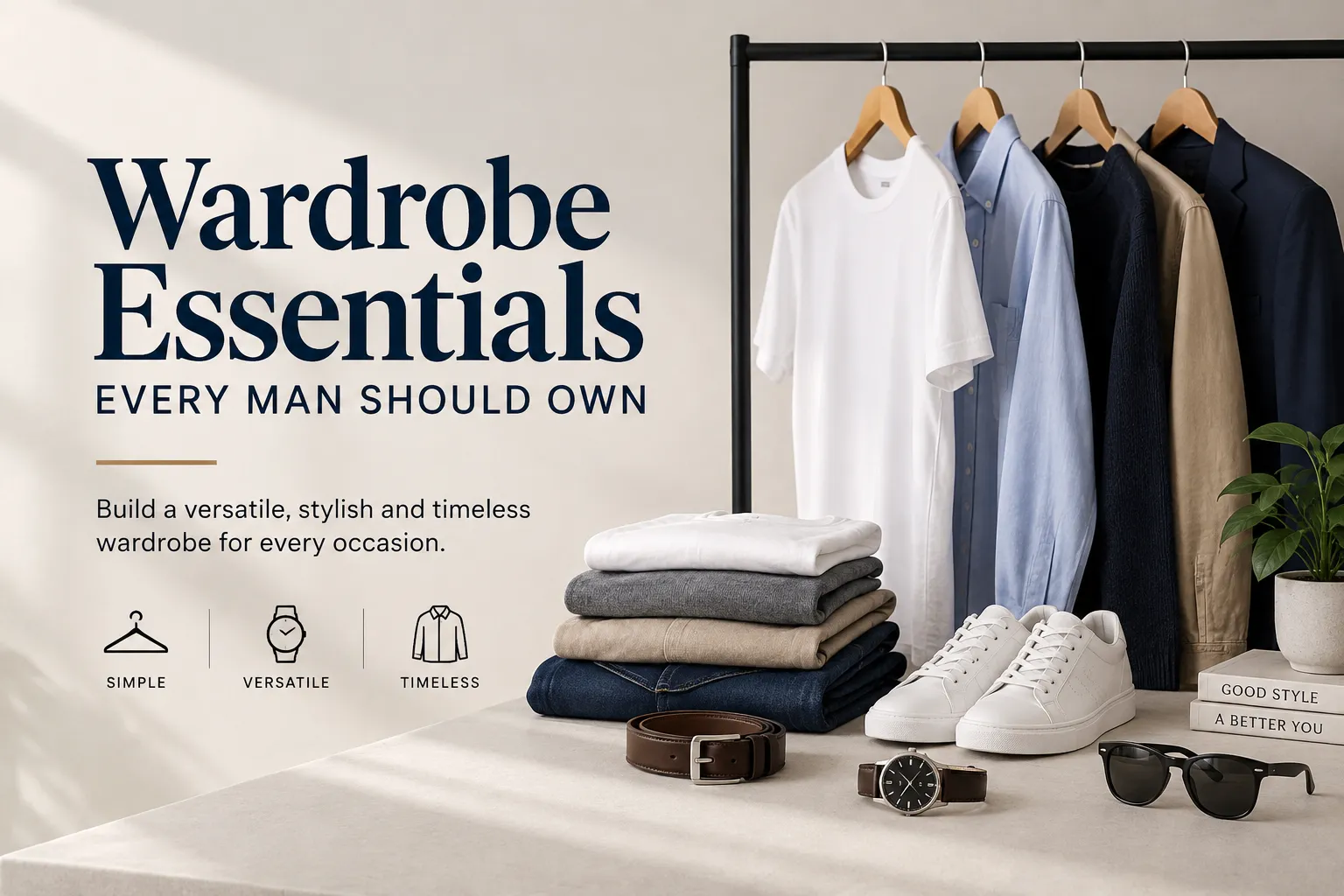
Men’s wardrobe essentials are the foundation of affordable men’s style. Instead of buying whatever catches your eye, start with pieces you can wear repeatedly.
Useful basics include:
- Plain T-shirts
- Oxford or casual shirts
- Dark jeans
- Chinos
- Neutral trousers
- Simple sneakers
- Casual leather shoes
- A lightweight jacket
- A versatile sweater
For example, a white T-shirt can work with dark jeans and sneakers for a casual look, or with chinos and a jacket for a smarter outfit.
The more combinations a piece creates, the more useful it becomes.
Focus on Fit, Not Brand Names
Fit is one of the easiest ways to make affordable clothes look more polished.
Avoid extremely baggy clothes unless you’re deliberately wearing an oversized style. At the same time, clothing shouldn’t be so tight that it restricts movement or pulls across buttons.
When buying shirts and jackets, check that the shoulder seams sit close to your natural shoulders. Trousers should have an appropriate length without excessive fabric pooling around your shoes.
If an inexpensive pair of trousers is almost perfect but slightly too long, inexpensive tailoring can be worthwhile. Small alterations can make ordinary clothes look considerably more refined.
Style example: A simple navy shirt, inexpensive chinos, and clean brown shoes can look sophisticated when each piece fits correctly.
Choose Neutral Colors
Neutral colors are extremely useful when building a wardrobe on a budget because they are easy to mix and match.
Good starting colors include:
- Black
- White
- Navy
- Grey
- Beige
- Olive
- Brown
Try combinations such as:
- White T-shirt + dark jeans + clean sneakers
- Navy shirt + beige chinos + brown shoes
- Grey sweater + black trousers + white sneakers
Once your basics are covered, you can gradually introduce stronger colors or patterns.
Shop Smart and Avoid Impulse Purchases
Budget fashion for men isn’t simply about finding the cheapest possible clothes. It’s about getting useful clothing for the money you spend.
Before shopping, make a list of what your wardrobe actually needs. Then compare prices and consider seasonal sales, outlet stores, thrift shops, and second-hand clothing.
Ask yourself one question before buying something:
“How many outfits can I create with this?”
A trendy shirt that works with only one pair of trousers may be less useful than a simple shirt that works with jeans, chinos, and trousers.
Understand Cost Per Wear
Cost per wear is a simple way to think about value.
Suppose you buy a $60 jacket and wear it 30 times. That’s $2 per wear. A $25 trendy shirt that you wear twice costs $12.50 per wear.
The more frequently you can realistically wear something, the more valuable it can become.
Affordable Men’s Wardrobe Essentials
| Clothing Item | Why You Need It | Versatile Colors |
| Plain T-shirt | Everyday outfits | White, black, grey |
| Oxford Shirt | Smart-casual looks | White, light blue |
| Dark Jeans | Casual and versatile | Dark blue |
| Chinos | Smart-casual outfits | Beige, navy |
| Sneakers | Everyday footwear | White, black |
| Casual Shoes | Dressier occasions | Brown, black |
| Lightweight Jacket | Layering | Navy, olive |
| Sweater | Cooler weather | Grey, navy |
You don’t need to buy everything at once. Build your collection gradually according to your lifestyle.
Learn to Create Multiple Outfits
A small wardrobe can produce many outfits when the pieces coordinate.
Here are seven affordable examples:
- Everyday casual: White T-shirt, dark jeans, white sneakers.
- College outfit: Grey T-shirt, olive chinos, casual sneakers.
- Office smart-casual: Light-blue Oxford shirt, navy chinos, brown shoes.
- Weekend outfit: Plain polo or T-shirt, dark jeans, clean sneakers.
- First-date outfit: Navy shirt, beige chinos, brown casual shoes.
- Dinner outfit: Grey sweater, black trousers, clean leather shoes.
- Casual event: White shirt, dark jeans, lightweight jacket, minimal sneakers.
The goal isn’t to make every outfit complicated. Simple combinations often look the most intentional.
Take Care of Your Clothes
Taking care of clothing is one of the easiest affordable fashion tips because it costs little or nothing.
Follow the care instructions on your garments, avoid washing clothes unnecessarily, and air-dry items when appropriate.
Also:
- Fold knitwear rather than hanging it.
- Hang shirts and jackets.
- Remove stains as soon as possible.
- Clean shoes regularly.
- Repair loose buttons and small tears.
- Store seasonal clothing properly.
A $30 shirt that lasts several years is much better value than a $20 shirt that quickly loses its shape.
Don’t Ignore Grooming
Good style isn’t only about clothing. Grooming has a major effect on your overall appearance.
Keep things simple:
- Get regular haircuts.
- Keep your nails clean and trimmed.
- Maintain facial hair neatly.
- Use basic skincare.
- Keep your shoes clean.
- Maintain fresh breath.
- Wear a light, appropriate fragrance.
You don’t need an elaborate grooming routine. Looking clean and well-maintained is more important than using a long list of expensive products.
Common Budget Fashion Mistakes Men Should Avoid
Avoid these common mistakes when building a wardrobe:
- Buying clothes only because they are cheap.
- Chasing every new trend.
- Wearing poorly fitting clothes.
- Buying too many similar T-shirts.
- Ignoring shoes.
- Wearing wrinkled clothing.
- Mixing too many unrelated colors.
- Buying fake designer products.
- Neglecting grooming.
- Spending money without a wardrobe plan.
Cheap clothing isn’t automatically good value. The right question is whether you’ll actually wear it.
How to Build a Stylish Wardrobe on a Small Budget
Follow this simple strategy:
Step 1: Check what you already own.
You may already have useful pieces hiding at the back of your wardrobe.
Step 2: Remove damaged or rarely worn items.
Keep clothes that fit, suit your lifestyle, and are in usable condition.
Step 3: Identify wardrobe gaps.
Perhaps you need dark jeans, versatile shoes, or a smart-casual shirt.
Step 4: Buy versatile basics first.
Prioritize pieces that work with several items you already own.
Step 5: Prioritize fit and quality.
Don’t automatically choose the cheapest option.
Step 6: Add a few accessories gradually.
A simple watch or belt can add polish without requiring a large investment.
Step 7: Avoid unnecessary purchases.
Give yourself time before buying something that isn’t on your list.
For example, someone starting from scratch could first focus on two or three plain T-shirts, one Oxford shirt, dark jeans, chinos, versatile sneakers, and one smarter pair of shoes. More specialized pieces can come later.
Accessories That Improve Men’s Style
Accessories can make simple outfits feel more complete.
Useful options include:
- A simple watch
- A minimal belt
- Sunglasses
- A clean, practical wallet
- A simple bracelet, if it suits your style
- A classic cap for casual outfits
The key is restraint. Accessories should complement an outfit rather than become the main attraction.
Frequently Asked Questions
1. Can men dress well without spending a lot of money?
Yes. Focus on fit, versatile basics, neutral colors, clean footwear, clothing care, and grooming rather than expensive labels.
2. What are the most important men’s wardrobe essentials?
Start with plain T-shirts, an Oxford shirt, dark jeans, chinos, versatile sneakers, casual shoes, a lightweight jacket, and a sweater.
3. How can I make cheap clothes look expensive?
Prioritize fit, keep clothing wrinkle-free and clean, choose simple colors, maintain your shoes, and avoid excessive logos.
4. What colors are easiest to style?
White, black, navy, grey, beige, olive, and brown are particularly versatile.
5. How many clothes does a man actually need?
There is no universal number. A smaller wardrobe can work extremely well if the pieces fit your lifestyle and combine easily.
Conclusion
Learning how to dress well on a budget is less about finding a magical cheap clothing store and more about making smarter decisions.
Start with the clothes you already own. Build around versatile basics, choose colors that work together, pay attention to fit, and take care of everything you buy. You don’t need a huge wardrobe to create outfits for college, work, weekends, dates, and social occasions.
Most importantly, don’t feel pressured to buy something simply because it’s fashionable. Build your wardrobe gradually and let your personal style develop over time.
Dressing well is ultimately about looking intentional, clean, comfortable, and confident—not looking expensive.
Good style isn’t about how much you spend; it’s about how well you choose, fit, and wear what you own.