For someone buying an electric vehicle (EV) for the first time, charging can seem complicated. What charger should you use? How long will it take? Can you charge an EV at home? What is the difference between AC and DC charging?
The good news is that electric car charging becomes quite simple once you understand the basics.
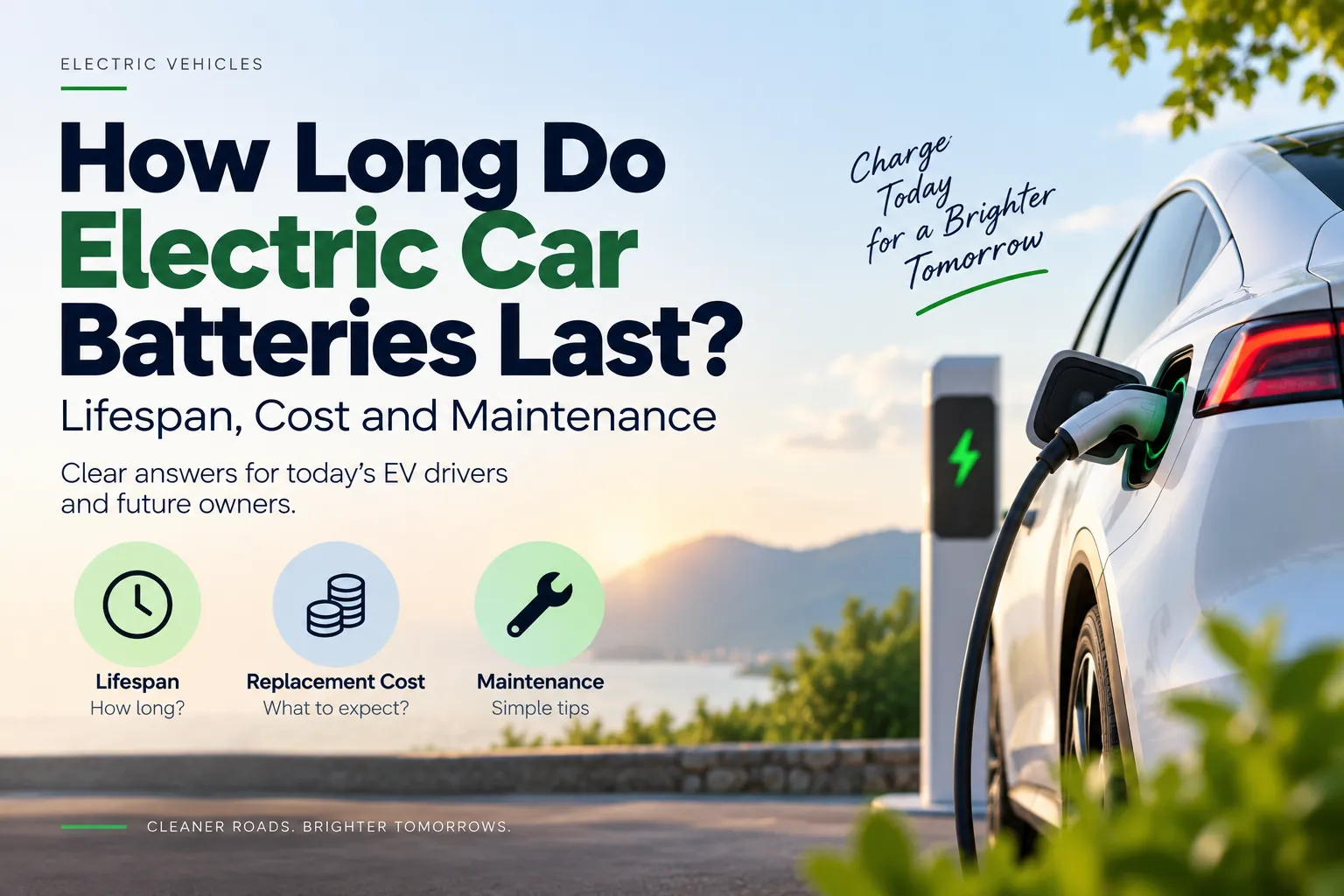
Unlike a petrol or diesel vehicle, an EV gets its energy from electricity stored in a battery. You can usually charge it at home, at work, or at EV public charging stations. The best option depends on your daily driving needs, available electrical infrastructure, and how quickly you need to recharge.
Charging speed varies between vehicles and charging equipment. Battery size, current battery level, charger power, the vehicle’s maximum charging capability, and temperature can all affect EV charging time.
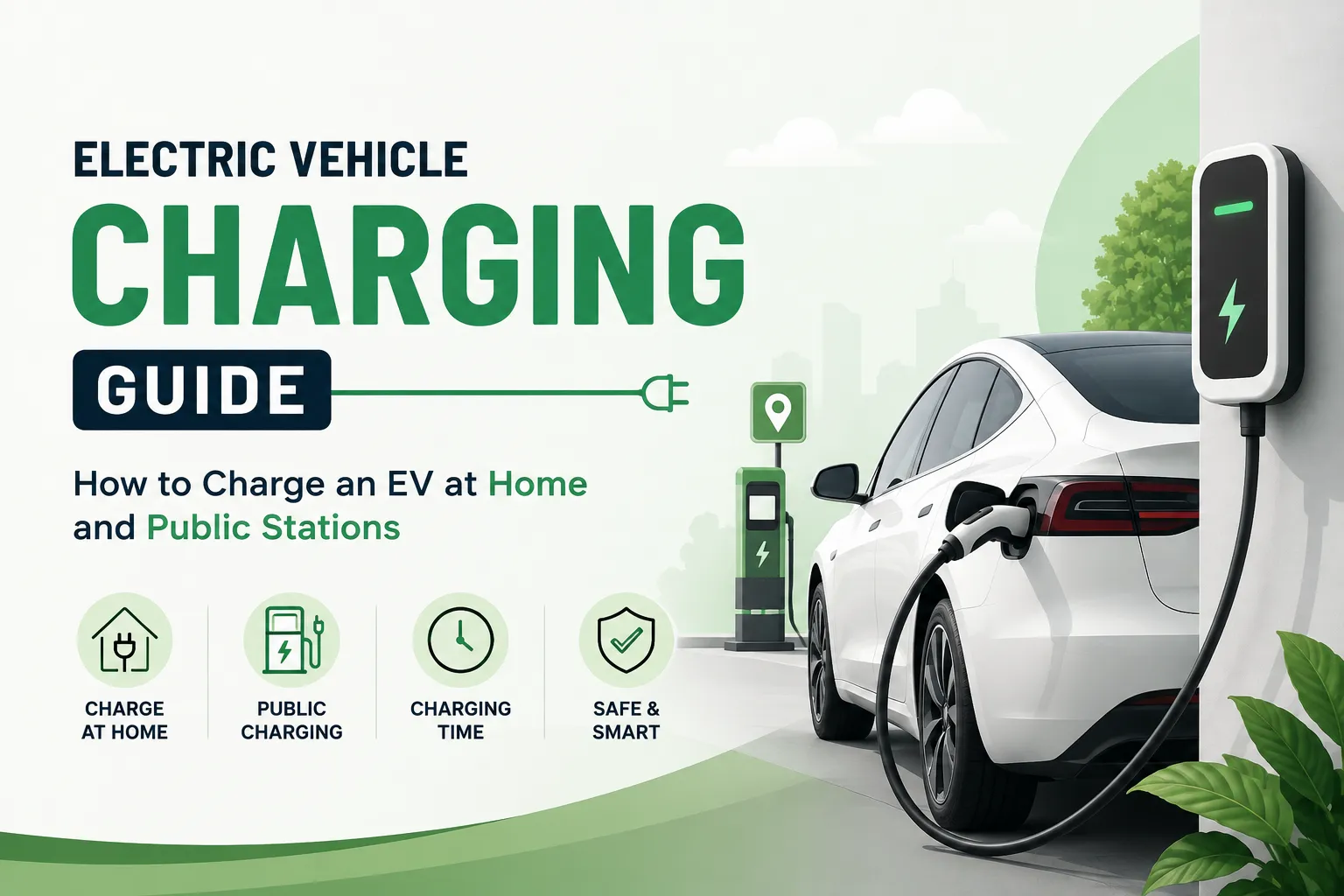
This Electric Vehicle Charging Guide explains how charging works, the different types of EV chargers, how to charge at home and public stations, and the common mistakes beginners should avoid.
Also Read: Electric Cars vs Petrol Cars: Which Is Better in 2026?
How Does EV Charging Work?
An EV charging system transfers electrical energy into the vehicle’s battery. When you connect the charging cable, electricity flows from the power source to the car through the charging equipment.
There are two important types of electricity to understand: AC (alternating current) and DC (direct current).
Most household electricity is AC. During AC charging, the vehicle’s onboard charger converts AC electricity into DC electricity that the battery can store.
DC fast chargers work differently. They provide DC power to the vehicle’s battery system without relying on the car’s onboard AC charger for the main conversion, allowing much higher charging power in compatible vehicles.
For example, imagine your EV battery is like a water tank. A standard household outlet might fill the tank slowly, while a more powerful charger can fill it much faster. However, the tank—and the vehicle’s charging system—still determines how quickly it can safely accept energy.
Types of EV Chargers
| Charger Type | Typical Use | Charging Speed | Best For |
| Level 1 / Standard AC | Household outlet | Slow | Overnight or occasional charging |
| Level 2 / Faster AC | Home wall-box, workplace | Moderate to fast | Regular daily charging |
| DC Fast Charging | Public charging station | Fast | Road trips and quick top-ups |
Exact charging speeds vary considerably by vehicle, charger, electrical supply, and local standards.
Level 1 / Standard AC Charging
Level 1 charging uses a standard household electrical outlet where supported. It requires little additional equipment beyond compatible charging equipment, but charging is relatively slow.
It can be useful when a vehicle is driven only a limited distance each day and can remain plugged in for many hours.
Because household outlets and electrical systems differ, always follow the vehicle and charging-equipment manufacturer’s requirements.
Level 2 / Faster AC Charging
Level 2 charging uses a dedicated AC charging system, commonly known as a home EV charger or wall-box.
It generally provides considerably more power than a standard household outlet. This makes it a popular option for EV owners who want convenient EV charging at home.
A qualified electrician should assess the home’s electrical system and install dedicated charging equipment where required.
DC Fast Charging
DC fast charging is designed to deliver much higher charging power than typical AC charging.
These chargers are commonly found at public charging locations, highways, travel routes, and other places where drivers may need a faster recharge.
However, not every EV can accept the same DC charging power. A vehicle may also reduce charging power under certain conditions, so advertised maximum power should not be treated as a guaranteed charging speed.
How to Charge an EV at Home
Home charging is convenient because you can often recharge while the vehicle is parked overnight.
Step-by-step EV charging at home
- Park safely near the charging point or electrical outlet.
- Turn off the vehicle if required by the manufacturer’s instructions.
- Locate the charging port on the vehicle.
- Connect the charging cable securely.
- Start charging according to the vehicle or charger instructions.
- Check the charging status using the vehicle display, charger, or mobile app if available.
- Stop charging when you have reached the desired charge level.
- Disconnect the cable safely and store it properly.
There is an important difference between using a regular household outlet and installing a dedicated home charger.
A household outlet may provide slower charging. A dedicated wall-box can provide higher charging power, subject to the vehicle and home’s electrical capacity.
Electrical installation should be carried out by a qualified professional when required. Never improvise electrical connections or use damaged charging equipment.
How to Charge an EV at Public Charging Stations
Public EV charging is particularly useful for long journeys or when home charging isn’t available.
The process is generally straightforward:
- Find a compatible charging station.
- Check the connector and charging compatibility.
- Park correctly in the designated space.
- Plug the cable into the vehicle.
- Start the charging session using the required method.
- Monitor the charging session.
- Stop the session when finished.
- Disconnect the cable and move the vehicle when charging is complete.
Depending on the charging network and location, you may need a mobile app, RFID card, payment method, vehicle interface, or another form of authentication.
Before starting a long trip, check whether charging stations along your route support your vehicle’s connector and charging requirements.
How Long Does It Take to Charge an EV?
There is no single answer to “How long does it take to charge an EV?”
Charging time depends on several factors:
- Battery capacity
- Current battery level
- Charger power
- Vehicle’s maximum charging rate
- Battery temperature
- Charging conditions
- Charging equipment and electrical supply
| Charging Method | General Charging Speed | Typical Use |
| Standard AC | Slow | Overnight/home charging |
| Faster AC | Moderate | Home/workplace charging |
| DC Fast Charging | Fast | Road trips/public stations |
A larger battery does not automatically mean faster charging. Similarly, connecting an EV to a high-powered charger does not mean the vehicle will always receive that maximum power.
AC vs DC Charging: What’s the Difference?
The easiest way to remember the difference is where the main electricity conversion takes place.
AC charging: Electricity is supplied as AC and converted by the vehicle’s onboard charger before being stored in the battery.
DC charging: The charging equipment supplies DC power directly to the vehicle’s battery system, allowing compatible vehicles to charge at much higher power.
| Feature | AC Charging | DC Charging |
| Speed | Usually slower | Usually faster |
| Common Location | Home/workplace | Public fast-charging stations |
| Best For | Daily charging | Longer trips |
| Cost | Often lower, but varies | Often higher, but varies |
The actual cost depends on factors such as electricity rates, charging-network fees, location, vehicle efficiency, and the amount of energy used.
EV Charging Tips for Beginners
Keep these EV charging tips in mind:
- Check your vehicle manufacturer’s recommended charging methods.
- Learn which connector types your vehicle supports.
- Plan charging stops before long journeys.
- Use convenient home charging for daily driving when practical.
- Follow the instructions displayed at public chargers.
- Do not use damaged cables, plugs, or connectors.
- Keep charging equipment clean and dry as recommended by the manufacturer.
- Check the charging status before leaving the vehicle.
- Avoid assuming that every charger delivers the same speed.
- Understand the charging limits of your specific EV.
Common EV Charging Mistakes to Avoid
New EV owners sometimes make simple mistakes that can cause inconvenience or create safety concerns.
Avoid:
- Using an incompatible connector.
- Ignoring charging warnings or error messages.
- Using damaged charging cables.
- Installing home charging equipment without an appropriate electrical assessment.
- Blocking a public charging space after your session has finished.
- Failing to check charger compatibility before a long trip.
- Assuming every EV supports the same charging speed.
- Relying on a single charging location without considering alternatives on long journeys.
Also Read About: Best Car Maintenance Tips: Complete Guide for Every Car Owner
Frequently Asked Questions
1. How do you charge an electric vehicle?
Park the EV safely, connect a compatible charging cable, start the charging session, and monitor the vehicle or charger until the desired charge level is reached. Then stop the session and disconnect safely.
2. Can I charge an EV at home?
Yes. Many EVs can be charged at home using a suitable household outlet or a dedicated home EV charger, depending on the vehicle and electrical installation.
3. How long does it take to charge an EV?
Charging time varies by battery size, charger power, vehicle charging limits, temperature, and other conditions. Standard AC charging is generally slower than DC fast charging.
4. Can I charge an EV using a normal household outlet?
Some EVs can be charged using a suitable household outlet and compatible equipment. However, charging is typically slower, and the electrical system should be suitable for the intended use.
5. Can all EVs use public charging stations?
Not necessarily. The vehicle must be compatible with the charger’s connector, charging standard, and power requirements. Always check compatibility before starting a charging session.
Conclusion
Learning how to charge an EV is easier than it may initially seem. Once you understand the difference between standard AC, faster AC, and DC fast charging, you can choose the right charging method for different situations.
For everyday driving, home charging can be convenient when suitable electrical infrastructure is available. Public charging stations become especially useful for longer journeys and situations where home charging isn’t practical.
The most important thing is to understand your particular vehicle’s charging capabilities, connector type, and manufacturer’s recommendations. Charging speeds and equipment can differ significantly between EV models.
With a little planning and basic knowledge, electric vehicle charging can become a simple part of your daily driving routine.