Hypertension or High Blood Pressure is one of the most prevalent health issues across the globe. Essentially, it happens when there is perpetual pressure from blood on the walls of your arteries.
Most of the people suffer from Hypertension for a long time unaware. It is why it is sometimes referred to as a silent killer. Often, it has no clear symptoms until serious health problems occur.
High BP – or hypertension – is a serious widespread disorder that raises the risk of heart disease, stroke, kidney injury, and other life-threatening medical conditions. Fortunately, it may be avoided, as well as perform through nice life-style changes and clinical remedy.
What Is High Blood Pressure?
Blood pressure is the force of blood pushing against the walls of your arteries when your heart pumps.
BP readings include two numbers:
Systolic Pressure
The higher number provides the pressure in your arteries during heart beats as blood pumps through.
Diastolic Pressure
The lower number reflects at what pressure the heart is resting between beats.
For example:
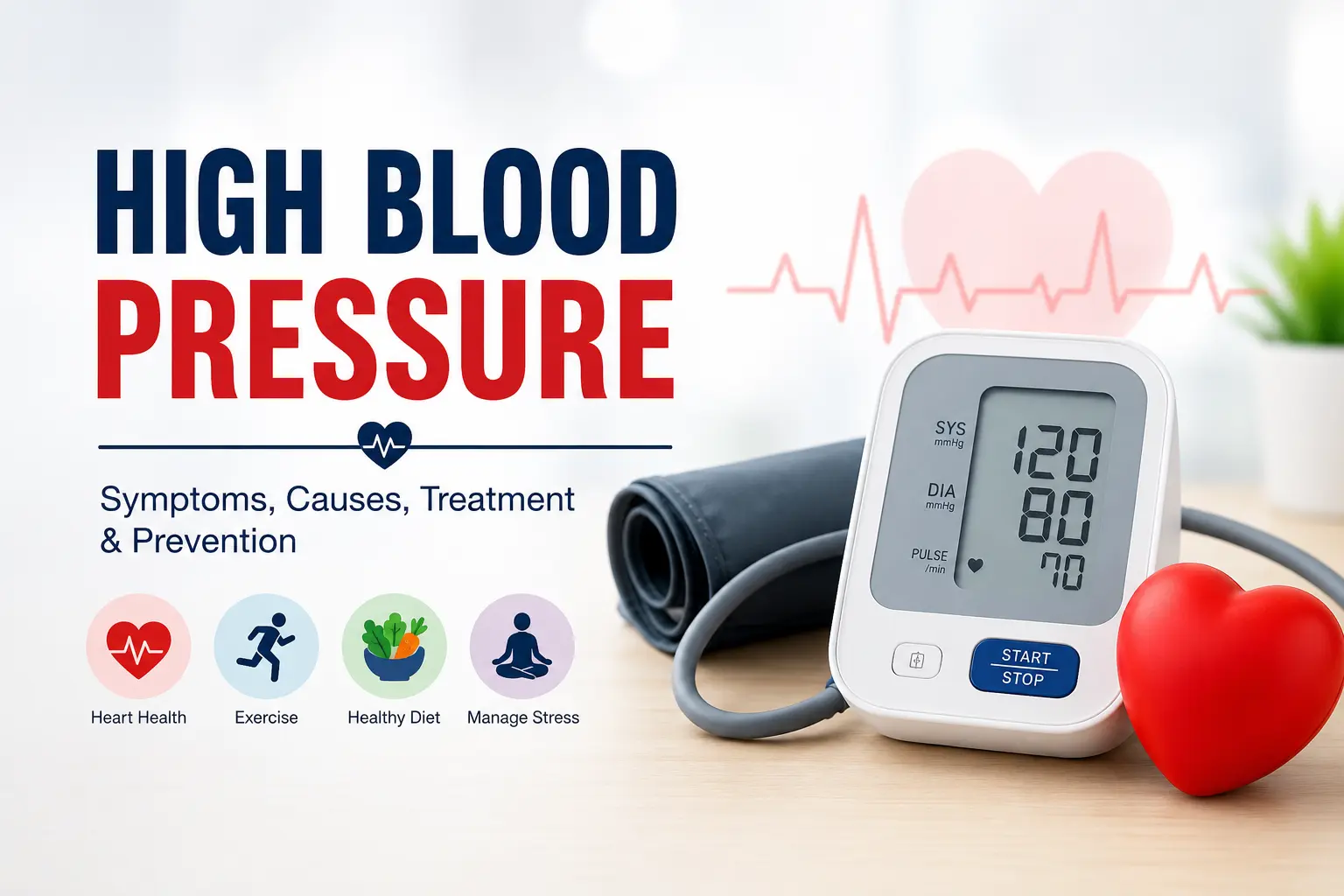
120/80 mmHg
- 120 = Systolic pressure
- 80 = Diastolic pressure
If either number remains elevated above target, hypertension could be at play.
Blood Pressure Categories
| Category | Systolic (Top Number) | Diastolic (Bottom Number) |
| Normal | Less than 120 | Less than 80 |
| Elevated | 120–129 | Less than 80 |
| Stage 1 Hypertension | 130–139 | 80–89 |
| Stage 2 Hypertension | 140 or higher | 90 or higher |
| Hypertensive Crisis | 180 or higher | 120 or higher |
Normal Blood Pressure
Your heart and your blood vessels are operating in a normal range.
Elevated Blood Pressure
Elevated blood pressure, but not hypertension Modification of lifestyle may prevent progression.
Stage 1 Hypertension
This is the beginning of hypertension and it may need lifestyle changes alone or combined with medications.
Stage 2 Hypertension
Hypertension is markedly raised and usually requires medical therapy.
Hypertensive Crisis
This is a medical emergency. If there are other symptoms, immediate medical attention is important.
What Are the Symptoms of High Blood Pressure?
Hypertension poses several challenges, the most difficult of which is that many people feel absolutely no symptoms whatsoever.
Generally speaking, hypertension is usually diagnosed during periodic physical examinations.
Common Symptoms of High Blood Pressure
Increased blood pressure So high it causes:
- Severe headaches
- Dizziness
- Blurred vision
- Shortness of breath
- Chest pain
- Nosebleeds
- Confusion
- Fatigue
- Irregular heartbeat
But these symptoms typically arise only when blood pressure is severely elevated.
Important Note
Take symptoms with a grain of salt. By the way, consistent blood pressure measurements is the only accurate method to diagnose a hypertension problem.
What Causes High Blood Pressure?
Causes of hypertension differ from individual to person.
Lifestyle Factors
Excess Salt Intake
Excess sodium causes the body to hold on to fluid which raises blood pressure.
Physical Inactivity
A sedentary lifestyle can reduce cardiovascular fitness and even lead to high blood pressure.
Obesity
With excess body weight, the heart beats up tighter and thus speaks for greater blood pressure.
Smoking
After each cigarette, smoking immediately damages blood vessels and increases blood pressure.
Excess Alcohol Consumption
Long-term excessive alcohol consumption can elevate blood pressure.
Chronic Stress
Chronic stress can lead to a propensity or to behaviors that increase blood pressure.
Medical Causes
Kidney Disease
The kidneys help control the pressure in your blood. High readings can be caused by problems with the kidneys.
Sleep Apnea
This disorder leads to sleep apnoea, temporary cessation of breathing while asleep, and is closely associated with high blood pressure.
Hormonal Disorders
Hormonal disorders which disturb the regulation of blood pressure
Certain Medications
Certain medications can also increase blood pressure, such as:
- Certain pain relievers
- Some decongestants
- Certain antidepressants
- Some hormonal medications
Never stop any medicines that were prescribed without asking your healthcare professional.
Risk Factors
You are at higher risk of developing high blood pressure if you have one or more of:
- Increasing age
- Family history of hypertension
- Diabetes
- Obesity
- Poor diet
- Smoking habits
- Physical inactivity
- Chronic stress
Why Is High Blood Pressure Dangerous?
Over time, hypertension can lead to damage in blood vessels. It is important to understand that this damage can have far-reaching effects on many organs in the body.
High BP Complications Table
| Complication | Organ Affected | Potential Impact |
| Heart Attack | Heart | Reduced blood flow to heart muscle |
| Stroke | Brain | Blocked or burst blood vessels |
| Heart Failure | Heart | Heart becomes weaker over time |
| Kidney Damage | Kidneys | Reduced filtering ability |
| Vision Problems | Eyes | Damage to blood vessels in the retina |
| Cognitive Decline | Brain | Memory and thinking difficulties |
Heart Attack
When arteries are diseased they narrow and become blocked, this limits the blood flow to the heart.
Stroke
One of the major causes of stroke is hypertension.
Heart Failure
Your heart needs to work harder against the higher pressure. As a result the heart becomes weaker.
Kidney Damage
Chronically high blood pressure is capable of harming kidney blood vessels and damaging function.
Vision Problems
The small blood vessels of your eyes may be damaged.
Cognitive Decline
Blood flow and damage to blood vessels can impact thinking and memory.
Myth vs Fact
| Myth | Fact |
| High blood pressure always causes symptoms. | Most people have no symptoms. |
| Only older adults get hypertension. | It can affect adults of any age. |
| Medication alone is enough. | Lifestyle changes remain important. |
| If blood pressure improves, treatment can be stopped. | Any treatment changes should be discussed with a healthcare professional. |
| Sea salt is completely safe. | All forms of salt contain sodium and can affect blood pressure. |
How Is High Blood Pressure Diagnosed?
Blood Pressure Measurement
Healthcare professionals measure blood pressure using an inflatable cuff wrapped around the upper arm.
Several readings on different occasions are frequently necessary for diagnosis.
Home Monitoring
Many people use home blood pressure monitors to track readings over time.
Benefits include:
- Convenience
- Better long-term tracking
- Reduced “white coat” effect
Ambulatory Monitoring
A portable device measures blood pressure throughout the day and night while you continue normal activities.
When to Seek Medical Advice
Speak with a healthcare professional if:
- Repeated readings are above normal
- You have risk factors for hypertension
- You experience symptoms such as chest pain or severe headaches
Treatment Options for High Blood Pressure
Treatment often combines healthy lifestyle habits and medication when necessary.
Lifestyle Changes
DASH-Style Eating Approach
The DASH diet emphasizes:
- Fruits
- Vegetables
- Whole grains
- Lean proteins
- Low-fat dairy
Lower Sodium Intake
Reducing sodium intake can significantly improve blood pressure control.
Weight Management
Even modest weight loss can lower blood pressure.
Exercise
Aim for at least 150 minutes of moderate physical activity per week.
Examples include:
- Walking
- Cycling
- Swimming
- Dancing
Better Sleep
Adults generally benefit from 7–9 hours of quality sleep each night.
Stress Management
Helpful techniques include:
- Meditation
- Deep breathing
- Yoga
- Spending time outdoors
- Social support
Medications
Healthcare providers may prescribe medications such as:
Diuretics
Help remove excess fluid and sodium.
ACE Inhibitors
Help relax blood vessels.
ARBs
Work similarly to ACE inhibitors.
Calcium Channel Blockers
Help blood vessels relax and widen.
Beta-Blockers
Reduce the workload on the heart.
Medication choices vary based on individual health needs.
How to Lower Blood Pressure Naturally
Follow these practical steps:
- Reduce salt intake.
- Eat more fruits and vegetables.
- Maintain a healthy weight.
- Exercise regularly.
- Quit smoking.
- Limit alcohol intake.
- Improve sleep quality.
- Manage stress effectively.
- Stay hydrated.
- Follow medical advice and monitor blood pressure regularly.
Small daily improvements often produce meaningful long-term results.
Foods That Help Control Blood Pressure
A healthy eating pattern can support better blood pressure control.
Best Foods for Hypertension
| Food Group | Examples | Potential Benefits |
| Fruits | Bananas, berries, oranges | Rich in potassium and antioxidants |
| Vegetables | Spinach, broccoli, carrots | Provide fiber and nutrients |
| Whole Grains | Oats, brown rice, quinoa | Support heart health |
| Lean Proteins | Fish, chicken, beans | Lower saturated fat intake |
| Nuts and Seeds | Almonds, walnuts, flaxseeds | Healthy fats and minerals |
| Low-Fat Dairy | Yogurt, milk | Source of calcium and protein |
Helpful Nutrients
- Potassium
- Magnesium
- Calcium
- Fiber
- Healthy fats
Foods and Habits to Avoid
Certain foods and habits can worsen hypertension.
Processed Foods
Often contain hidden sodium.
Examples include:
- Packaged snacks
- Frozen meals
- Processed meats
Excess Sodium
Too much salt contributes to fluid retention and increased pressure.
Smoking
Smoking damages blood vessels and increases cardiovascular risk.
Excess Alcohol
Heavy drinking can raise blood pressure levels.
Sugary Beverages
Frequent consumption may contribute to weight gain and metabolic issues.
Quick Blood Pressure Control Checklist
Use this simple checklist:
☐ Check blood pressure regularly
☐ Limit sodium intake
☐ Eat more fruits and vegetables
☐ Exercise at least 150 minutes weekly
☐ Maintain a healthy weight
☐ Avoid smoking
☐ Limit alcohol consumption
☐ Manage stress
☐ Get adequate sleep
☐ Follow medical recommendations
When to Seek Emergency Care
Seek immediate medical attention if:
- Blood pressure reaches 180/120 mmHg or higher
- Chest pain occurs
- Severe shortness of breath develops
- Sudden weakness or numbness occurs
- Difficulty speaking develops
- Severe headache appears suddenly
- Vision changes occur
- Confusion or loss of consciousness occurs
These symptoms may indicate a hypertensive emergency, stroke, or heart attack.
Frequently Asked Questions
1. What are high levels of blood pressure?
Normal blood pressure is defined as a reading of 130/80 mmHg and above.
2. Can hypertension be cured?
Although most cases cannot be cured entirely, they can often be successfully managed with diet and treatment.
3. What are the warning signs of dangerously high blood pressure?
Possible symptoms include headache, shortness of breath, chest pain, confusion and vision changes.
4. How frequently is blood pressure monitored?
Regular blood pressure checks are important – even for healthy adults. Those with hypertension or risk factors require more frequent monitoring at the direction of a physician.
5. What foods are banned in hypertension?
Limit:
- Processed foods
- Salty snacks
- Processed meats
- Sugary drinks
- Excess alcohol
6. Can stress increase blood pressure?
Yes. Stress can lead to a temporary increase in the blood pressure, and stress may also compound the problem of obesity that pushes people toward high-blood-pressure diseases.
7. Is hypertension hereditary?
While genetics may contribute to increased risk, lifestyle has an even larger impact.
8. How To Lower Blood Pressure Quickly In A Safe Way
If the blood pressure is high but not for emergency emergencies, following medical advice, reducing sodium intake, taking prescribed medicine, and lying down can be done. Emergency readings need medical attention right away.
Key Takeaways
- Elevated Blood Pressure often causes no symptoms.
- Hypertension is a major risk factor for heart disease and stroke.
- Regular monitoring is essential.
- Healthy eating patterns can significantly improve blood pressure control.
- Physical activity supports heart health.
- Smoking and excess alcohol increase risk.
- Medications may be necessary for some individuals.
- Early diagnosis helps prevent serious complications.
- Lifestyle changes remain the foundation of treatment.
- Consistent medical follow-up is important.
Conclusion
Hypertension is one of the most prevalent and significant health issues facing adults today. Since it usually progresses without obvious symptoms, most individuals are unaware they have it until complications such as stroke or heart attack occur.
The good news is that hypertension can often be prevented, controlled, and treated through healthier lifestyle choices, regular blood pressure monitoring, and medical care when needed. Simple steps such as eating a balanced diet, staying physically active, managing stress, maintaining a healthy weight, and following professional medical advice can make a significant difference.
If your blood pressure readings become a concern, it is important to consult a healthcare professional. Early detection and timely intervention can help protect your heart, brain, and kidneys for years to come.
Medical Disclaimer
This article is intended for educational purposes only and should not be considered medical advice. Always consult a qualified healthcare professional for diagnosis, treatment, and personalized recommendations regarding high blood pressure or any other medical condition.