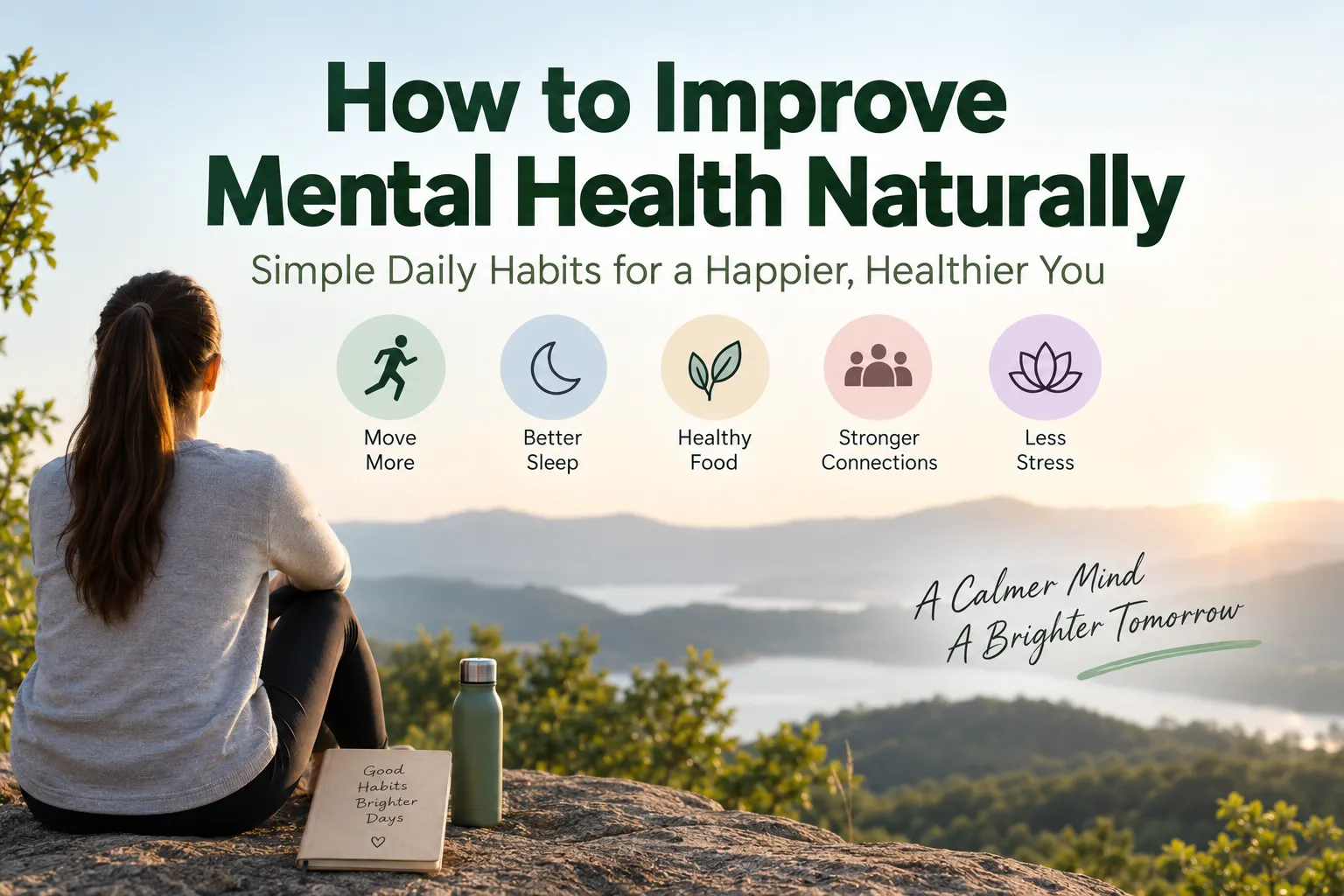
Mental health is an important part of overall health. It influences how we think, feel, handle everyday stress, relate to other people, and manage daily responsibilities.
Modern routines can make emotional well-being harder to maintain. Poor sleep, prolonged stress, inactivity, social isolation, unhealthy eating patterns, and spending too much time on screens may all affect how we feel. On the other hand, healthy lifestyle habits can provide valuable natural mental health support.
The good news is that improving mental well-being does not require changing your entire life overnight. Small, consistent actions—such as walking regularly, getting enough sleep, eating balanced meals, spending time outdoors, and staying connected—can become meaningful parts of self-care. WHO also identifies physical activity, healthy eating, sleep, avoiding harmful substance use, and social connection as important self-care practices.
These approaches can support mental wellness, but they are not a substitute for professional treatment when someone has a mental health condition or is struggling to cope.
What Does Improving Mental Health Naturally Mean?
Natural mental health support means using healthy daily habits and lifestyle changes to support emotional well-being, manage everyday stress, and build resilience.
Common healthy mental health habits include:
- Regular physical activity
- Quality sleep
- Nutritious, balanced food
- Meaningful social connection
- Stress-management techniques
- Time outdoors
- Mindfulness and relaxation
The goal is not to achieve perfect mental health. Instead, it is to create routines that support your body and mind over time.
Best Natural Ways to Improve Mental Health
Exercise Regularly
Physical activity is one of the most practical natural ways to improve mental health. Regular movement can support mood, well-being, sleep, and overall brain health. WHO notes that physical activity can also reduce symptoms associated with depression and anxiety.
You do not need an expensive gym membership. Try:
- Walking
- Cycling
- Swimming
- Yoga
- Strength training
- Simple home workouts
If you are inactive, start with a 20–30 minute walk most days and gradually build from there. Even small amounts of movement are a useful starting point.
Get Enough Quality Sleep
Sleep and mental well-being are closely connected. Regular, restorative sleep helps the body and mind recover and can make it easier to manage everyday stress.
Most adults generally need around 7–9 hours of sleep each night, although individual needs vary.
Helpful sleep habits include:
- Keep a consistent bedtime and wake-up time.
- Create a relaxing bedtime routine.
- Reduce excessive screen use before bed.
- Keep your bedroom quiet, comfortable, and dark.
- Avoid excessive caffeine late in the day.
If sleep problems persist despite healthy habits, consider discussing them with a healthcare professional.
Eat a Balanced Diet
Nutrition supports both physical and brain health. A balanced diet should provide a variety of nutrients rather than relying on one “superfood.” WHO recommends dietary patterns based on adequacy, balance, moderation, and diversity.
Build meals around foods such as:
- Fruits and vegetables
- Whole grains
- Beans and lentils
- Nuts and seeds
- Eggs
- Fish or other nutritious protein sources
Food alone cannot cure depression, anxiety, or other mental health conditions. However, regular, balanced meals are an important part of a healthy lifestyle for mental health.
Spend Time Outdoors
Spending time in natural environments can be a simple way to support well-being. Nature exposure has been associated with benefits such as reduced stress, improved mood, physical activity, and relaxation.
Try adding small outdoor activities to your routine:
- Take a morning walk.
- Sit in a nearby park.
- Work in a garden.
- Exercise outdoors.
- Eat a meal outside when practical.
You do not need to spend hours in nature. Making outdoor time a regular part of your week is a realistic goal.
Practice Mindfulness and Deep Breathing
Mindfulness means paying attention to the present moment without immediately judging your thoughts or feelings. Relaxation techniques, including slow breathing and mindfulness, can be useful tools for managing everyday stress.
Try this simple exercise:
- Breathe in slowly.
- Pause briefly.
- Breathe out slowly.
- Repeat for a few minutes.
You can practice while sitting at your desk, before bed, or during a stressful moment.
These techniques may help with everyday stress, but they are not a cure for mental health disorders.
Stay Connected With Other People
Healthy relationships can play an important role in mental well-being. Social connection and support are recognized protective factors for mental health, while loneliness and social isolation can negatively affect well-being.
Consider:
- Calling a friend.
- Spending time with family.
- Joining a hobby group.
- Participating in community activities.
- Talking honestly with someone you trust.
A short, meaningful conversation can be more valuable than simply being around people.
Manage Daily Stress
Stress is part of life, but constantly operating at full capacity can make healthy routines harder to maintain.
Practical stress-management strategies include:
- Break large tasks into smaller steps.
- Take regular short breaks.
- Make time for hobbies.
- Write down your thoughts in a journal.
- Limit unnecessary commitments.
- Create a realistic daily routine.
Instead of trying to eliminate every source of stress, focus on developing healthier ways to respond to manageable everyday pressures.
Daily Mental Wellness Routine
| Time | Healthy Habit | Example |
| Morning | Movement | 20-minute walk |
| Afternoon | Healthy break | Stretch or breathe for 5 minutes |
| Evening | Social connection | Talk with family or a friend |
| Night | Relaxation | Reading or mindfulness |
This routine is intentionally simple. Adapt it to your schedule rather than treating it as another obligation.
Habits That May Harm Mental Well-Being
Some everyday patterns can make emotional well-being harder to maintain, including:
- Chronic sleep deprivation
- Excessive alcohol use
- Smoking or substance use
- Social isolation
- Constant screen or social media use
- Lack of physical activity
- Ignoring persistent emotional distress
This is not about blaming yourself. Habits are often connected to work, family responsibilities, stress, finances, and other circumstances. Change gradually and focus on one realistic improvement at a time.
When Should You Seek Professional Help?
Natural approaches can support mental wellness, but sometimes professional care is the right next step.
Consider speaking with a qualified mental health professional if emotional or psychological symptoms are:
- Persistent
- Getting worse
- Affecting work or relationships
- Interfering with sleep or everyday activities
- Difficult to manage on your own
Therapy and other evidence-based treatments can help people manage persistent mental health difficulties. Seeking professional support is not a failure; it is a practical form of healthcare.
If someone is in immediate danger, thinking about suicide or self-harm, or unable to stay safe, they should contact local emergency services or a crisis service immediately and reach out to a trusted person. Crisis resources vary by country, so use an authoritative local service rather than relying on an unverified number.
Frequently Asked Questions
1. What is the best natural way to improve mental health?
There is no single best method for everyone. A combination of regular movement, sufficient sleep, balanced nutrition, social connection, stress management, and enjoyable activities can provide a strong foundation for mental wellness.
2. Can exercise improve mental health?
Yes. Regular physical activity is associated with improved mental well-being and can help reduce symptoms of depression and anxiety. Start with an activity you enjoy and can maintain consistently.
3. Can diet affect mental well-being?
Diet supports overall physical and brain health. A varied, balanced diet is preferable to focusing on individual foods or supplements. Nutrition should complement—not replace—appropriate mental health care.
4. How does sleep affect mental health?
Adequate, consistent sleep supports physical and emotional well-being and can make everyday stress easier to manage.
5. Can meditation help reduce stress?
Mindfulness and relaxation practices can be useful tools for managing everyday stress. They should be viewed as supportive practices rather than guaranteed treatments for mental health disorders.
Conclusion
Learning how to improve mental health naturally does not mean searching for a single cure or changing everything at once. It means building everyday habits that support your physical and emotional well-being.
Start small. Take a walk, improve your sleep routine, prepare a balanced meal, spend time outside, or call someone you trust. Choose one or two changes that feel realistic and build from there.
There will be difficult days, and progress will not always be linear. What matters is continuing to care for yourself and asking for help when you need it. Healthy lifestyle habits can be valuable natural mental health support, while professional care remains important when symptoms persist or become difficult to manage.
Medical Disclaimer
This article is for general educational and wellness purposes only. It is not a substitute for diagnosis, treatment, or personalized medical advice from a qualified healthcare professional. If you have concerns about your mental health, speak with an appropriately qualified healthcare or mental health professional.