
Grip strength rarely gets the attention it deserves. Most training plans focus on bigger, more visible muscles like the chest, legs and shoulders, while the hands and forearms are left to develop on their own. Yet almost everything you do, from lifting a barbell to clicking a mouse to carrying shopping bags, starts with your hands.
Whether you compete on a field, play for hours on a keyboard or spend your working day at a desk or on a job site, a stronger and more resilient grip makes a real difference. Here’s why it matters for three very different groups of people, and how a digital hand grip strengthener can help you train it properly.
Why grip strength matters more than you think
Grip strength is more than the ability to crush something in your hand. It’s a combination of crushing power, pinch strength, the ability to hold on for long periods, and the fine control of the small muscles in your fingers and forearm.
It’s also one of the most widely studied simple measures of overall physical health. Clinicians and researchers have used hand dynamometers for decades, and grip strength is commonly treated as a useful indicator of general muscular strength and how well the body is ageing. In other words, a strong grip is a sign that much more than your hands is working well.
Grip strength for athletes
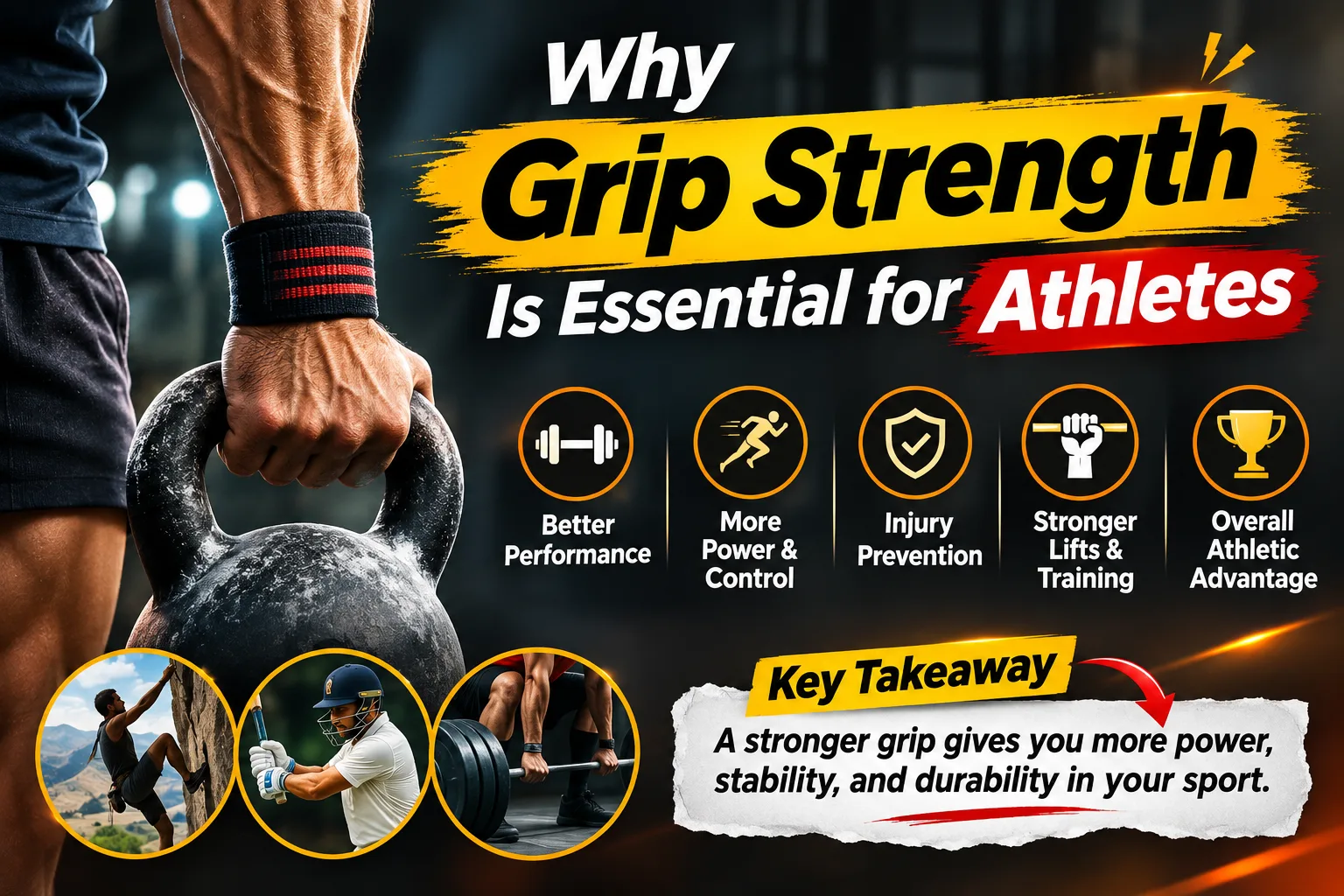
For athletes, grip is often the link between strength and performance. You can have powerful legs and a strong back, but if your hands give out first, that power never reaches the bar, the ball or the opponent.
Strength sports. In deadlifts, pull-ups and rows, grip is frequently the limiting factor. Lifters often find their back can handle more weight than their hands can hold. A stronger grip lets you train your bigger muscles to their full potential.
Climbing and combat sports. Rock climbers, judoka, wrestlers and Brazilian jiu-jitsu athletes depend on grip endurance. Losing your hold in the final minute of a match or a hard route can decide the outcome.
Racket and bat sports. Tennis, cricket, baseball, golf and badminton all rely on a firm but controlled grip. The right strength helps transfer power cleanly, while balanced forearm training may help reduce the strain that leads to common elbow complaints.
For athletes, the key is measurable progress. Small, steady gains in grip strength can translate into better lifts, longer holds and more consistent technique.
Grip strength for gamers
It might seem strange to mention grip training and gaming together, but competitive and long-session gamers put their hands through a surprising amount of repetitive work. Thousands of clicks, key presses and controller movements every hour add up.
Endurance and control. Gaming isn’t about crushing force. It’s about precise, repeated movements over long periods. Stronger, better-conditioned forearm and finger muscles can help you stay accurate late into a session instead of feeling stiff or fatigued.
Balance and recovery. Gamers tend to use their hands in the same fixed positions for hours. Light grip work, combined with finger extensions and regular stretching breaks, can help balance out those repetitive patterns and keep your hands feeling fresh.
Reaction and stability. A steady, well-conditioned hand supports smoother mouse movements and more controlled inputs, which matters in fast-paced competitive play.
For gamers, the goal is not maximum strength but conditioning, endurance and balance, trained gently and consistently.
Grip strength for everyday professionals
You don’t need to be an athlete or a gamer to benefit from a stronger grip. Most professionals use their hands constantly, often without realising how much.
Office and desk workers. Hours of typing and mouse use can leave the wrists and forearms tight and tired. Short, light grip sessions spread through the week can act as a counterbalance to all that static, repetitive work.
Hands-on trades and healthcare. Electricians, mechanics, chefs, nurses, dentists and physiotherapists all depend on hand strength and control. A strong grip helps with handling tools, lifting, and performing precise tasks without early fatigue.
Long-term health and independence. As we age, grip strength naturally declines. Keeping it up helps with everyday tasks like opening jars, carrying groceries and lifting children or luggage. Maintaining grip strength is a simple way to protect your independence in later life.
How a digital hand grip strengthener helps you train smarter
Traditional spring grippers work, but they have one big limitation: they don’t tell you whether you’re actually improving. You squeeze, it feels a little easier after a few weeks, and that’s about all the feedback you get.
A digital hand grip strengthener changes that. It measures the force of every squeeze and shows it as a number, either on a built-in display or through an app on your phone. That simple change brings some real advantages:
- Clear progress tracking. You can see your best reading for each hand over days and weeks, which makes it easy to apply progressive overload and avoid plateaus.
- Left and right comparison. Imbalances between your dominant and non-dominant hand become obvious, so you can correct them.
- Better motivation. Watching your numbers climb is far more rewarding than guessing whether your training is working.
- Suited to every goal. Athletes can push for maximum strength, gamers can focus on endurance and control, and professionals can keep things light and consistent, all using the same device.
Simple tips to get started
Train grip three or four times a week rather than every day, giving your forearms time to recover. Choose a resistance that challenges you but still lets you complete each rep with good control. Test your strength in the same position each time, ideally seated with your elbow bent at about 90 degrees, and record your best of two or three attempts. And don’t forget the muscles that open your hand: finger extensions with a rubber band help keep your training balanced.
If you feel sharp or lingering pain in your wrist, elbow or fingers, stop and speak to a physiotherapist before continuing.
Final thoughts
Grip strength supports performance on the field, precision at the keyboard and comfort throughout the working day. It’s also one of the simplest indicators of how strong and healthy your body is overall. By training it consistently and tracking your progress with a digital hand grip strengthener, you can turn a commonly overlooked area into a real advantage, whatever your sport, game or profession.