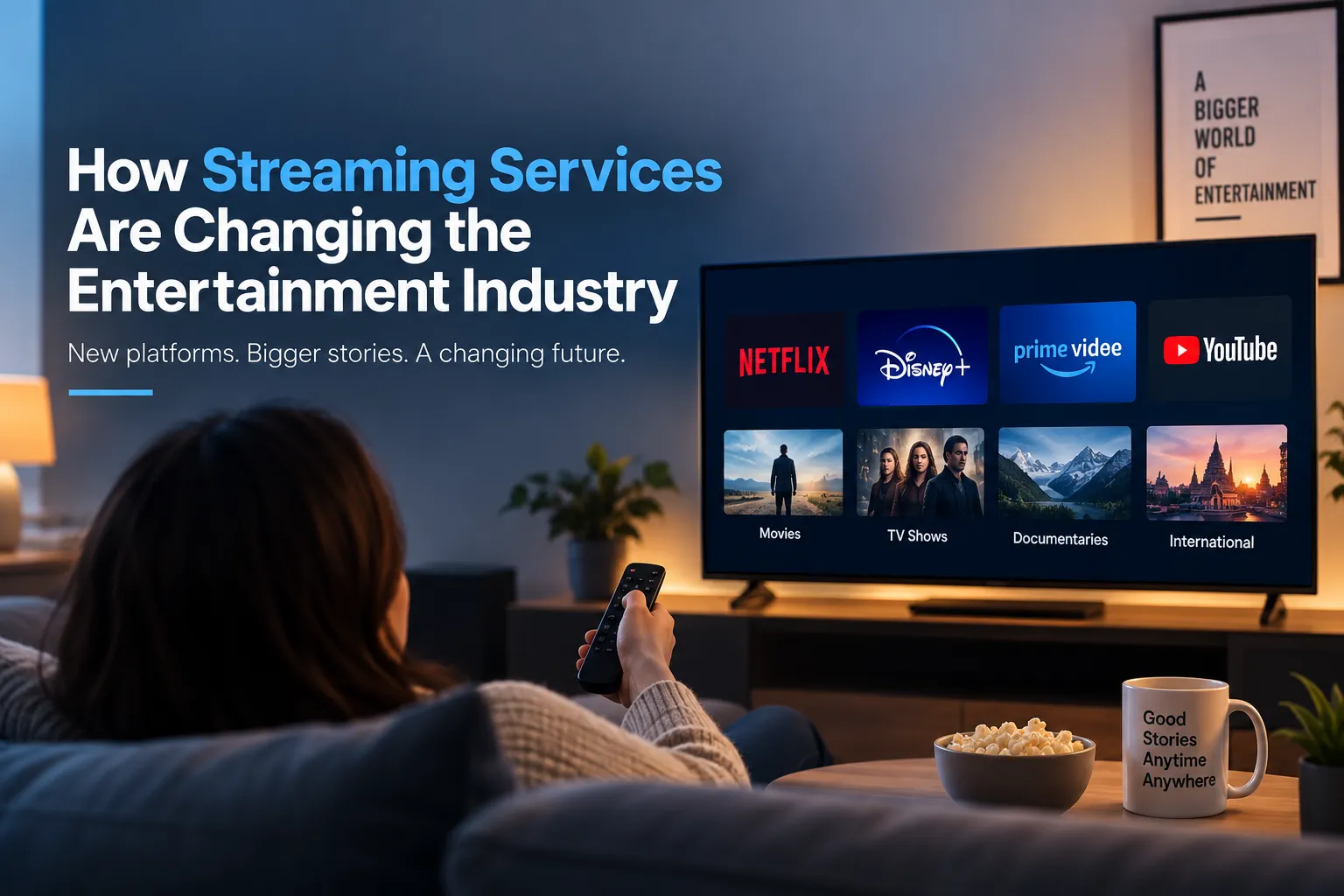
The days of waiting for a favorite show to air at a fixed time—or visiting a video store for a DVD—are largely gone. Today, audiences can watch movies, television series, documentaries and live events whenever they want, often across several devices.
Streaming services have changed not only how people watch entertainment but also how movies and shows are produced, distributed and monetized. The rise of streaming platforms has pushed studios and broadcasters to rethink traditional business models while giving audiences access to more international content than ever.
So, how streaming services are changing the entertainment industry goes far beyond replacing television schedules. It is a broader shift in viewing habits, content creation, global distribution and the economics of entertainment.
The Rise of Streaming Services
Streaming became popular because it solved several problems associated with traditional entertainment. Faster internet connections, smartphones, smart TVs and connected devices made online streaming convenient and widely accessible.
Instead of planning around a television schedule, viewers could choose what they wanted to watch and start immediately. Streaming also reduced reliance on physical media and gave audiences huge digital libraries.
Original programming accelerated the shift. Streaming companies began investing heavily in exclusive movies and series, turning their platforms into destinations rather than simply digital video libraries.
The result has been a significant change in consumer behavior. Deloitte’s research shows that streaming now competes directly with traditional pay TV, social video, gaming and other forms of digital entertainment for people’s limited leisure time.
How Streaming Changed the Way We Watch
On-Demand Viewing
The biggest change is simple: viewers are in control. On-demand services allow people to watch content when and where they choose rather than following fixed schedules.
Binge-Watching
Full-season releases helped create binge-watching, allowing viewers to watch several episodes in one sitting. Although weekly releases remain common, the expectation of having multiple episodes available has permanently influenced television culture.
Personalized Recommendations
Streaming platforms use viewing behavior and recommendation systems to help audiences discover movies and shows. This can make large libraries easier to navigate, although viewers increasingly compete with algorithms—and social media—for content recommendations.
Multi-Device Viewing
Entertainment is no longer tied to the television set. Smartphones, tablets, laptops, gaming consoles and smart TVs allow audiences to move between screens depending on where they are and what they are doing.
Impact on Movies, TV, and Creators
Streaming has changed the traditional path from production to audience. Movies and series can now reach viewers directly through digital platforms, sometimes without following the conventional theatrical or broadcast route.
Original streaming productions have also created opportunities for writers, directors, actors and producers. Projects that might struggle to find space on traditional television can potentially reach international audiences through an OTT platform.
For filmmakers, this global reach can be particularly valuable. A production made in one country can find viewers elsewhere through subtitles, dubbing and platform distribution.
However, streaming has also intensified competition. Platforms need a steady supply of attention-grabbing content, while creators compete not only with other professional productions but also with social video, gaming and user-generated content. Deloitte describes this as a broader competition for consumers’ limited entertainment time.
The business is therefore more open in some ways, but also more crowded. Getting noticed can be as difficult as getting produced.
How Streaming Changed the Entertainment Business
Streaming has introduced several ways to make money from digital entertainment:
- Subscriptions: Viewers pay a recurring fee for access.
- Ad-supported plans: Lower-cost or free services generate revenue through advertising.
- Premium tiers: Customers pay more for additional features or an ad-free experience.
- Licensing: Platforms acquire rights to movies and shows from other producers.
- Original programming: Exclusive content is used to attract and retain subscribers.
Ad-supported streaming is becoming particularly important. Deloitte’s 2026 research found that 68% of surveyed streaming subscribers had at least one ad-supported service, up from 46% in 2024.
| Traditional Entertainment | Streaming Entertainment |
| Fixed schedules | On-demand viewing |
| Physical media | Digital access |
| Limited channels | Large content libraries |
| Mostly local distribution | Global reach |
| Traditional advertising | Subscriptions + advertising |
Global Entertainment and New Viewing Trends
One of streaming’s most important effects is its ability to move entertainment across borders. Korean dramas, Indian films and series, Spanish-language productions, Japanese anime and European shows can now find audiences far beyond their countries of origin.
Subtitles and dubbing have made international programming easier to access, while global streaming distribution can give local productions a much larger potential audience.
Viewing is also becoming more flexible. Personalized discovery, ad-supported plans and hybrid movie releases are reshaping how audiences find and consume content.
At the same time, the industry is moving toward more aggregation and bundling as consumers become less willing to maintain large numbers of separate subscriptions. Deloitte has identified subscription stacking and fragmentation as significant challenges for the streaming business.
Challenges of Streaming Services
Streaming has created its own problems. With so many platforms competing for subscribers, audiences can face subscription fatigue, rising prices and fragmented content libraries.
A show may be available on one service today and removed later because of licensing or business decisions. Consumers can therefore end up paying for several platforms while still struggling to find something they want to watch.
Competition is also affecting traditional television and cinemas. Yet streaming has not made either obsolete. Live sports, major theatrical releases and shared viewing experiences continue to give traditional formats an important role.
What Does the Future of Streaming Look Like?
The future of streaming is likely to be less about replacing every older form of entertainment and more about combining different models.
Advertising-supported plans are likely to remain important, while personalization and international programming should continue to develop. Bundles and aggregation may also become more common as consumers seek simpler ways to manage multiple services.
Streaming, television and cinemas are increasingly interconnected rather than completely separate. The entertainment industry is adapting to a world in which audiences can move between a theater, a streaming app, live television, social video and gaming within the same day.
Frequently Asked Questions
1. How have streaming services changed the entertainment industry?
They have changed how entertainment is produced, distributed, marketed and consumed. Audiences now have greater control over when and where they watch content.
2. Why are streaming services so popular?
Convenience, flexible viewing, large libraries and original programming are major reasons. Viewers can access entertainment across multiple devices without following traditional schedules.
3. Are streaming services replacing traditional TV?
Not completely. Traditional television remains important for live news, sports and other scheduled programming, while streaming continues to reshape everyday viewing habits.
4. How has streaming affected movie theaters?
Streaming has increased competition for viewers and changed release strategies. However, cinemas remain valuable for major releases and communal viewing experiences.
5. What are the biggest challenges for streaming platforms?
Key challenges include rising content costs, subscription fatigue, churn, competition and the difficulty of maintaining audience attention.
6. What is the future of streaming entertainment?
Expect more ad-supported options, stronger personalization, international content and greater bundling. Streaming will likely coexist with television, cinemas and other digital entertainment.
Conclusion
Streaming has fundamentally changed the entertainment industry by giving audiences greater choice, flexibility and access to global content. It has also forced studios, broadcasters, creators and cinemas to rethink how they attract audiences and generate revenue.
But the future is unlikely to belong to streaming alone. Instead, entertainment will continue to blend streaming, television, cinemas, social video and other digital formats. The biggest change is not the disappearance of traditional entertainment—it is the growing freedom audiences have to decide how, when and where they experience it.