Physical fitness plays an important role in living an active and healthy life. However, modern routines often involve long hours of sitting, working on screens, commuting, and spending less time moving. Over time, a sedentary lifestyle can make everyday activities feel more difficult and reduce overall physical fitness.
The good news is that improving fitness does not require becoming a professional athlete or following an extreme workout plan. Regular exercise and sports can help improve physical fitness gradually by building endurance, strength, mobility, coordination, and confidence.
The key is to choose activities you genuinely enjoy. Some people prefer walking or strength training, while others stay motivated through football, cricket, badminton, swimming, or other sports.
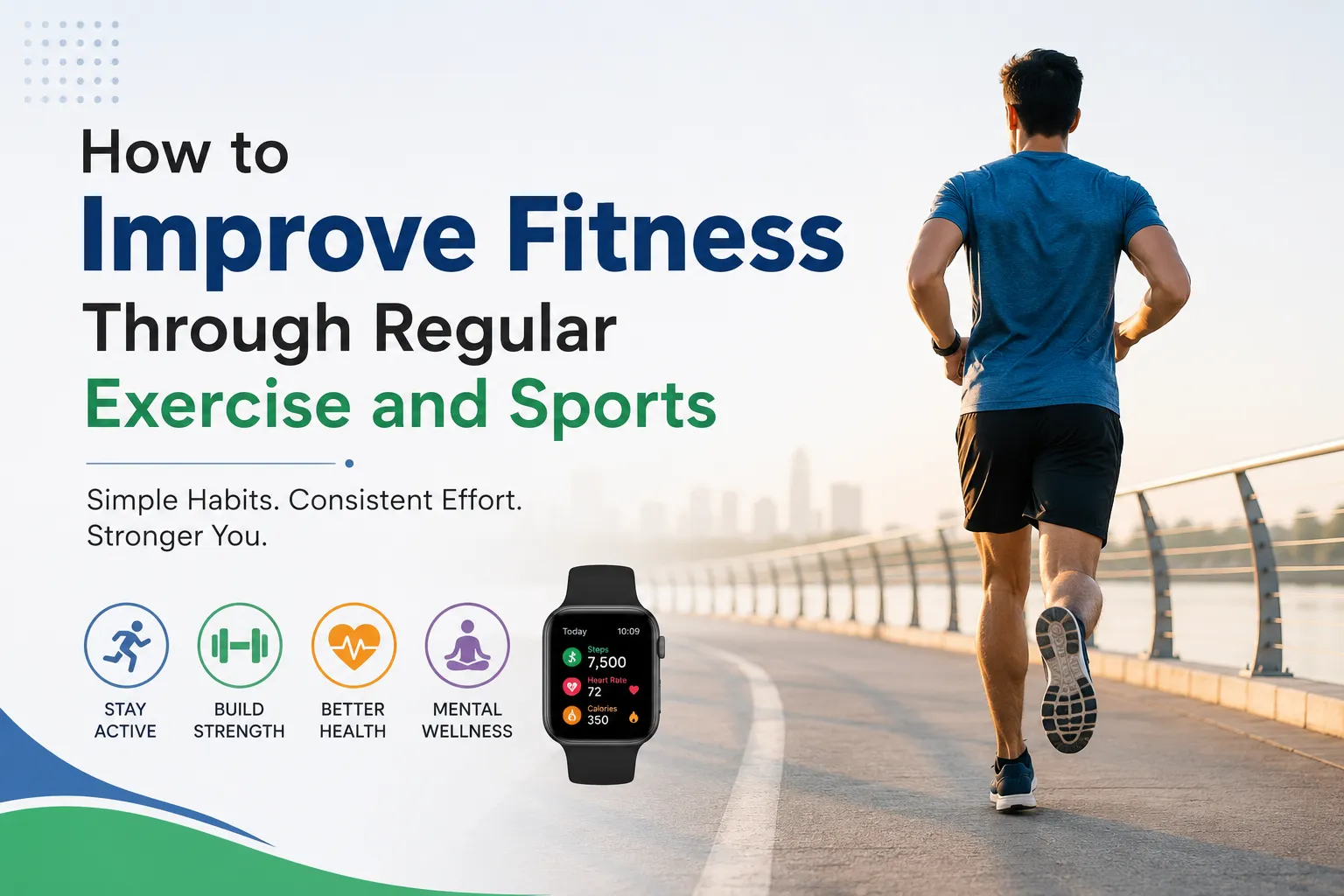
Technology can also provide useful support. Fitness apps, smartwatches, workout trackers, and digital training tools can help you monitor activity and recognize progress. Used wisely, these tools can make a regular exercise routine easier to maintain without replacing the importance of simply moving your body consistently.
What Does Physical Fitness Mean?
Physical fitness is the ability to perform daily activities efficiently while having enough strength, endurance, mobility, and energy for exercise, recreation, and everyday life.
The main components of fitness include:
- Cardiovascular endurance: How efficiently your heart and lungs support sustained activity.
- Muscular strength: The amount of force your muscles can produce.
- Muscular endurance: Your ability to repeat movements over time.
- Flexibility: The ability of joints and muscles to move through an appropriate range of motion.
- Balance: Your ability to control and stabilize body position.
- Body composition: The relative proportion of body fat and other tissues.
Improving physical fitness does not necessarily mean becoming an athlete. For many people, becoming fitter simply means having more energy, moving more comfortably, and finding physical activities easier to perform.
How Regular Exercise Improves Physical Fitness
Improves Heart and Lung Health
Regular aerobic activity can improve cardiovascular fitness. Activities such as walking, cycling, swimming, and running challenge the heart and lungs and can gradually improve endurance.
You do not need to start with intense workouts. A beginner might begin with regular walks and slowly increase pace or duration as fitness improves.
Builds Strength and Muscle
Strength training helps challenge the muscles and can improve muscular strength and everyday function. Beginners can start with simple bodyweight or resistance exercises such as:
- Squats
- Push-ups or modified push-ups
- Lunges
- Resistance-band exercises
Strength training can be adapted to different fitness levels. Good technique and gradual progression are usually more useful than trying to lift or do too much too soon.
Improves Flexibility and Mobility
Stretching, yoga, and mobility exercises can help maintain comfortable movement and improve body awareness. Mobility work can be particularly useful alongside strength training or sports that involve repeated movements.
A few minutes of appropriate mobility exercises before or after activity can be an easy addition to a regular exercise routine.
Helps Maintain a Healthy Weight
Physical activity uses energy and can support weight management when combined with sustainable eating habits. However, exercise is not a guaranteed or instant weight-loss solution.
Weight changes depend on many individual factors, including diet, activity levels, sleep, health, and lifestyle. The most useful goal is often to build healthy lifestyle habits that can be maintained over time.
Improves Energy and Daily Performance
As fitness improves, everyday activities such as climbing stairs, carrying groceries, walking longer distances, or participating in recreational activities may become easier.
This is one of the most practical benefits of regular exercise: better fitness can support a more active and capable daily life.
How Playing Sports Can Improve Fitness
Sports and fitness often go naturally together because sports can make exercise feel less like a chore. Instead of focusing only on repetitions or workout duration, you may be concentrating on scoring a goal, returning a serve, or improving your skills.
Depending on the sport, regular participation may help develop:
- Endurance
- Coordination
- Speed
- Agility
- Strength
- Balance
- Teamwork and motivation
Football, cricket, badminton, tennis, basketball, and swimming all involve different combinations of physical skills. A fast-paced game of badminton, for example, can challenge movement and coordination, while swimming provides a full-body activity that can be adapted to different ability levels.
Playing with others can also improve consistency because the social side of sports gives many people an additional reason to stay active.
Want to understand how sports can support both physical and mental well-being? Explore our guide on Benefits of Playing Sports for Physical and Mental Health.
Best Types of Exercise for Overall Fitness
| Type of Exercise | Examples | Main Fitness Benefit |
| Cardio exercise | Walking, cycling, swimming, jogging | Cardiovascular endurance |
| Strength training | Squats, push-ups, weights, resistance bands | Strength and muscular endurance |
| Flexibility training | Stretching, yoga | Mobility and range of motion |
| Balance exercises | Single-leg movements, yoga poses | Stability and body control |
| Sports activities | Football, badminton, tennis, basketball | Combined fitness skills and enjoyment |
Combining different forms of exercise can support more balanced physical fitness. For example, walking may improve endurance, strength training can build muscular capacity, and mobility exercises can support comfortable movement.
A Simple Weekly Exercise and Sports Routine for Beginners
| Day | Activity | Duration |
| Monday | Brisk walking | 20–30 minutes |
| Tuesday | Basic strength training | 20–30 minutes |
| Wednesday | Walking and gentle stretching | 20–30 minutes |
| Thursday | Rest or light mobility work | 10–20 minutes |
| Friday | Strength training | 20–30 minutes |
| Saturday | Sports activity or recreational exercise | 30–60 minutes |
| Sunday | Active recovery, such as an easy walk | 20–30 minutes |
This is only an example. Beginners should start gradually and adjust activity according to their current fitness level, available time, and individual needs.
How Technology Can Help Improve Fitness
Technology can be a useful supporting tool for people who want to build better fitness habits.
Fitness Trackers and Smartwatches
Fitness trackers and smartwatches may help users monitor:
- Daily steps
- General activity levels
- Workout duration
- Heart rate during supported activities
These features can help you notice patterns and set practical goals. However, consumer devices should not be treated as medical diagnostic tools.
Fitness and Workout Apps
Fitness apps can support beginners by providing:
- Workout planning
- Exercise demonstrations
- Activity tracking
- Progress monitoring
Digital tools can be especially useful when you are learning a new exercise routine. However, it is still important to use appropriate technique and choose workouts suitable for your experience level.
Setting Digital Fitness Goals
Tracking progress can help people recognize improvement. You might track weekly walks, workout sessions, strength progress, or sports participation.
The goal is to use numbers as guidance, not as an obsession. Missing a step target or workout does not erase previous progress. Long-term consistency matters more than perfect daily data.
How to Stay Consistent With Exercise and Sports
Try these practical strategies:
- Choose activities you genuinely enjoy.
- Start with realistic goals.
- Schedule exercise like an important appointment.
- Exercise with friends or family.
- Join a local sports group or club.
- Track progress using a notebook, app, or fitness tracker.
- Avoid comparing your progress with other people.
- Increase difficulty gradually.
The best regular exercise routine is usually one that fits realistically into your life.
Common Mistakes to Avoid When Improving Fitness
Beginners often lose motivation by trying to progress too quickly. Common mistakes include:
- Doing too much too soon
- Skipping warm-ups
- Ignoring rest and recovery
- Focusing on only one type of exercise
- Setting unrealistic goals
- Exercising inconsistently
- Ignoring proper technique
A sustainable approach is usually safer and easier to maintain than an extreme routine.
Popular Sports You Can Try for Fitness
Many sports can contribute to fitness through sports, but the best choice depends on personal interest, access, fitness level, available time, and injury considerations.
- Badminton: can improve coordination and agility.
- Football: involves repeated running and changes of direction.
- Cricket: can encourage movement, coordination, and teamwork.
- Tennis: combines cardiovascular activity with agility and skill.
- Basketball: involves running, jumping, and coordination.
- Swimming: can provide a full-body workout with different intensity options.
Trying several activities can help you discover what you enjoy most.
Curious about the sports that have captured the attention of fans around the world? Discover Most Popular Sports in the World and Why They Are Loved.
Exercise and Sports Tips for Beginners
Use this quick checklist when starting:
- Start slowly
- Warm up before exercise
- Focus on correct technique
- Stay hydrated
- Include rest days
- Wear suitable footwear and equipment
- Increase activity gradually
- Listen to your body
- Stay consistent
- Seek professional advice when needed
People with medical concerns, injuries, or existing health conditions should seek guidance from an appropriately qualified healthcare professional before starting a new exercise program.
Frequently Asked Questions
1. How often should I exercise to improve fitness?
Regularity is more important than occasional intense workouts. Start with a manageable schedule and gradually build activity according to your fitness level and goals.
2. Can playing sports replace regular exercise?
Sports can provide substantial physical activity and improve several aspects of fitness. Depending on the sport, you may still benefit from additional strength, mobility, or recovery work.
3. What is the best sport for improving overall fitness?
There is no single best sport for everyone. The best option is one that suits your interests, physical condition, access, and ability to participate consistently.
4. How long does it take to improve physical fitness?
Progress varies between individuals. Consistent activity over time can lead to gradual improvements, but the rate depends on starting fitness, training habits, recovery, and other lifestyle factors.
5. Can beginners start strength training?
Yes. Beginners can start with basic bodyweight movements or appropriately selected resistance exercises while focusing on good technique and gradual progression.
6. Are fitness trackers useful for improving fitness?
Fitness trackers can help monitor activity and encourage consistency. They work best as motivational and tracking tools rather than as a substitute for listening to your body.
7. Is walking enough to improve fitness?
Walking is an excellent way to increase physical activity and improve cardiovascular fitness. Adding strength and mobility work may help create a more balanced fitness routine.
8. How can I stay motivated to exercise regularly?
Choose enjoyable activities, set realistic goals, exercise with others, track progress, and focus on building a routine rather than chasing immediate results.
Conclusion
Learning how to improve fitness through regular exercise and sports does not require extreme workouts or complicated training plans. Fitness is usually built through small, repeated actions that become part of everyday life.
Walking more often, adding basic strength exercises, playing a sport you enjoy, and making time for recovery can gradually improve physical fitness. The most effective approach is one you can maintain.
Fitness technology can also be useful for tracking workouts, activity levels, and progress, but it should support healthy habits rather than replace them. Ultimately, regular movement, realistic goals, and enjoyable activities provide a strong foundation for a healthier and more active lifestyle.
Start where you are, progress gradually, and focus on consistency. Small improvements repeated over time can lead to meaningful long-term changes in how strong, active, and capable you feel.