Have you ever felt stiff after sitting at your desk for hours or struggled to bend down and touch your toes? You’re not alone. Many beginners and people with sedentary lifestyles experience restricted movement, especially when they spend much of the day sitting.
Flexibility is your body’s ability to move comfortably through a range of motion. Improving it doesn’t require complicated workouts, expensive equipment, or the ability to perform advanced yoga poses.
With simple stretching exercises and regular practice, you can gradually become more comfortable with everyday movements. A consistent stretching routine may also help you maintain mobility, prepare for physical activity, and feel less stiff.
If you’re wondering how to improve flexibility, start with gentle movements, breathe naturally, and focus on steady progress rather than perfection.
What Is Flexibility and Why Is It Important?
Flexibility refers to how far a muscle and its surrounding tissues can comfortably lengthen around a joint. Your flexibility varies between body parts and can be influenced by factors such as age, activity level, and individual anatomy.
Good flexibility can make everyday activities more comfortable, including reaching overhead, bending to pick something up, and turning your body.
Flexibility vs. Mobility
Although people often use these terms interchangeably, they are slightly different.
- Flexibility is the ability of muscles and other tissues to lengthen.
- Mobility is the ability to move a joint through its available range of motion with control.
For example, your hamstrings may be flexible enough to allow a deep stretch, but mobility also involves controlling your hips and legs as you move.
Both matter for comfortable movement. Stretching can support flexibility, while combining stretching with strength and controlled movement can help develop overall mobility.
Best Flexibility Exercises for Beginners
These flexibility exercises for beginners require little or no equipment. You can perform most of them at home using a yoga mat, a sturdy chair, or a wall for support.
Before starting, spend about five minutes walking around or marching gently in place.
1. Neck and Shoulder Stretch
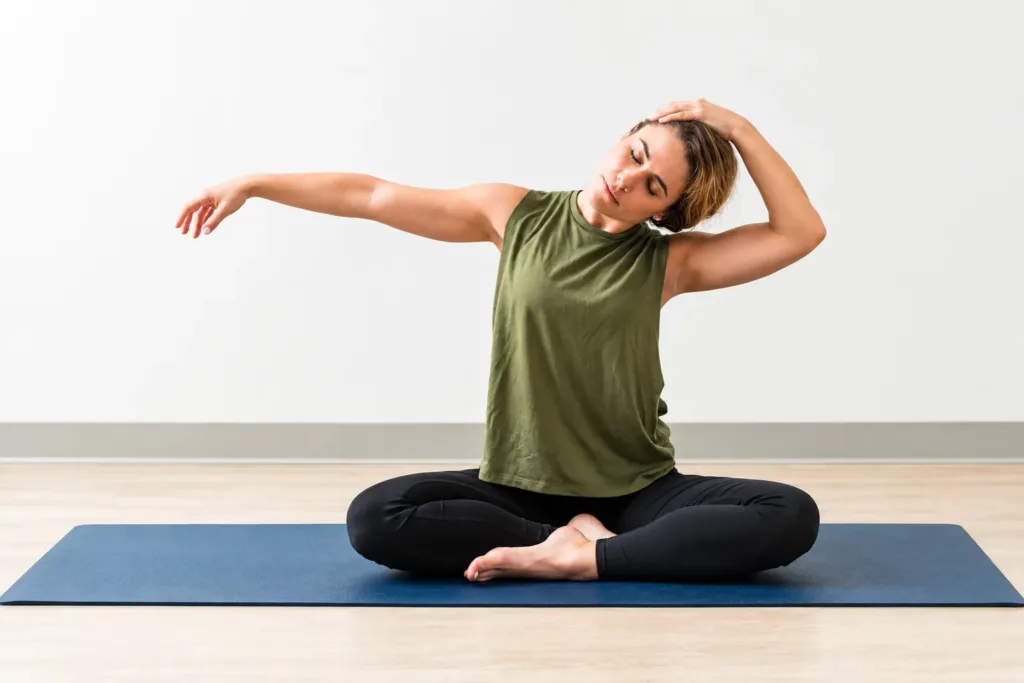
How to do it:
- Sit or stand comfortably with your shoulders relaxed.
- Slowly tilt your right ear toward your right shoulder.
- Hold without pulling your head down.
- Return to the center and repeat on the other side.
- Finish with a few gentle shoulder rolls.
Duration: Hold each side for 15–20 seconds. Repeat once.
Safety tip: Keep the movement gentle. Avoid forceful neck circles or pulling your head with your hand.
This simple stretch may help ease the feeling of everyday neck and shoulder stiffness after long periods of sitting.
2. Cat-Cow Stretch
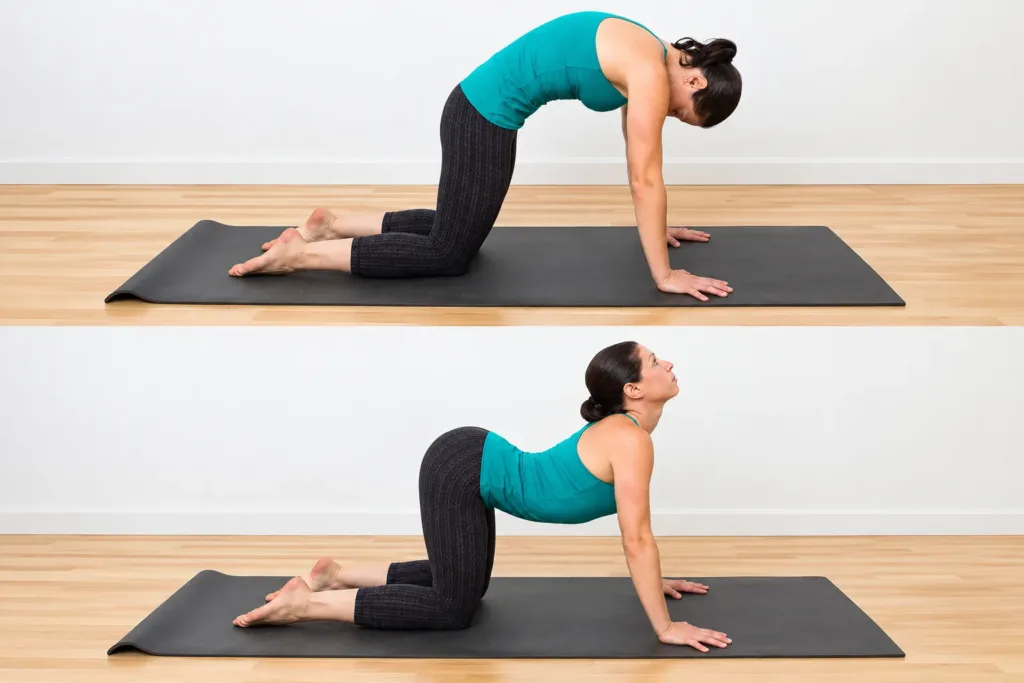
How to do it:
- Begin on your hands and knees, with your wrists under your shoulders and knees under your hips.
- Inhale as you gently lift your chest and tailbone.
- Exhale as you round your back and gently tuck your chin.
- Continue moving slowly between the two positions.
Duration: Perform 8–10 slow repetitions.
Safety tip: Move within a comfortable range and avoid forcing your lower back into a deep arch.
Cat-Cow gently moves your spine and encourages awareness of how your back feels during movement.
3. Standing Forward Bend
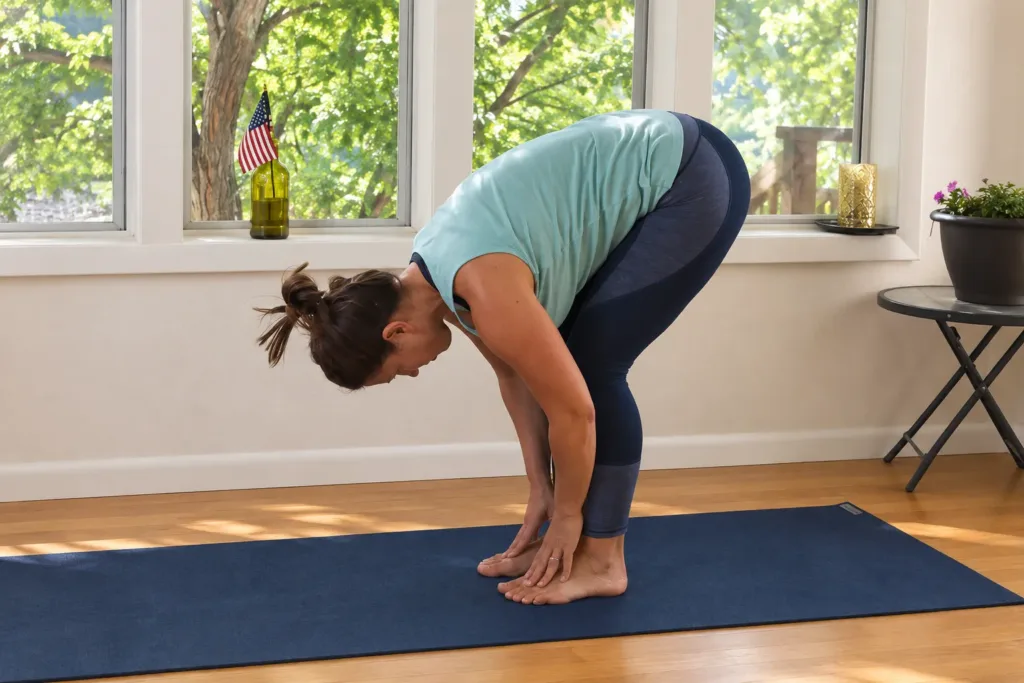
How to do it:
- Stand with your feet about hip-width apart.
- Soften your knees and slowly hinge forward from your hips.
- Let your arms hang comfortably or rest your hands on your thighs.
- Allow your upper body to relax without forcing yourself toward the floor.
- Slowly return to standing.
Duration: Hold for 15–20 seconds, once or twice.
Safety tip: Keep your knees slightly bent and stop if you feel sharp pain or dizziness.
This stretch targets the back of your legs and can be modified by bending your knees more or resting your hands on a chair.
4. Seated Hamstring Stretch
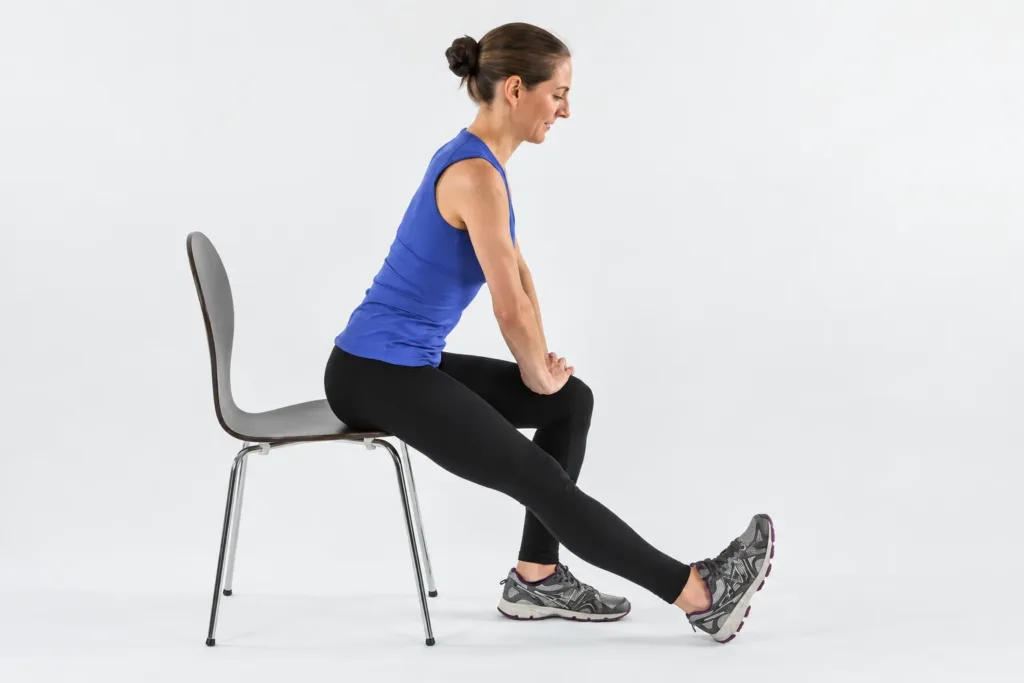
How to do it:
- Sit near the edge of a sturdy chair.
- Extend one leg forward, keeping the heel on the floor.
- Keep your back comfortably straight.
- Lean forward slightly from your hips until you feel a gentle stretch behind your thigh.
- Switch legs.
Duration: Hold for 20–30 seconds per leg.
Safety tip: Avoid rounding your back excessively or pulling your toes toward you forcefully.
If reaching forward feels difficult, reduce the lean. You don’t need to touch your toes to benefit from the stretch.
5. Butterfly Stretch
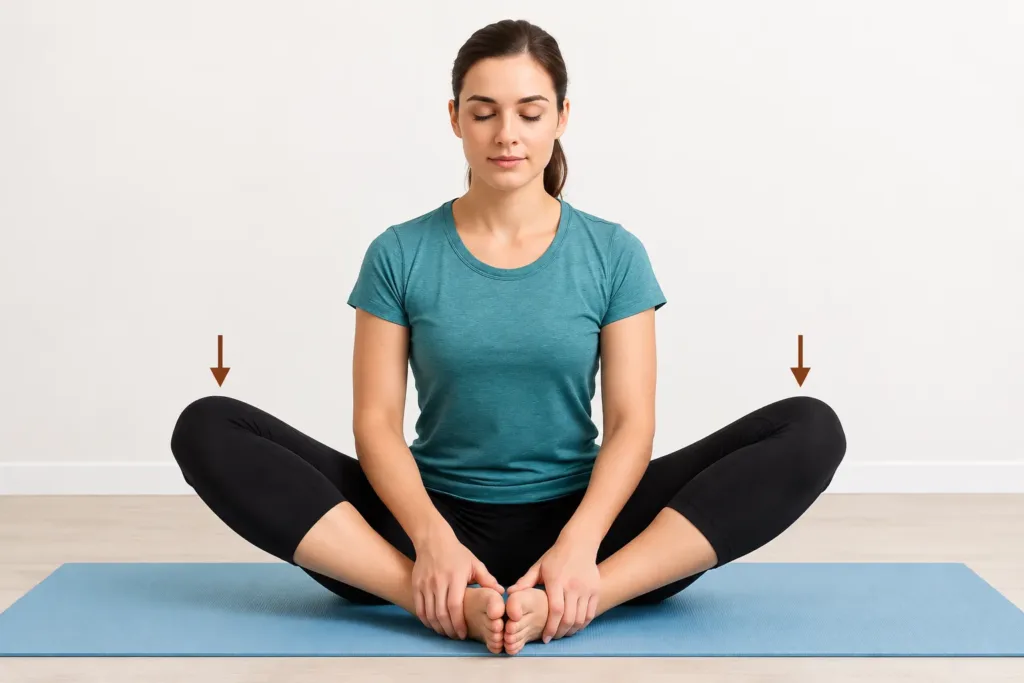
How to do it:
- Sit on the floor with your back comfortably upright.
- Bring the soles of your feet together.
- Let your knees relax outward.
- Hold your feet or ankles and breathe slowly.
Duration: Hold for 20–30 seconds.
Safety tip: Don’t press your knees toward the floor. Sit on a folded towel or cushion if your hips feel uncomfortable.
The butterfly stretch gently targets the inner thighs and hips.
6. Child’s Pose
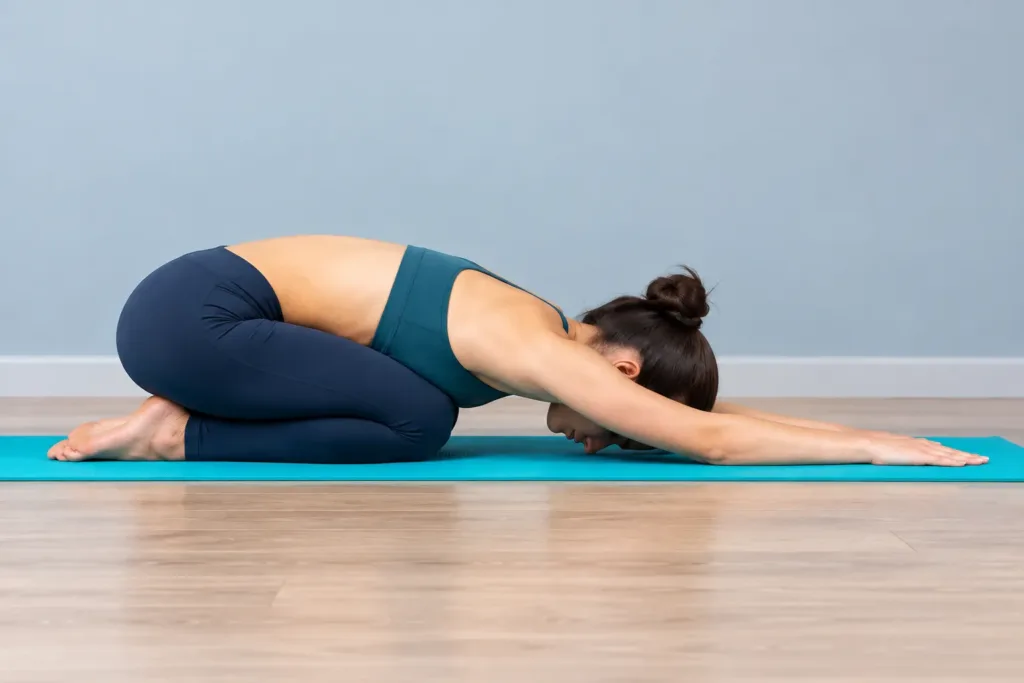
How to do it:
- Start on your hands and knees.
- Slowly move your hips toward your heels.
- Extend your arms forward or rest them beside your body.
- Lower your forehead toward the floor only as far as comfortable.
- Take slow, relaxed breaths.
Duration: Hold for 30–45 seconds.
Safety tip: Place a cushion beneath your hips or chest if needed. Skip or modify the pose if kneeling hurts.
This relaxing position gently stretches the hips, thighs, and back while giving you time to focus on your breathing.
7. Standing Calf Stretch
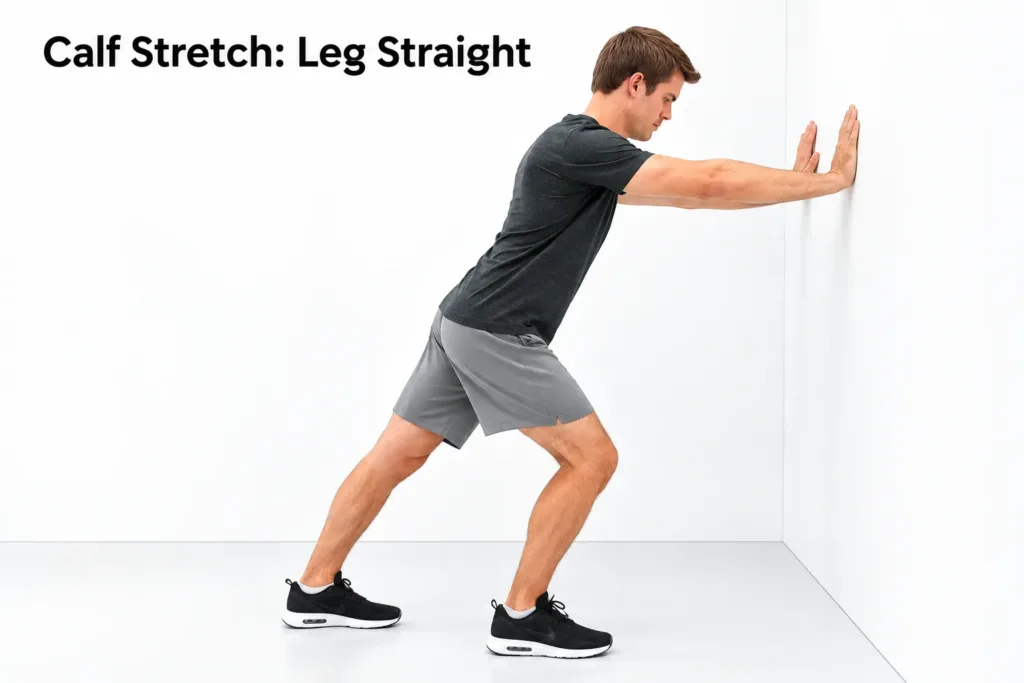
How to do it:
- Stand facing a wall and place both hands against it.
- Step one foot backward, keeping that heel on the floor.
- Bend your front knee while keeping your back leg relatively straight.
- Lean forward slightly until you feel a stretch in your back calf.
- Switch sides.
Duration: Hold for 20–30 seconds per leg.
Safety tip: Keep your back heel grounded without forcing your ankle into the stretch.
This exercise is useful after walking or when your calves feel tight from prolonged sitting or standing.
Beginner Flexibility Routine at Home
A beginner stretching routine doesn’t need to be long or complicated. The following 10–15-minute flexibility workout for beginners covers several major muscle groups.
Start with a five-minute warm-up, then move through the exercises below. The stretching portion takes approximately 10 minutes.
| Exercise | Duration | Main Area |
| Neck and shoulder stretch | 1 minute | Neck and shoulders |
| Cat-Cow stretch | 1 minute | Spine and back |
| Standing forward bend | 1 minute | Hamstrings and back |
| Seated hamstring stretch | 2 minutes | Back of the thighs |
| Butterfly stretch | 1 minute | Inner thighs and hips |
| Child’s Pose | 1 minute | Hips and back |
| Standing calf stretch | 2 minutes | Calves and ankles |
Total: Approximately 9 minutes of stretching, plus a five-minute warm-up. Take short breaks between exercises as needed.
You can begin with just three exercises if the full routine feels overwhelming. Gradually add more as you become comfortable.
Tips to Improve Flexibility Faster and Safely
The key to learning how to become more flexible is consistency, not forcing your body into deeper stretches.
Try these practical habits:
- Warm up first: Walk, march in place, or move gently for five minutes before stretching.
- Stretch regularly: Practice several times a week, or establish a manageable daily stretching routine.
- Breathe slowly: Keep breathing naturally instead of holding your breath.
- Stay comfortable: Aim for a mild pulling sensation, not pain.
- Avoid bouncing: Use smooth, controlled movements during static stretches.
- Adapt to your ability: Bend your knees, use a chair, or reduce the range of motion when necessary.
- Be patient: Increase the duration or range gradually instead of pushing for immediate results.
For a more complete fitness routine, combine stretching with walking, strength training, and other activities you enjoy.
Common Stretching Mistakes to Avoid
Even simple stretching exercises can become uncomfortable when performed incorrectly.
Watch out for these common mistakes:
- Stretching intensely before warming up.
- Forcing your body through pain to reach a deeper position.
- Bouncing aggressively during a stretch.
- Comparing your flexibility with someone else’s.
- Ignoring fatigue or discomfort and skipping recovery when needed.
- Expecting dramatic results overnight.
Remember that your body has its own natural range of motion. A comfortable stretch is more useful than an extreme position you cannot control.
How Long Does It Take to Improve Flexibility?
There is no single timeline for improving flexibility. Your starting point, age, activity level, consistency, and the areas you stretch can all affect your progress.
Some people notice gradual changes in comfort or range of motion over several weeks of regular practice. Others may need more time.
Instead of measuring success by whether you can touch your toes, look for practical changes, such as bending more comfortably, reaching overhead with greater ease, or moving with less restriction.
Keep practicing, adjust your routine when necessary, and allow yourself time to improve.
Frequently Asked Questions
1. How can beginners improve flexibility at home?
Start with gentle stretches for your neck, back, hips, hamstrings, and calves. Warm up first, practice regularly, and use a chair or wall for support when needed.
2. How many minutes should I stretch every day?
A manageable starting point is 10–15 minutes per session, including a warm-up. You can begin with less and build up gradually. Consistency matters more than completing a long routine every day.
3. Can I improve flexibility at any age?
Many adults can work on flexibility at different ages. However, progress varies with individual health, mobility, and starting ability. Choose exercises appropriate for your body and current fitness level.
4. Is it better to stretch in the morning or evening?
Either can work. Morning stretching exercises may help you ease into movement after waking, while evening stretching can be a convenient way to unwind. Choose the time that fits your schedule and feels comfortable.
5. Should stretching hurt?
No. Stretching should generally feel like mild tension, not sharp pain. Stop or modify the movement if you experience pain, numbness, tingling, or unusual discomfort.
6. How long does it take to become more flexible?
It varies from person to person. Some people notice gradual improvements over several weeks, while others need longer. Regular practice and realistic expectations are important.
Conclusion
Improving flexibility doesn’t require advanced workouts, expensive equipment, or hours at the gym. With a few simple stretching exercises, you can begin building a routine that fits comfortably into your everyday life.
Start with the movements that feel manageable, practice regularly, and gradually expand your beginner flexibility routine as your confidence grows.
Your first step: Set aside 10 minutes today, warm up gently, and try three stretches from this guide. Small, consistent efforts can help you work toward more comfortable movement over time.